Two quotes for the exact same building footprint can come back 20–40% apart in price — and both can be technically “correct.” The gap almost never comes from one supplier being dishonest; it comes from differences in design load basis, corrosion specification, scope inclusions, and Incoterms that aren’t visible unless you know exactly where to look. If you’ve already sent out your RFQ and now have two, three, or five quotes sitting in front of you, this guide gives you the evaluation framework to compare them on the same basis, catch the gaps before they become change orders, and score suppliers on more than just the bottom-line number.
(If you haven’t issued your RFQ yet, see our Metal Building Buyer’s Guide for the full list of specifications to include before you request quotes.)
1. Why PEB Quotes Are Notoriously Hard to Compare
A pre-engineered steel building isn’t a commodity with a fixed unit price — the final steel tonnage, and therefore the price, is a direct output of the load assumptions, design code, and specification basis each supplier used. Two suppliers pricing “the same” 5,000 m² warehouse can land on structural steel weights that differ by 15–20% simply because one assumed a lighter wind/seismic load combination, a lower corrosion category, or a thinner cladding gauge than the other. Unless the RFQ locked every one of these variables down — and unless you check that both quotes actually respected those instructions — you’re not comparing two prices for one building. You’re comparing prices for two different buildings that happen to share a footprint.
2. Step 1: Confirm You’re Comparing an Apples-to-Apples Basis
Before looking at the bottom-line figure on any quote, verify that every supplier priced against the same fundamentals. If any of these differ between quotes, the price comparison is meaningless until you normalize them:
- Governing design code — AISC 360, Eurocode 3, AS 4100, or another standard. A frame designed to a less conservative code will legitimately weigh less and cost less, but may not be permit-ready in your jurisdiction.
- Design loads — wind speed, seismic zone, snow load (if applicable), and live/floor loads used. Ask each supplier to state the specific values used, not just “per local code.”
- Corrosion protection category — per ISO 12944 or equivalent. A C2-rated coating system and a C5M-rated system are not interchangeable, and the price difference can be substantial.
- Steel grade and coating specification for both primary structural members and secondary/cladding elements.
- Crane provisions, if applicable — capacity, duty class, and whether the frame is crane-ready (see our crane building design guide for what should be specified here).
- Scope boundary — supply-only (ex-works/FOB/CIF) vs. full turnkey (delivered and erected), and exactly where one ends and the other begins.
If a supplier’s quote doesn’t explicitly state these assumptions, that’s not a minor omission — it’s the single biggest reason quote comparisons go wrong. Request written confirmation of each before scoring the quote on price.
3. Step 2: Read the Quote Line by Line
Once the basis is confirmed, work through the quote systematically rather than jumping to the total figure:
- Steel tonnage and per-ton price. A lower per-ton price with a higher total tonnage can cost more than a higher per-ton price with an optimized, lighter frame. Ask for the total structural steel tonnage, not just the unit rate — an efficient frame design (such as tapered built-up sections optimized to the actual moment diagram, rather than uniform hot-rolled sections) can reduce total tonnage meaningfully without reducing capacity.
- Incoterms and freight. For cross-border procurement — common across Southeast Asia, the Middle East, and Australia/New Zealand — confirm whether pricing is EXW, FOB, CIF, or DDP. A CIF quote that looks cheaper than a competitor’s DDP quote may not actually be cheaper once local customs, inland freight, and unloading are added back in. Always normalize to the same Incoterm before comparing totals.
- Erection and civil works exclusions. Confirm whether foundation design, foundation construction, crane mobilization for erection, and site civil works are included or explicitly excluded. “Excludes civil works” is standard and reasonable — but it needs to be visible in the quote, not discovered during contract negotiation.
- Accessories and secondary items. Louvers, skylights, roof ventilators, personnel doors, gutters, and downpipes are frequently quoted as optional add-ons. Confirm whether your functional requirements (ventilation, natural lighting, safety egress) are included in the base price or listed separately.
- Testing, inspection, and documentation. Third-party inspection, mill test certificates, and welding qualification records (e.g., to AWS D1.1) may be included by default or offered only on request. For projects requiring specific certification for permitting or insurance, confirm this explicitly.
- Payment terms and schedule. Compare deposit percentage, milestone payments, and final payment terms — these affect project cash flow as much as the headline price.
4. Step 3: Score the Supplier, Not Just the Quote
Price comparison tells you what a building costs. It doesn’t tell you whether the supplier can actually deliver it on spec and on time. Use a weighted scorecard to evaluate the supplier alongside the number:
| Evaluation criteria | What to check | Suggested weight |
|---|---|---|
| In-house engineering capability | Does the supplier design in-house (and with what software — e.g., SAP2000, Tekla Structures) or outsource structural design to a third party? | High |
| Manufacturing capacity & QC | Annual fabrication tonnage, factory certifications, welding qualifications (e.g., AWS D1.1), in-house quality control process | High |
| Export & cross-border experience | Track record shipping and erecting in your specific country — familiarity with local codes, customs, and site conditions | High |
| Project references | Verifiable completed projects of similar scale, industry, or complexity — ideally in your region | Medium |
| Certifications & standards compliance | ISO 9001 (quality), ISO 14001 (environmental), country-specific certifications relevant to your project | Medium |
| After-sales support & warranty | Structural warranty terms, cladding warranty terms, and local service/spare parts availability | Medium |
| Financial stability & company history | Years in operation, scale of operations, evidence of financial capacity to deliver the contract | Medium |
| Responsiveness & documentation quality | Clarity and completeness of the quote itself is often a leading indicator of project communication quality | Low-Medium |
Score each supplier 1–5 against each criterion, apply the weights, and use the resulting total alongside — not instead of — the price comparison. A supplier scoring highest on price but lowest on engineering capability and export experience is a common source of costly change orders and schedule delays on cross-border projects.
Red Flags to Watch For in a PEB Quote
- No design code or load values stated. If a quote doesn’t reference the specific structural code and load basis used, you cannot verify what you’re actually being sold.
- Unusually low price with no stated basis. If one quote is dramatically below the others with no explanation (lighter load assumptions, lower corrosion category, reduced steel grade), assume the scope was reduced to hit a price point — not that the supplier found a genuine efficiency.
- Vague or missing exclusions. A quote that doesn’t clearly list what’s excluded is more likely to generate change orders once the contract is signed.
- No factory or fabrication site information. For cross-border projects, confirm where the steel is actually fabricated and whether that facility has the certifications and capacity the quote implies.
- No in-house engineering stamp or reference. If structural drawings will be outsourced to a third party, ask who that party is and what their track record looks like — the supplier’s fabrication quality doesn’t guarantee the engineering behind it.
- Payment terms heavily front-loaded relative to industry norms, without milestone-based structure tied to design approval, fabrication, and delivery.
Common Mistakes When Comparing PEB Quotes
- Comparing total price without confirming both quotes cover the same scope (supply-only vs. turnkey)
- Comparing per-ton price instead of total tonnage and total price for the actual functional building
- Ignoring Incoterms, leading to hidden freight and customs costs discovered after contract signing
- Treating “lowest price” and “best value” as the same thing without scoring engineering capability, track record, and after-sales terms
- Not requesting written confirmation of design assumptions (code, loads, corrosion category) before finalizing comparison
5. Why Buyers Compare Pebsteel Alongside Other Quotes
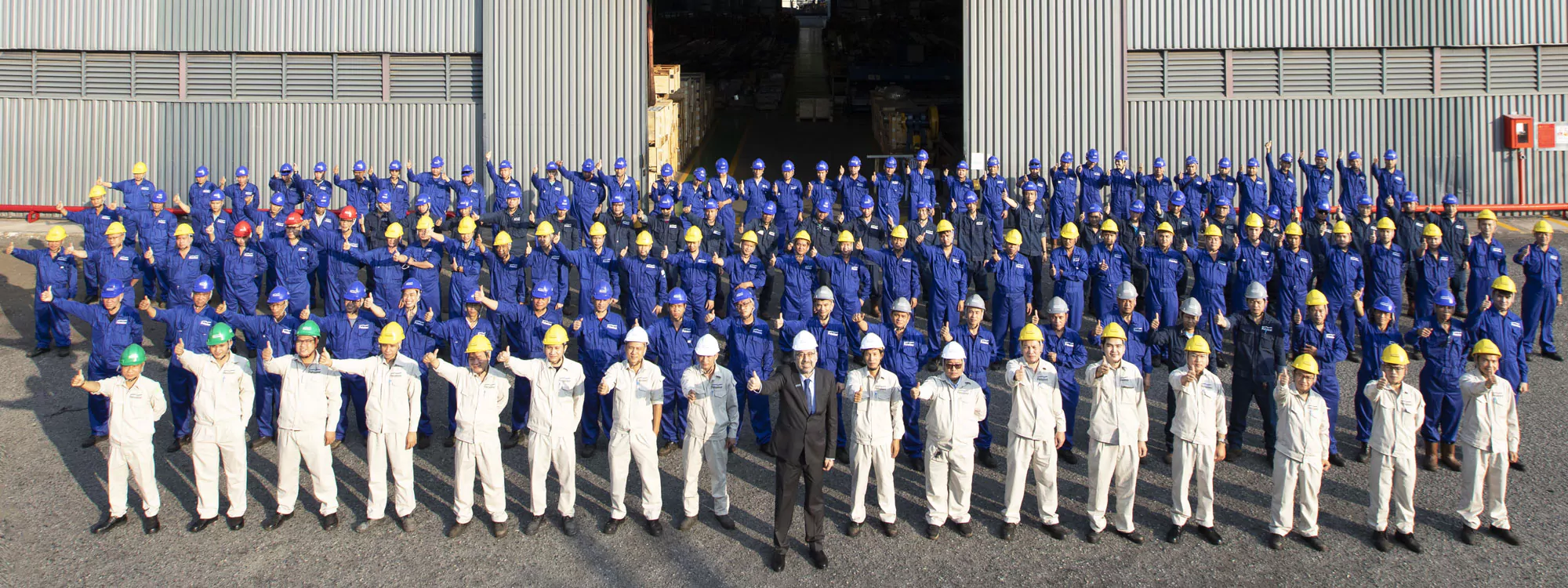
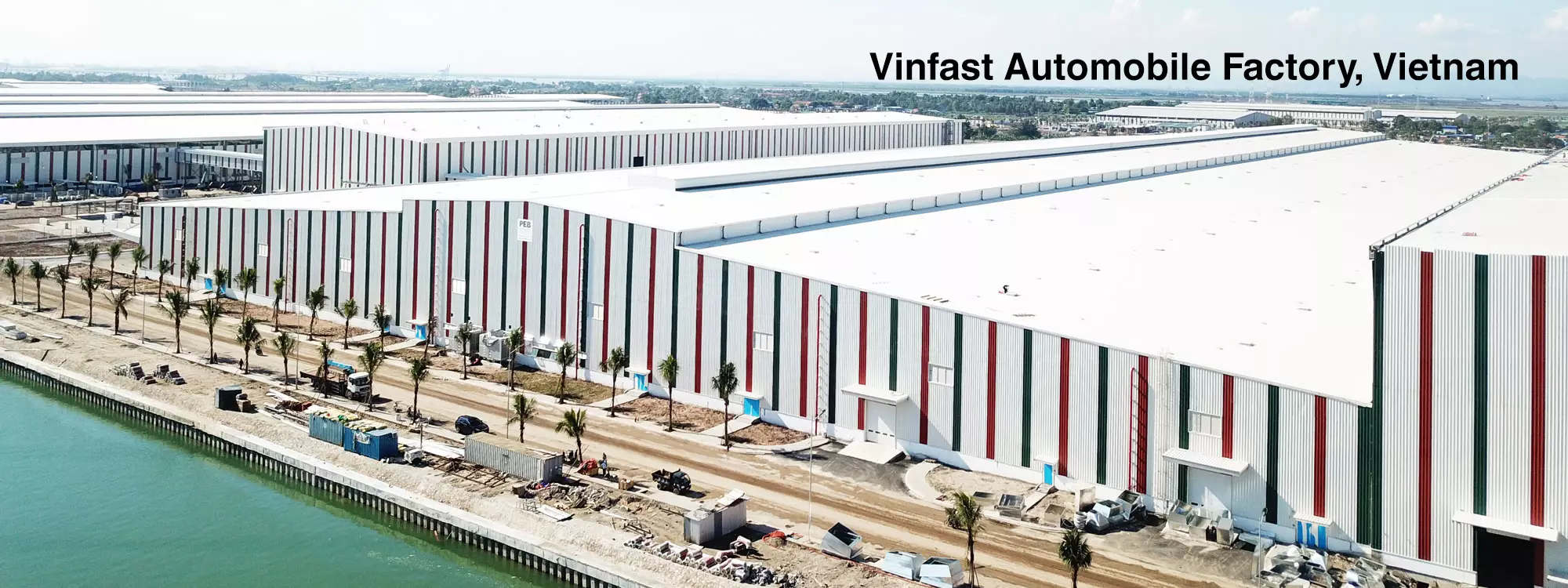
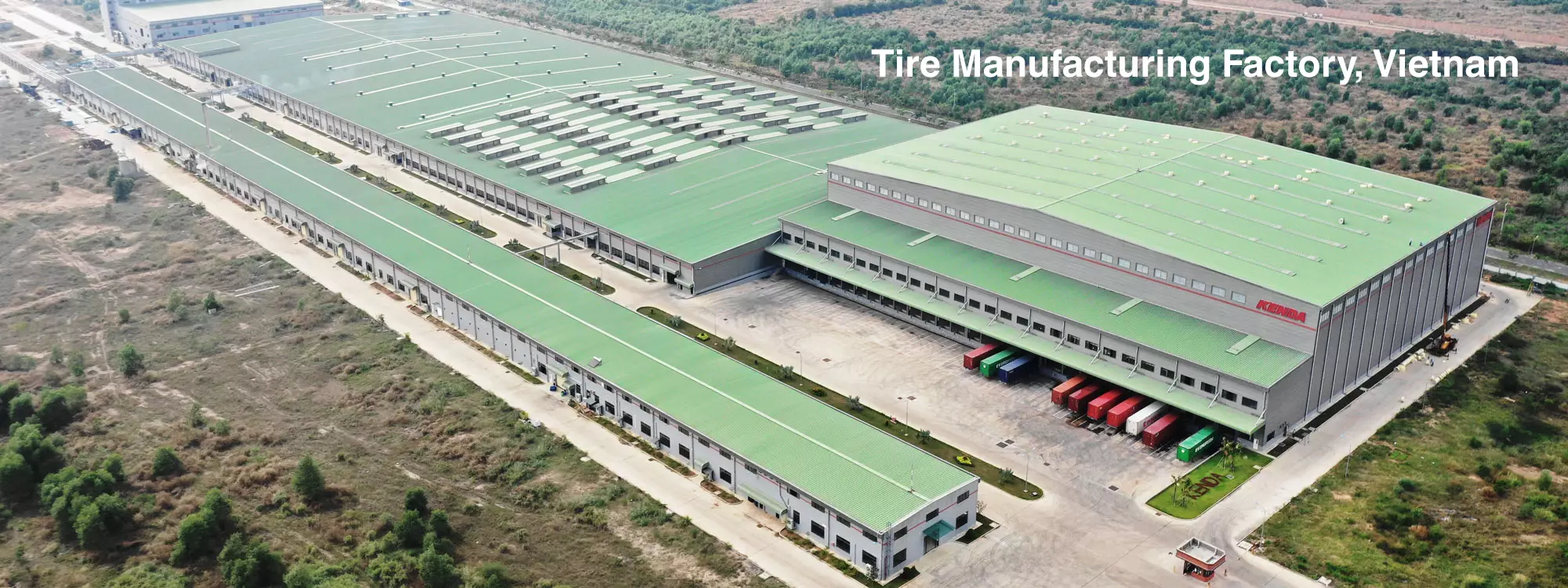
Pebsteel’s quotes are built on in-house structural design using SAP2000 and Tekla Structures — modeled by a team of 100+ structural engineers — with tapered built-up frame technology engineered to the actual moment diagram rather than uniform sections, reducing steel tonnage without reducing capacity. With more than 31 years fabricating and erecting pre-engineered buildings and structural steel across Southeast Asia, the Middle East, and Australia/New Zealand, and a fabrication base in Vietnam producing 100,000 metric tons annually, Pebsteel’s quotes state design code, load basis, and corrosion specification explicitly — so you can score it against other offers using the exact framework above.
Frequently Asked Questions
Why do PEB quotes for the same building vary so much between suppliers? The price difference almost always comes from differing design assumptions — wind/seismic load basis, corrosion protection category, steel grade, and scope inclusions — rather than one supplier padding margin or another cutting corners. Confirming these assumptions in writing before comparing totals is the single most effective way to normalize quotes.
What’s the difference between supply-only and turnkey PEB pricing? Supply-only pricing (typically quoted EXW, FOB, or CIF) covers the fabricated structural steel and cladding delivered to a port or site, with erection, foundation, and civil works handled separately. Turnkey pricing includes delivery and erection, and sometimes foundation and civil works. Always confirm which basis each quote uses before comparing totals.
Should I always choose the lowest-priced quote? Not without checking the design basis and scope first. A lower price frequently reflects a lighter load assumption, a lower corrosion category, or excluded scope items — not a more efficient design. Use the weighted scorecard alongside price to evaluate true value.
What Incoterm should I request for cross-border PEB procurement? It depends on your logistics capability and risk preference. EXW and FOB give the buyer more control (and more responsibility) over freight and customs; CIF and DDP shift more of that responsibility to the supplier at a higher quoted price. For first-time cross-border buyers, DDP or CIF quotes are often easier to compare directly against local turnkey competitors.
How do I verify a supplier’s project references are genuine? Ask for project names, locations, and — where possible — contact references for completed projects of similar scale or industry. Suppliers with genuine export experience in your region should be able to provide verifiable, in-country references rather than only headquarters-market examples.
What certifications should a PEB supplier have? At minimum, look for ISO 9001 quality management certification and evidence of welding qualification (such as AWS D1.1 or equivalent) for the fabrication facility. Depending on your project and jurisdiction, ISO 14001 environmental certification and country-specific compliance certificates may also be relevant.
How many suppliers should I request quotes from? Three to five qualified suppliers is generally enough to establish a reliable price and capability benchmark without creating excessive evaluation overhead. Prioritize suppliers with verifiable in-house engineering and relevant regional experience over volume of quotes.
Ready to get a quote you can compare with confidence?
Pebsteel’s proposals state the design code, load basis, and corrosion specification explicitly, so you can score it against other offers using the framework above. Contact your regional Pebsteel office or write to marketing@pebsteel.com.vn with your building brief, and our engineering team will respond with a structural proposal built on a fully transparent basis.
Disclamer: The content provided in this article is for reference purposes only. For further details or clarification based on your needs, please contact Pebsteel directly.