
If you are planning a new warehouse — or redesigning an existing one — the single most important insight is this: the structural building decisions you make before breaking ground will determine your operational efficiency for the next 25 years. Most guides cover warehouse layout planning (aisles, racking, zones). Almost none explain how the building itself — column spacing, clear height, dock positions, roof load allowance — either enables or permanently constrains those operational choices. This guide covers both layers, giving investors, project owners, and logistics managers a complete picture of how to design a high-performance warehouse from the ground up.
1. Two Layers of Warehouse Design: Building and Layout
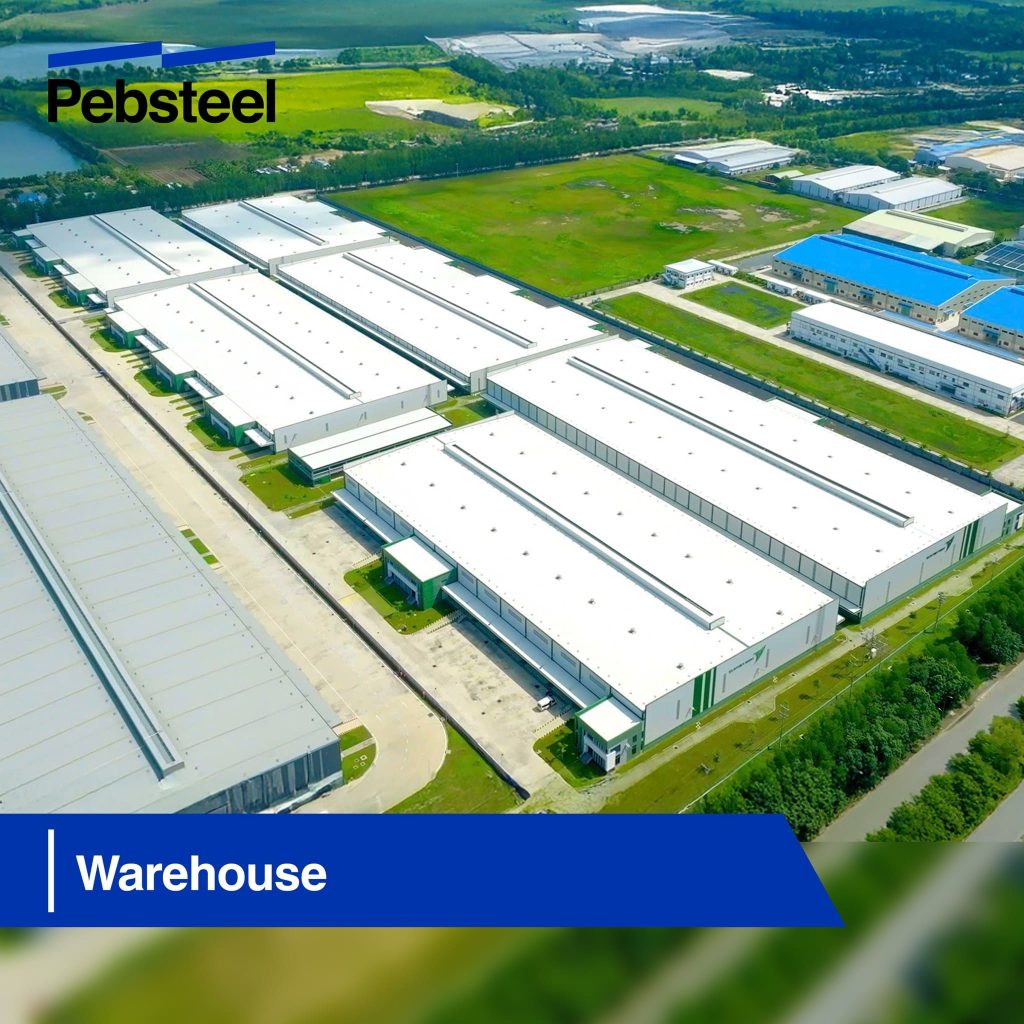
Warehouse design is not a single discipline — it operates on two interconnected levels that must be resolved together:
Layer 1 — Structural building design: Decisions made during the engineering and construction phase: site orientation, building footprint and shape, structural system, clear eave height, column bay spacing, loading dock positions, expansion provisions, roof structural capacity for solar PV, and cladding/insulation specification for the target operating environment.
Layer 2 — Functional layout design: Decisions made about the interior: zoning (receiving, storage, picking, packing, dispatch), rack configuration and aisle width, traffic flow pattern, mezzanine levels, material handling equipment selection, and technology integration (WMS, automation).
The critical insight: Layer 1 decisions are largely permanent. A 9m eave height cannot become 12m after construction. A 6m column grid cannot become 12m. Getting structural design wrong forces costly operational compromises for the life of the building.
2. Phase 1: Structural Building Design — The Decisions That Drive Everything
2.1 Site Selection and Building Orientation
Before a single structural element is specified, site selection and building orientation should be optimised. Key considerations:
- Orientation of the long axis: In tropical and sub-tropical climates (Southeast Asia, Middle East, North Australia), orienting the ridge line east-west minimises direct solar gain on the broadside wall panels and maximises north or south-facing roof area for future solar PV. This can reduce HVAC loads by 10–18%.
- Truck access and dock frontage: The site must accommodate turning circles for 19 m articulated semi-trailers (minimum 25 m turning radius). Inadequate truck aprons are among the most common and most expensive design errors — they require the building to be set back further from the boundary than originally planned.
- Ground conditions: Soft ground or high water tables significantly increase foundation costs. A preliminary geotechnical investigation (borehole and CPT) prior to building design prevents costly foundation re-engineering mid-project.
- Future expansion land: If business growth is anticipated, reserve land on the short-end wall axis. Pre-engineered steel buildings expand longitudinally by adding bays — but only if the land is available.
2.2 Clear Height: The Single Biggest Operational Design Decision
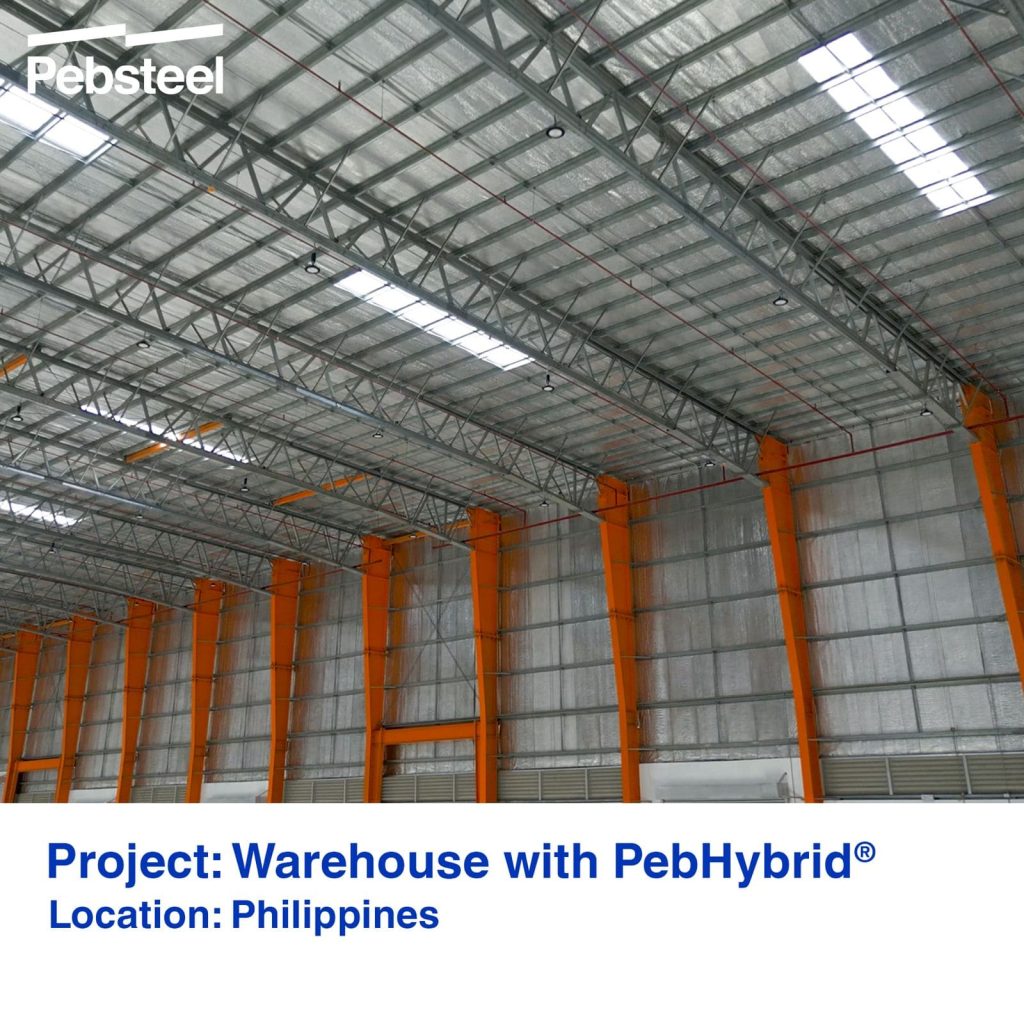
Clear height — the usable interior height from finished floor level to the underside of the lowest structural obstruction (haunch, purlin, or crane beam) — directly determines maximum racking height and therefore total storage volume.
The relationship between clear height and racking capacity is the most underexplained concept in warehouse design literature:
| Clear Height (m) | Max Pallet Racking Levels | Approx. Pallet Positions / 100 m² | Suitable Forklift Type | Typical Applications |
| 7–8 m | 3–4 levels | ~85–100 positions | Counterbalance (CB) to 5 m lift | Smaller warehouses, retail back-of-house |
| 9–10 m | 5–6 levels | ~120–145 positions | CB to 6 m / Reach truck | Standard distribution warehouse |
| 11–12 m | 6–8 levels | ~150–180 positions | Reach truck / VNA turret | High-density DC, 3PL, e-commerce |
| 14–18 m | 8–12 levels | ~200–260 positions | VNA / Man-up turret | High-bay automated warehouse |
| 20–30 m | 12–20+ levels | AS/RS dependent | Automated stacker cranes | AS/RS, automated storage |
Cost note: Each additional metre of eave height increases primary frame steel cost by approximately 2–5%. A 10 m warehouse costs roughly 15–25% more in structural steel than a 7 m warehouse of the same footprint — but may deliver 40–60% more storage positions. Always evaluate additional height on a storage-density ROI basis, not purely on upfront construction cost.
2.3 Column Bay Spacing: The Operational Efficiency Multiplier
Column bay spacing — the distance between primary structural frames — is the most overlooked structural design variable in warehouse planning. The relationship between bay spacing and pallet racking grid alignment is direct and quantifiable:
| Bay Spacing | Racking Grid Fit | Wasted Floor Area (% approx.) | Recommendation |
| 6 m | Racking modules (1.1 m deep + upright) don’t divide evenly into 6 m. Column intrudes into aisle zone. | 8–15% wasted against columns | Avoid for pallet racking; acceptable for shelving-only operations |
| 8 m | Slightly better but still non-ideal for standard 1,100 mm rack depth + aisle combinations. | 5–8% wasted | Acceptable for medium-density operations |
| 12 m | Two rows back-to-back (2 × 1.1 m) + 3.5 m forklift aisle + column clearance each side fit exactly within the 12 m bay. | <2% wasted | Optimal for pallet racking. PEB Steel standard recommendation for DCs and 3PLs |
| 18–24 m | Multi-aisle configurations fit; often used for high-throughput e-commerce facilities. | <1% wasted | Best for large-format automated or VNA facilities |
For a 10,000 m² warehouse, the difference between 6 m and 12 m bay spacing can represent 800–1,500 additional pallet positions of usable storage — without changing the building footprint or clear height.
2.4 Loading Dock Design: Traffic Flow Begins at the Structural Stage
Loading dock positions, dock sill heights, and truck apron dimensions must be resolved at the structural design stage — not after the building is ordered. Key design parameters:
- Number of docks: Plan for 1 dock per 1,000–1,500 m² of floor area for standard distribution. High-throughput e-commerce or cross-dock operations may require 1 per 500–700 m².
- Dock sill height: For standard European or Asian pallet trucks (trailer bed height 1.15–1.30 m), the dock sill should be set at 1.20 m above finished floor level of the apron. This must be specified in the structural foundation drawings.
- Truck apron depth: Minimum 12 m for rigid trucks; 18–22 m for articulated semi-trailers. This space must be hard-surfaced and kept clear of any structure or landscaping.
- Dock shelters and levellers: Dock shelters (inflatable or foam-pad type) and dock levellers (hydraulic or mechanical) are specified at the structural stage so the opening size, lintel height, and slab recesses are built in. Retro-fitting is significantly more expensive.
- Separation of inbound and outbound: Where operational volume justifies it, design the dock frontage to physically separate inbound (receiving) docks from outbound (dispatch) docks — eliminating cross-traffic and reducing yard accidents.
2.5 Designing for Future Expansion from Day One
One of the most undervalued attributes of a pre-engineered steel warehouse is the ability to expand the building longitudinally — by adding bays to the end — without disturbing the existing operational structure. To take advantage of this, four provisions must be incorporated into the original structural design:
- Removable end wall: Design the gable end frame as a flush-framed removable gable (with temporary cladding and no load-bearing end-wall bracing). Standard end walls with diagonal bracing cannot be expanded without costly structural modification.
- Oversized electrical infrastructure: Size the main distribution board, sub-main cabling, and earthing system for the full future footprint. Adding electrical capacity to an operational building is expensive and disruptive.
- Continuous drainage fall: Design the stormwater drainage network with sufficient capacity and correct falls to serve the extended roof area and hardstand.
- Anchor bolt provision for next phase: When pouring the original concrete slab, cast in the anchor bolt templates for the Phase 2 column base plates at the expansion end. This adds negligible cost at the time and eliminates future slab coring.
3. Phase 2: Functional Layout Design — Optimising the Interior
3.1 The Three Core Warehouse Layout Patterns
Once the structural shell is defined, the interior layout is designed around the flow of goods from receiving to dispatch. Three layout patterns dominate industrial warehouse design:
| Layout | Flow Pattern | Best For | Dock Configuration | Key Trade-off |
| U-shaped | Product enters and exits on the same wall. Storage in centre. | General distribution, high-SKU count, limited dock frontage | Inbound and outbound on same wall | Most flexible but can cause dock congestion at peak |
| I-shaped (Through-flow) | Product enters one end, exits the other. True flow-through. | High-throughput, cross-dock, e-commerce fulfilment, 3PL | Opposite walls: inbound one end, outbound other | Requires more dock frontage (two walls); long building suits this |
| L-shaped | Receiving on one wall, dispatch on perpendicular wall. | Corner sites, operations needing hard separation of inbound and outbound | Adjacent perpendicular walls | Less efficient circulation; better security between inbound/outbound zones |
3.2 Functional Zoning
Every warehouse should be divided into dedicated functional zones that reflect the operational flow. The standard zones and their space allocations for a 10,000 m² general distribution warehouse are:
| Zone | Typical % of Floor Area | Key Design Requirement | Common Design Error |
| Receiving / inbound staging | 8–12% | Wide column-free bay adjacent to inbound docks; non-slip flooring; adequate forklift manoeuvre room | Too small — creates inbound congestion and spoiled goods |
| Bulk storage | 50–65% | Clear height maximised; column grid aligned to racking modules; fire suppression zoning | Column positions not aligned to racking grid — wastes 10–15% of storage area |
| Pick / forward area | 5–10% | Lower racking or shelving; good lighting (≥300 lux); proximity to dispatch | Located far from dispatch — increases picker travel time |
| Packing / value-add | 5–8% | Long workbench runs; compressed air provision; ergonomic height (900–950 mm) | Not enough power points and air outlets — retrofitting is expensive |
| Dispatch / outbound staging | 8–12% | Clear lanes for sorted outbound pallets; dock leveller access; lane marking | Mixed with inbound staging — creates sorting errors and congestion |
| Office, welfare, plant room | 5–10% | Mezzanine above low-clearance areas (e.g. above packing bench); separate welfare entry | Placed at prime storage location, wasting high-value floor area |
3.3 Aisle Width: Matching Equipment to Operations
Aisle width is determined by the material handling equipment selected — and this decision must align with the building’s clear height and column grid. Using the wrong equipment in the wrong aisle width is one of the most common and costly layout errors:
| Equipment Type | Required Aisle Width | Max Lift Height | Throughput (pallets/hr, indicative) | Best Suited Clear Height |
| Counterbalance forklift | 3.5–4.0 m | Up to 7 m | 15–25 | ≤10 m |
| Reach truck | 2.7–3.0 m | Up to 11 m | 12–20 | 10–12 m |
| Very Narrow Aisle (VNA) turret truck | 1.5–1.8 m | Up to 16 m | 8–15 | 12–18 m |
| Automated Guided Vehicle (AGV) | 1.8–2.4 m | Up to 6 m (load) | 20–40 (24/7) | ≤10 m (standard AGV) |
| Automated Stacker Crane (AS/RS) | Aisle integrated into system | Up to 30+ m | 40–100 (fully automated) | 14–30 m |
READY TO DESIGN YOUR WAREHOUSE?
Get a free structural concept and preliminary cost estimate from PEB Steel’s warehouse engineering team.
Share your brief: floor area, clear height, number of docks, and location — we respond within 48 hours.
→ Request Your Free Warehouse Design Consultation ←
31+ years | 6,000+ projects | 50+ countries | 100+ in-house structural engineers
AISC 360 design standard | ISO 9001 fabrication | AWS D1.1 welding | 10-year structural warranty
4. Specialty Warehouse Design Considerations
4.1 Cold Storage and Temperature-Controlled Warehouse Design
Cold storage design introduces structural and building envelope complexity absent from ambient warehouses. The following parameters must be specified at the building design stage:
- Insulated panel specification: Polysomer (PIR) or polyurethane (PUR) sandwich panels are the standard envelope for controlled temperature warehouses. For chilled facilities (0–8°C), a 100 mm PIR panel achieves approximately U = 0.21 W/m²K. For deep freeze (-18°C to -28°C), 150–200 mm panels are required.
- Vapour control: The vapour control layer must be on the warm side (outside) of the insulation. Omitting or incorrectly locating the VCL is the most common cause of interstitial condensation and panel delamination.
- Heated or suspended floor: For sub-zero facilities, the slab must either be heated (by embedded electric trace heating or glycol pipe loops) or elevated above a ventilated void to prevent ground freezing and heave.
- Structural thermal break: All steel column base plates and purlin brackets that penetrate the insulated envelope must incorporate a thermal break pad (typically a neoprene or HDPE isolator) to prevent cold bridging.
- PEB Steel cold store standard: PEB Steel specifies thermal break connections at all cladding rail-to-column interfaces as a standard detail for cold store projects, eliminating a common specification omission.
4.2 Crane-Equipped Warehouse and Production Hall Design
Warehouses that require overhead bridge cranes — maintenance bays, heavy manufacturing, shipyard component stores — must incorporate the crane runway beam and wheel loads into the primary frame design from the outset. Adding a crane to an existing building that was not designed for it almost always requires new columns and independent runway structure — at a cost typically exceeding the original structural budget.
- Key design inputs required at brief stage: crane SWL (safe working load in tonnes), span (m), lift height (m), duty class (ISO 4301: A1–A8), and operational frequency.
- A 10-tonne SWL bridge crane in a 30 m span warehouse typically adds 15–25% to the primary frame steel tonnage compared to an equivalent crane-free building.
- Vertical clearance: Crane hook height to underside of structure is typically 1.5–2.0 m above the SWL hook height at maximum lift. This drives the minimum eave height and is the primary determinant of building height for crane buildings.
4.3 Hazardous Materials Storage Design
Warehouses storing flammable liquids, gas cylinders, or regulated chemicals require dedicated design provisions that affect the building structure:
- Bunded storage areas (containment slab with upstand kerbs to retain spills) require structural slab thickening and drainage provisions.
- Explosion relief panels (blast vents) must be integrated into the cladding design — typically lightweight translucent panels on external walls that relieve pressure in the event of an explosion.
- Separation walls (fire-rated) between hazmat zones and general storage must be structural and designed to the relevant fire rating (typically 60–120 minutes FRR).
4.4 Solar-Ready Warehouse Structural Design
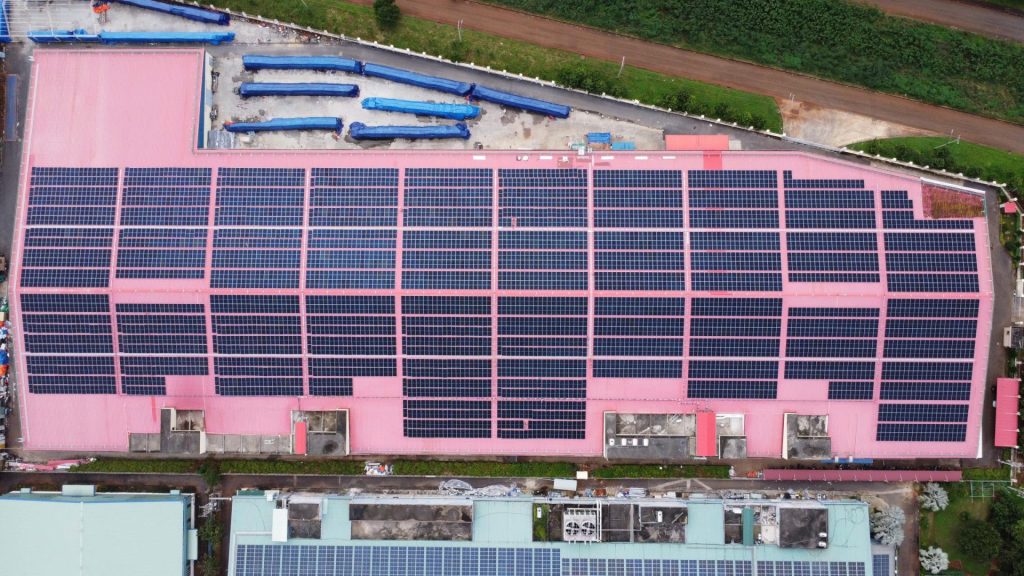
Rooftop solar PV has become a standard element of warehouse design across Southeast Asia, Australia, and the Middle East — driven by energy cost reduction, sustainability commitments, and ESG reporting requirements. A warehouse designed as solar-ready from the outset requires minimal additional capital; retrofitting solar to a structure not designed for it often requires costly structural reinforcement.
Structural provisions for solar-ready design:
- Additional roof dead load allowance of 15–25 kg/m² for panel weight (added to the purlin and primary frame design load combination).
- Wind uplift design check for panel arrays — the panel surface acts as a sail; array edge and corner panels experience significantly higher wind suction forces than the surrounding roof panels.
- Cable management penetrations designed into the roof panel at the fabrication stage — including EPDM-gasketed pipe collars at the point of penetration to maintain weather-tightness.
- Main switchboard and inverter room provision — sized in the original electrical design for the full solar array capacity.
PEB Steel Rooftop Solar Solutions: PEB Steel provides an integrated package covering structural engineering for solar loading, roof panel specification with pre-installed mounting rails, and coordination with the solar PV installer. This eliminates the most common solar-on-warehouse integration failures.
→ More about PEB Steel’s Rooftop solar solution ←
5. Regional Climate and Structural Loading: How Geography Shapes Warehouse Design
International warehouse design guides almost exclusively reference US or European conditions. For buyers in Southeast Asia, the Middle East, and the Asia-Pacific, regional climate loading governs structural design in ways that directly affect frame weight, specification, and cost:
| Region | Key Design Loading | Dominant Structural Concern | Specification Implication for Warehouse Design |
| Southeast Asia (Philippines, Vietnam coast) | Typhoon wind: up to 250–300 km/h design wind speed (ASCE 7 hurricane zones) | Wind uplift on roof; pressure on cladding | Heavy purlin/girt gauge; Z225 or Z300 purlins; increased anchor bolt size; consider metal cap sheet at eave |
| Southeast Asia (inland, low seismic) | Thermal expansion; monsoon rainfall intensity | Roof drainage; thermal movement at expansion joints | High-capacity gutters (min 150 mm box); expansion joints every 80–100 m; tropical roof profile slope ≥1.5° |
| Middle East / GCC | Extreme heat (45–50°C ambient); sand/dust; haboob wind events | Thermal loads; cladding seal failure; dust ingress | Insulated roof and wall panels even for ambient storage (heat control); positive-pressure ventilation; sealed cladding laps |
| Australia (cyclonic coast — QLD, WA) | Category 3–5 cyclone wind; AS/NZS 1170.2 Region D | Roof uplift; cladding failure | AS 4100 design; NCC compliance; cyclone-rated fasteners; heavy-gauge (0.42 mm+ BMT) cladding |
| New Zealand | Seismic zone 2–3; moderate wind (NZS 1170.5) | Seismic frame ductility; anchor bolt tension | Moment connection details for seismic; capacity design of anchor bolts; geotech required |
| Japan / Korea | High seismic (BCJ / KBC); heavy snow in north | Seismic frame design; snow load on roof | Moment frames; snow load per JIS A 6514; roof slope ≥3° for snow shedding |
6. Technology Integration in Warehouse Design
Technology decisions have significant implications for building and layout design. Systems selected at a late stage often cannot be accommodated without structural or layout modifications. The following technology integration considerations should be resolved during the design phase:
- Warehouse Management System (WMS): WMS drives the pick-zone and slotting strategy; this affects the location and sizing of the forward pick area relative to bulk storage. Label printer and scanner access point positions should be shown on the layout drawing.
- Conveyor systems: Conveyor routing must be coordinated with column positions and aisle traffic. Overhead conveyors require structural attachment points to the purlin system — these loads must be included in the structural design.
- AGV / AMR automation: Automated Guided Vehicles and Autonomous Mobile Robots require specific floor flatness (typically FM2 or FM1 per TR34 — minimum 5 mm deviation over 3 m). The concrete slab specification must include FM1 or FM2 tolerances in the structural brief.
- CCTV and access control: Camera and reader positions should be integrated into the building services design from the outset, with conduit cast into the slab for cable routing. Retrofitting conduit to an operational warehouse slab is disruptive and expensive.
- Charging infrastructure for electric forklifts: Battery-electric forklifts and AGVs require dedicated charging bays (1.5 m × 2.5 m per charger minimum), heavy power circuits (32A or 63A per charger), and ventilation provisions in the charging zone. This must be in the original electrical design.
7. Warehouse Design Cost Benchmarks by Type and Region
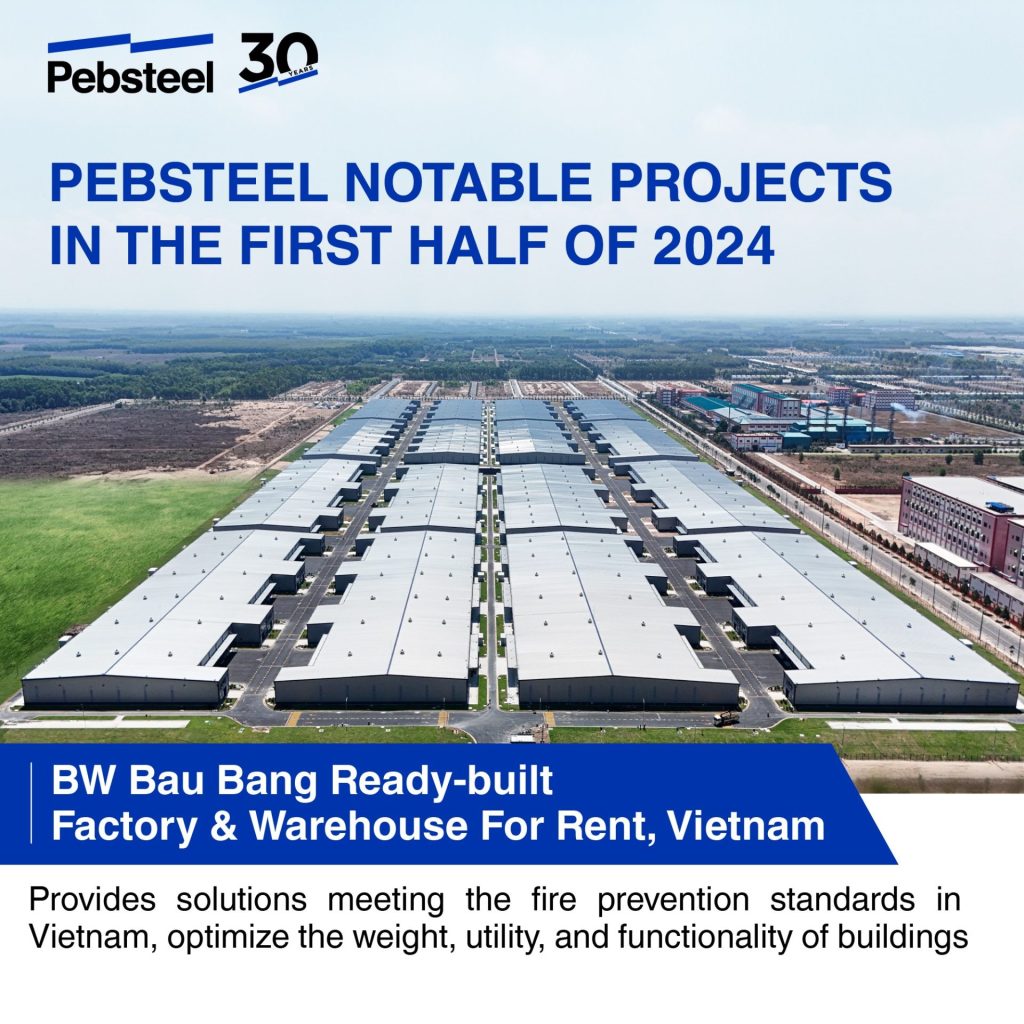
Cost data for warehouse design and construction is almost exclusively available for the US and European markets. The following benchmarks reflect PEB Steel’s project data across Southeast Asia, the Middle East, and Australia — markets where international buyers often have no reference point.
| Warehouse Type | SEA Market (USD/m², installed) | Middle East (USD/m², installed) | Australia/NZ (USD/m², installed) | Key Cost Driver |
| Standard ambient, 9 m clear height | 55–90 | 65–110 | 200–320 | Clear height and column count |
| High-bay, 12 m+ clear height | 80–130 | 95–150 | 280–420 | Heavy primary frame; reach truck infrastructure |
| Cold store / controlled atmosphere | 130–220 | 150–260 | 380–600 | Insulated panels (IMP); refrigeration plant; heated slab |
| Crane-equipped production hall (10T) | 90–150 | 110–170 | 280–450 | Crane runway beam; heavy columns; increased anchor bolts |
| Cross-dock / high-dock-density | 65–110 | 80–130 | 220–380 | Dock equipment; apron paving; structural dock sill |
| Solar-ready standard warehouse | 60–100 | 70–120 | 220–340 | Additional structural loading allowance; pre-wired cable routes |
Note: Costs are installed building (structure + cladding + foundation + dock equipment) excluding fit-out (racking, WMS, conveyors, HVAC). They exclude land, site preparation, and utility connections. Obtain project-specific quotes for accurate budgeting.
8. PEB Steel’s Warehouse Design Process: From Brief to Handover
PEB Steel provides a complete one-stop design-fabrication-erection service for pre-engineered steel warehouses. The process integrates structural building design and layout consultation — ensuring the two layers of warehouse design are resolved together rather than sequentially.
Stage 1: Briefing and Conceptual Design (Week 1–2)
PEB Steel’s engineering team receives the client’s operational brief: floor area, clear height requirement, number of docks, crane requirements (if any), operating environment, governing structural code, and target completion date. A preliminary structural concept is developed within one to two weeks, including building footprint, column grid, eave height, and dock arrangement. This concept is the basis for the structural proposal and initial cost estimate.
Stage 2: Detailed Structural Engineering (Week 3–6)
Once the concept is approved, the full structural design is produced using SAP2000 (primary frame analysis) and Tekla Structures (3D detailing). All designs comply with AISC 360 as default; EN 1993 or AS 4100 compliance is available on request. Drawings are submitted for client review and approval before fabrication commences.
Stage 3: Fabrication and Quality Assurance (Week 6–18)
Primary frames are fabricated at PEB Steel’s ISO 9001-certified facility in Vietnam. Welding is performed to qualified WPS/PQR procedures under AWS D1.1. NDT (magnetic particle or dye penetrant testing) is performed on all critical structural welds. Components are blast-cleaned and primed to the specified corrosion category before shipment.
Stage 4: Foundation and Slab (concurrent, client-managed or PEB Steel-coordinated)
PEB Steel provides anchor bolt templates, foundation reaction loads, and recommended slab thickness and reinforcement specifications for the client’s civil contractor. This phase typically proceeds concurrently with fabrication, eliminating sequential schedule delays.
Stage 5: Erection and Commissioning (Week 18–24 typical)
PEB Steel’s trained erection team or a client-appointed erector assembles the building to the approved erection drawings. Progressive quality checks, bolt torque verification, and caulking/sealant application are completed before handover. PEB Steel provides a structural warranty of 10 years and a cladding warranty of up to 25 years depending on specification.
9. Warehouse Design Checklist: 30 Items Before You Brief an Engineer
Use this checklist to ensure your design brief is complete before engaging a structural engineer or building supplier:
Site and Building Envelope
- Total gross floor area required (m²)
- Required clear height (m) — based on racking/equipment decision
- Building footprint shape preference (rectangular, L-shape, etc.)
- Site boundary setbacks and height restrictions
- Future expansion area available (yes/no, direction)
- Ground conditions (geotechnical investigation available?)
Loading Docks and Traffic
- Number of inbound dock doors required
- Number of outbound dock doors required
- Truck type: rigid vs articulated semi-trailer (affects apron depth)
- Dock height: standard 1.20 m or refrigerated (1.20 m with dock shelter)
- Dock levellers: mechanical or hydraulic?
- Ground-level access doors required (roller doors for forklifts)
Structural and Environmental
- Operating environment: ambient / chilled / frozen (temperature range)
- Corrosion category (C2–C5) — based on location relative to coast/industry
- Overhead crane requirement (SWL, span, lift height, duty class)
- Hazardous materials storage (type, quantity, separation requirements)
- Solar PV planned (now or future) — additional roof structural loading allowance needed
- Governing structural code (AISC / EN / AS / other)
Interior Layout
- Layout pattern: U-shape / I-shape / L-shape
- Racking type: selective pallet / drive-in / VNA / AS/RS
- Material handling equipment: counterbalance / reach truck / VNA / AGV
- Mezzanine level required? (area, purpose, live load)
- Office and welfare area size (m²)
- Minimum aisle width (determines equipment selection)
Technology and Services
- WMS provider selected — any floor slab or layout implications?
- Conveyor routing — structural attachment points needed?
- Electric forklift/AGV charging bays (quantity and power requirement)
- CCTV and access control conduit provisions
- Fire suppression system type (sprinkler, ESFR — affects clear height clearance below head)
- Lighting level requirement (lux) — affects purlin spacing for luminaire mounting
Frequently Asked Questions — Warehouse Design
What is warehouse design?
Warehouse design operates on two interconnected levels: structural building design (the physical building envelope — column grid, clear height, dock positions, expandability) and functional layout design (zoning, racking, aisle configuration, workflow). Poor structural design locks in operational inefficiencies permanently; optimising both simultaneously is the foundation of a high-performance warehouse.
What clear height should a warehouse be?
Clear height requirements depend on racking height and handling equipment. A 9–10 m clear height accommodates standard 5–6-level selective pallet racking. A 12 m clear height enables high-bay racking (up to 8 levels). For automated stacker cranes (AS/RS), clear heights of 14–30 m are typical. Each additional metre of clear height increases structural frame cost by approximately 2–4%, but the storage density return is often 8–12% per metre added.
What is the optimal column spacing for a warehouse?
The most operationally efficient column spacing aligns with standard pallet racking modules. A 12 m bay spacing accommodates two rows of back-to-back racking plus a 3.5 m forklift aisle with clear overhangs — eliminating wasted space against columns. A 6 m bay spacing forces aisle interruptions that reduce usable storage area by 8–15%. For large-format warehouses, PEB Steel recommends 12 m primary bay spacing as the standard for maximum operational efficiency.
What is the difference between U-shaped, I-shaped, and L-shaped warehouse layouts?
U-shaped: receiving and shipping docks on the same wall; ideal for limited-dock-frontage sites and high-SKU operations. I-shaped: receiving and shipping docks on opposite walls; ideal for high-throughput cross-dock or flow-through operations. L-shaped: receiving and shipping on adjacent perpendicular walls; useful for corner sites or when operational separation between inbound and outbound is required.
How do I future-proof a warehouse for expansion?
Pre-engineered steel buildings expand longitudinally by adding bays. Key provisions in the original design: removable flush-framed end wall (no load-bearing diagonal bracing); oversized electrical main board for future footprint; drainage routed for extended roof; anchor bolt templates for Phase 2 columns cast into the original slab. These provisions add negligible upfront cost and eliminate expensive retrofit work when expansion occurs.
How many loading docks does a warehouse need?
A commonly used ratio is one dock door per 1,000–1,500 m² for standard distribution. High-throughput e-commerce or cross-dock operations may require one per 500–700 m². Each dock needs a minimum 12 m truck apron (18 m for articulated semi-trailers), dock shelter, and dock leveller — all specified at the structural design stage.
What structural considerations apply to cold storage warehouse design?
Cold storage requires: insulated sandwich panels (PIR/PUR core, 100–200 mm); vapour control layer on the warm side; heated or suspended floor slab (sub-zero only); thermal break connections at all structural penetrations; freezer-grade roller doors and dock shelters. PEB Steel includes thermal break connections as standard for all cold store structural designs.
Can a warehouse be designed for rooftop solar PV?
Yes. Pre-engineered steel warehouse roofs are ideal for solar PV. Required provisions: additional 15–25 kg/m² dead load allowance; wind uplift design check for panel arrays; cable penetration details in the roof cladding; main switchboard and inverter room in the original electrical design. PEB Steel offers an integrated Rooftop Solar Solutions package covering structural engineering and panel mounting coordination.
Disclamer: The content provided in this article is for reference purposes only. For further details or clarification based on your needs, please contact Pebsteel directly.
READY TO DESIGN YOUR WAREHOUSE?
Get a free structural concept and preliminary cost estimate from PEB Steel’s warehouse engineering team.
Share your brief: floor area, clear height, number of docks, and location — we respond within 48 hours.
→ Request Your Free Warehouse Design Consultation ←
31+ years | 6,000+ projects | 50+ countries | 100+ in-house structural engineers
AISC 360 design standard | ISO 9001 fabrication | AWS D1.1 welding | 10-year structural warranty