
Unprotected structural steel can lose measurable thickness within a single year in an aggressive industrial or coastal environment — and once corrosion starts on a primary frame member, the fix is never cosmetic. The question buyers actually need answered isn’t “what is ISO 12944” — it’s “which coating system does my building need for its actual environment, and what happens if I under-spec it.” This guide answers that directly: it separates the two coating decisions every PEB project involves (primary structural steel vs. secondary cladding), maps them to real environmental categories, and gives you the lifecycle cost logic to avoid paying twice — once for a coating that fails early, and again for the recoating or replacement.
(For the full building specification process, see our Metal Building Buyer’s Guide. This guide goes deeper specifically on corrosion protection selection.)
1. Two Separate Coating Decisions, Not One
Most buyers treat “corrosion protection” as a single spec line. In practice, a pre-engineered steel building has two structurally and functionally different elements that each need their own coating decision:
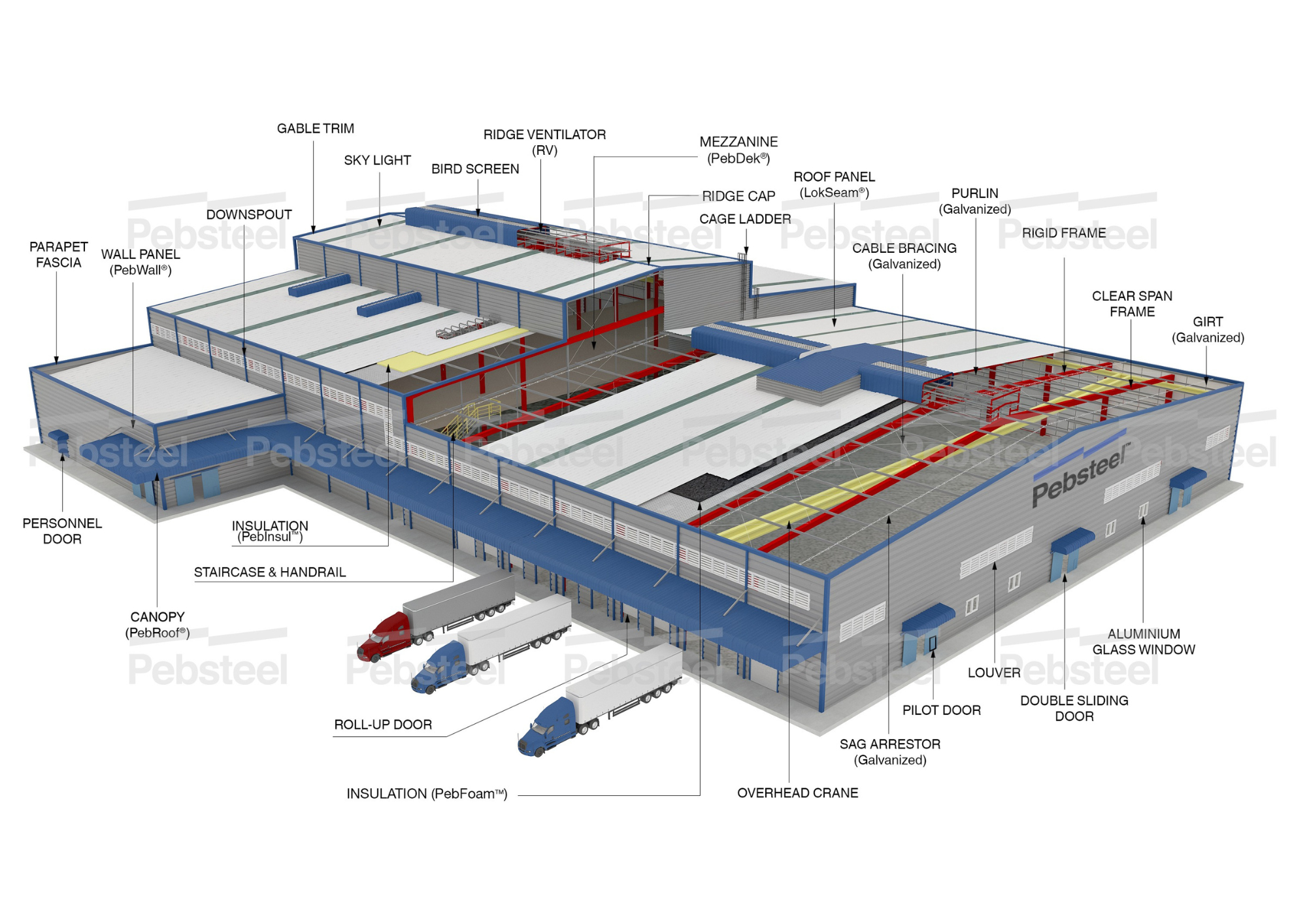
- Primary structural steel — columns, rafters, and frame members, typically hidden within the building envelope, exposed to the internal microclimate rather than direct weather
- Secondary/cladding steel — roof sheeting, wall panels, purlins, and girts, directly exposed to rain, UV, and external atmospheric conditions
These require different protection strategies, and pricing them as one line item is one of the most common reasons a coating system underperforms in the field. Specify each separately.
2. ISO 12944 in Practice: What the Categories Actually Mean for Your Building
ISO 12944 classifies environments by corrosivity, from C1 (very low, heated interior spaces) through C5 (very high, aggressive industrial or marine atmospheres), with a CX category above that for extreme offshore or chemical-exposure conditions. It also defines durability ranges for how long a coating system is expected to perform before needing maintenance — broadly grouped as low, medium, high, and very-high durability.
The practical takeaway most guides skip: the corrosivity category should be determined by your specific site conditions, not assumed by building type. A warehouse 5 km inland and a warehouse on a port frontage are not the same corrosivity category even if the building design is otherwise identical — and specifying the wrong one is either an expensive over-spec or a coating that fails years before the structure does.
| Environment type | Typical ISO 12944 category | Common in |
|---|---|---|
| Dry, heated interior spaces | C1–C2 | Climate-controlled facilities, office areas within industrial buildings |
| Inland industrial estates, moderate humidity | C3 | Most inland manufacturing zones across Southeast Asia |
| Coastal industrial areas, high humidity, chemical exposure | C4–C5 | Port-adjacent facilities, shipyards, coastal Middle East sites |
| High-salinity marine exposure, extreme humidity or chemical atmospheres | C5–CX | Offshore-adjacent structures, heavy marine industrial zones |
Buyers frequently underestimate their category because they assess the region generally rather than the specific site — a factory 500 m from a port frontage in a humid tropical climate is a materially different corrosivity environment than the same building type further inland, even within the same country.
3. Structural Steel Protection Systems: Comparison
For primary frame members, the main protection strategies are:
| System | Description | Typical film thickness | Best suited for | Considerations |
|---|---|---|---|---|
| Shop primer only | Single coat, primarily rust-inhibiting during transport/erection | ~25–40 µm | Interior, low-corrosivity (C1–C2) environments only | Not a long-term protective system on its own |
| Multi-coat paint system (zinc-rich primer + epoxy intermediate + polyurethane topcoat) | Layered system providing barrier and sacrificial protection | Commonly 200–320 µm total (system-dependent) | C3–C5 environments where painted finish and colour are required | Requires proper surface preparation (typically Sa 2½ blast cleaning) to perform as specified |
| Hot-dip galvanizing | Steel immersed in molten zinc, forming a metallurgically bonded zinc coating | Minimum ~85 µm for steel over 6 mm thick (per EN ISO 1461) | Hidden or inaccessible steelwork, high-durability requirements | Excellent mechanical durability; less commonly painted unless aesthetics require it |
| Duplex system (galvanizing + paint topcoat) | Galvanizing as base protection with a compatible paint topcoat | Combined | Highest-durability requirements, aggressive environments (C4–C5+) | Highest upfront cost but generally the longest maintenance-free life |
Why surface preparation matters as much as the coating itself. A correctly specified coating applied over inadequately prepared steel will underperform regardless of film thickness. Surface cleanliness is typically graded against ISO 8501-1 rust grades, with abrasive blast cleaning to Sa 2½ standard for high-performance systems. This is a specification detail worth confirming explicitly with your supplier — it rarely appears on the quote line but materially affects real-world coating life.
4. Secondary Cladding Protection Systems: Comparison
Roof and wall cladding sheet is directly weather-exposed and uses a different coating logic than structural steel — typically a metallic coated substrate (zinc or zinc-aluminium alloy) plus an organic paint finish:
| System | Typical coating weight | Paint finish options | Best suited for |
| Standard galvanized (Z-coated) sheet | ~120–180 g/m² zinc | Basic polyester or none | Low-corrosivity inland environments, budget-driven projects |
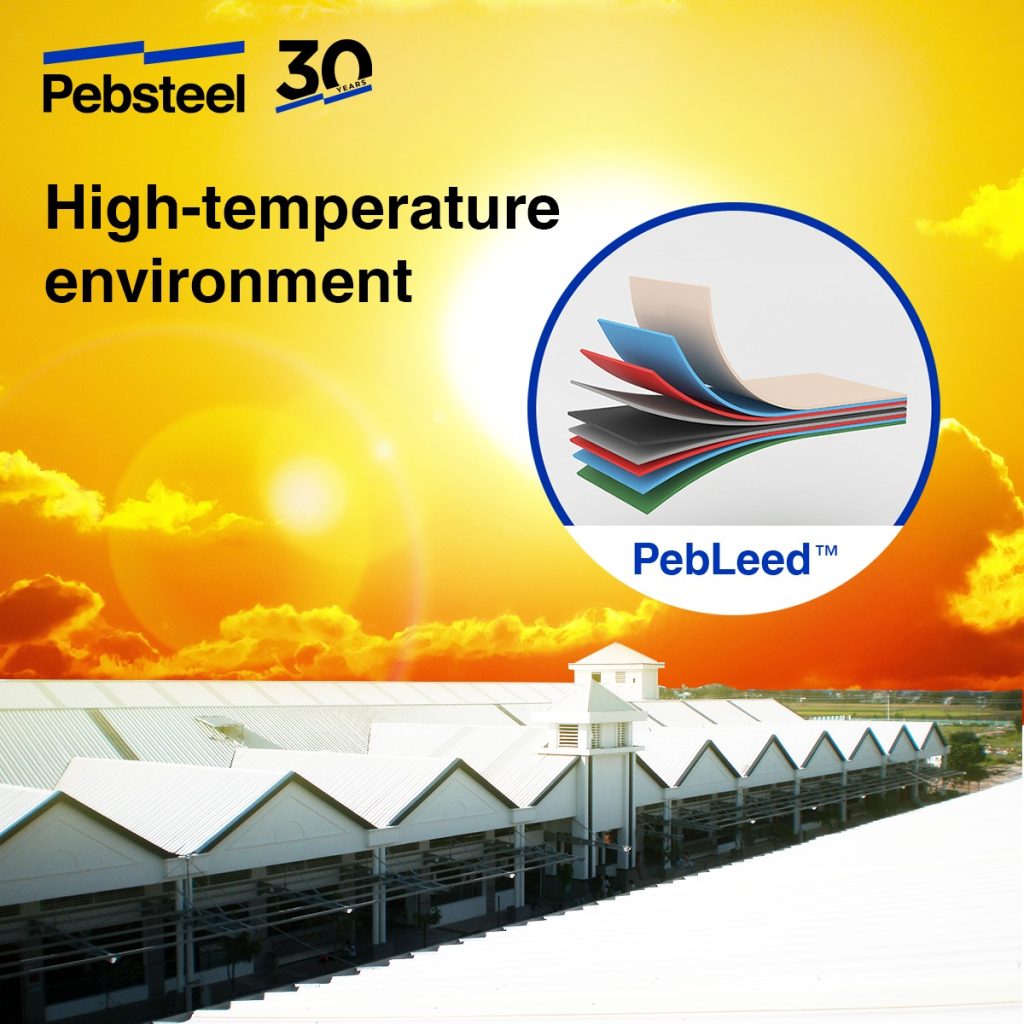
| Zinc-aluminium alloy coated sheet (e.g., Pebsteel’s Hyper180® system, AZ180 zinc-aluminium alloy coating) | ~150–185 g/m² zinc-aluminium alloy | PVDF colour coat | Moderate to high corrosivity environments (C3–C5), where longer service life and colour retention matter |
| Heavy-duty coastal-grade systems | Higher coating weight, specified per project | High-performance PVDF or fluoropolymer finish | Coastal, high-humidity, or chemically aggressive environments |
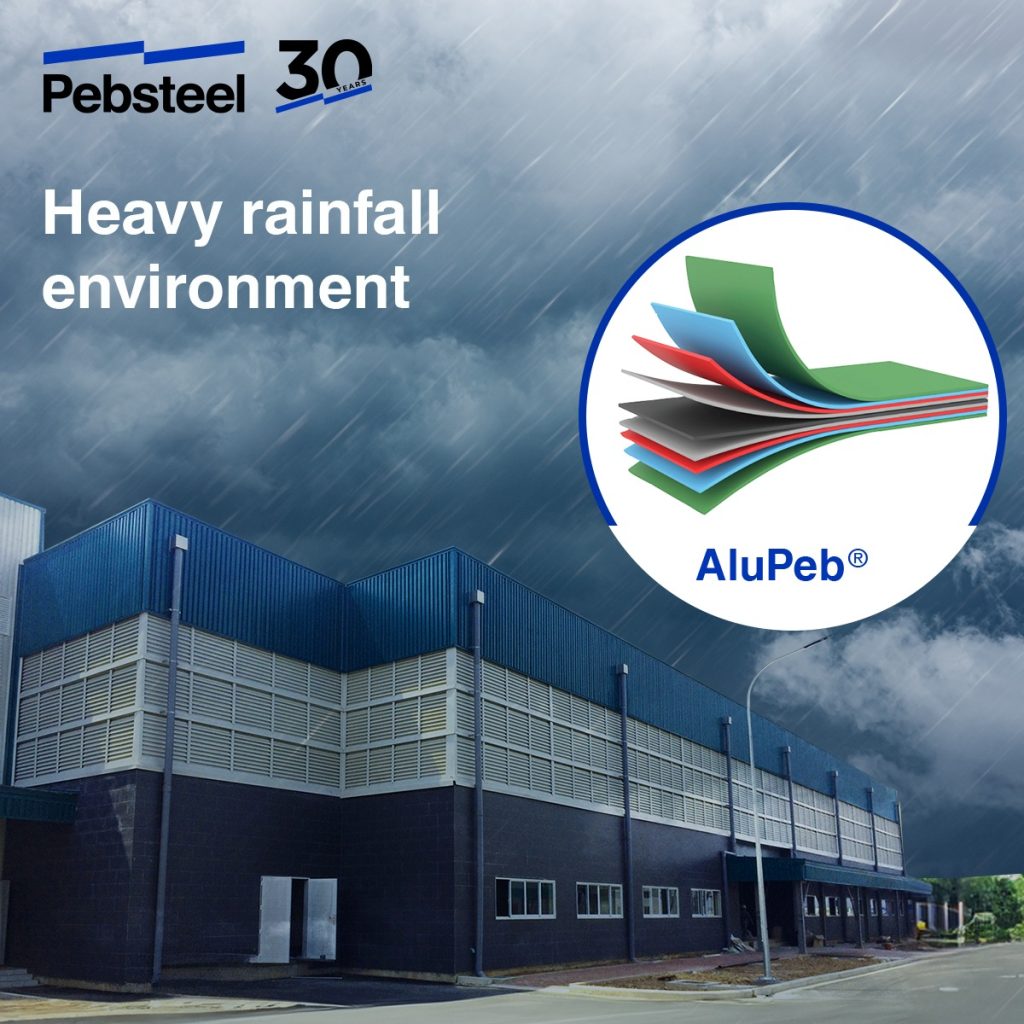
| Al-Zn-Mg alloy coated sheet (e.g., Pebsteel’s UltraAluPeb®) | Al-Zn-Mg coating, 150 g/m² on both sides | Super polyester colour coat | Environments that need higher corrosion resistance: fertilizer plants, feed mills, chicken and cow sheds, chemical plants and projects near the sea |
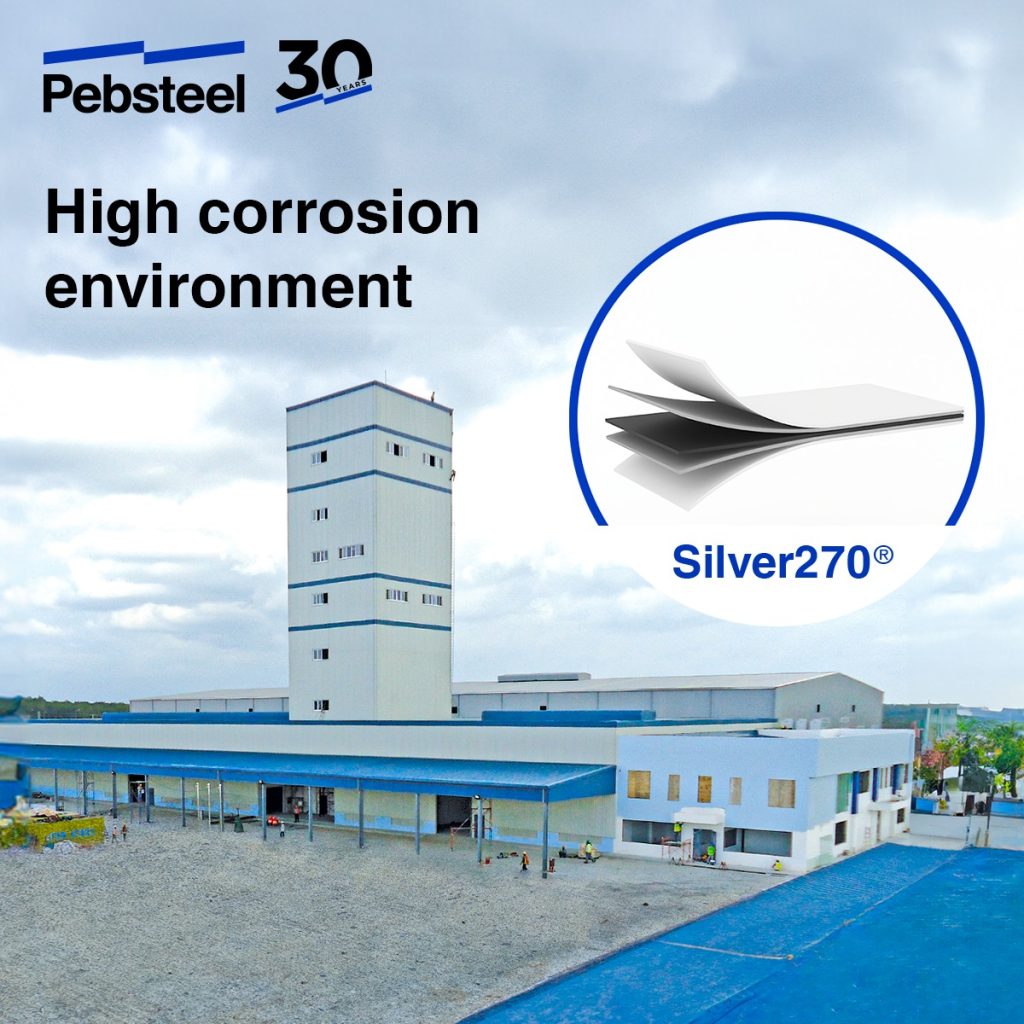
| Zn-Al-Mg coated purlins and girts (e.g., Pebsteel’s Silver270®) | Zn-Al-Mg coating, 270 g/m² on both sides | Unpainted (chemical-treated surface) | Purlins and girts in aggressive environments: facilities near areas of salt damage, chemical products, agriculture and compost plants, multi-storey parking garages and production halls |
Paint finish quality matters as much as the metallic coating underneath it. SMP (Silicone Modified Polyester) finishes are common and cost-effective for moderate environments, while PVDF (Polyvinylidene Fluoride) finishes offer significantly better colour and chalk retention under UV exposure — a meaningful factor for buildings in high-UV tropical and desert climates across Pebsteel’s core markets.
5. The Lifecycle Cost Question Nobody Puts on the Quote
The cheapest coating system on a quote is rarely the cheapest system over the building’s life — and this is the single biggest blind spot in corrosion-protection procurement. Consider the two variables buyers should weigh against upfront cost:
- Accessibility for recoating. Hidden structural steel within the building envelope is expensive and disruptive to recoat once the building is operational — production may need to pause, scaffolding erected internally, and the facility taken partially offline. A higher-durability system specified at construction is frequently cheaper than a lower-cost system that requires recoating access mid-life.
- Recoating vs. replacement risk. Underspecified cladding in a high-corrosivity environment doesn’t always get “recoated” — in many cases it needs to be replaced outright once perforation or significant coating failure occurs, which is a materially larger cost than a maintenance recoat.
When comparing quotes with different coating specifications, don’t just compare the price difference on the coating line — model what each system implies for maintenance access, expected recoating interval, and replacement risk over a 15–25 year horizon. This is exactly the kind of comparison gap covered in our guide to comparing PEB quotes.
6. Maintenance & Inspection Planning
Even a correctly specified coating system benefits from a planned inspection schedule:
- Visual inspection of accessible structural steel and cladding at regular intervals (commonly annual, or after significant weather events) to catch mechanical damage, coating breakdown, or early corrosion before it spreads.
- Prompt repair of coating damage from mechanical impact, welding during later modifications, or fastener corrosion — small areas of exposed steel corrode disproportionately faster than the surrounding protected area.
- Warranty terms for both structural coating and cladding finish should be confirmed at procurement — these vary meaningfully between suppliers and coating systems, and should be requested in writing rather than assumed.
7. Corrosion Specification Checklist for Your RFQ
- Site-specific corrosivity category (not just regional generalization) for both structural steel and cladding
- Structural steel coating system specified separately from cladding coating system
- Film thickness (µm) or coating weight (g/m²) stated explicitly, not just “standard” or “premium”
- Paint finish type for cladding (SMP, PVDF, or equivalent) matched to UV exposure and colour retention requirements
- Surface preparation standard specified (e.g., Sa 2½ blast cleaning) for painted systems
- Warranty terms for structural coating and cladding finish requested in writing
- Recoating accessibility considered at design stage for hidden/inaccessible structural steel
Why Pebsteel’s Coating Specifications Are Built for Export Markets
Corrosion protection isn’t a generic spec at Pebsteel — it’s engineered against the specific environmental exposure of each project site across Southeast Asia, the Middle East, and Australia/New Zealand, where humidity, industrial pollutants, and coastal proximity vary significantly within the same country. **Pebsteel’s Hyper180®** cladding system combines a 180 g/m² zinc-aluminium alloy coating (AZ180) with a PVDF colour coat, designed for severe corrosion environments (salt, alkaline, fertilizer, chemical) with no colour change for 20 years, and Pebsteel shot-blasts every job, applies epoxy paint and checks dry film thickness in-house before shipment.
Frequently Asked Questions
Q1: Do I need the same coating system for my structural steel and my roof/wall cladding? No. Structural steel is typically hidden within the building envelope and protected against the internal microclimate, while cladding is directly weather-exposed and needs its own metallic coating and paint finish. These should be specified as two separate decisions, not one combined line item.
Q2: How do I know what ISO 12944 corrosivity category applies to my project? Base it on your specific site conditions — proximity to coastline, industrial pollutant exposure, and humidity — rather than a general regional assumption. Two sites in the same city can fall into different categories depending on distance from the coast or a chemical-processing facility.
Q3: Is hot-dip galvanizing better than a painted coating system? It depends on the application. Galvanizing offers excellent mechanical durability and is well suited to hidden or hard-to-access steelwork, while multi-coat paint systems offer more finish and colour flexibility and can be specified to match a wide range of corrosivity categories. A duplex system (galvanizing plus a paint topcoat) combines both for the highest-durability requirements.
Q4: What’s the difference between standard galvanized cladding and a zinc-aluminium alloy system like Hyper180®? Standard galvanized (zinc-coated) sheet offers solid protection for lower-corrosivity environments, while zinc-aluminium alloy coatings generally provide improved corrosion resistance and are commonly paired with higher-performance paint finishes such as PVDF for better colour and chalk retention — an important factor in high-UV tropical and desert climates.
Q5: Why does surface preparation matter if I’m already paying for a premium coating? A coating system applied over inadequately prepared steel — with rust, mill scale, or contamination still present — will underperform regardless of the film thickness specified. Confirm the surface preparation standard (commonly Sa 2½ blast cleaning) as part of the coating specification, not as a separate assumption.
Q6: Should I choose the lowest-cost coating system to reduce upfront project cost? Not without considering lifecycle cost. A lower-cost system in a higher-corrosivity environment often requires earlier recoating or cladding replacement — both of which are typically more expensive and disruptive than specifying appropriate protection at construction, particularly for structural steel that’s hard to access once the building is operational.
Q7: How often should a coated steel building be inspected for corrosion? Annual visual inspection of accessible structural steel and cladding is a common baseline, with additional inspection after significant weather events. Prompt repair of any coating damage — from mechanical impact, later modifications, or fastener corrosion — prevents small areas of exposed steel from corroding disproportionately faster than the surrounding protected surface.
Not sure which coating system fits your project’s environment?
Pebsteel’s engineering team can help you choose structural and cladding coating systems for your project site. Send your requirements through the contact form or email marketing@pebsteel.com.vn, and we’ll recommend a coating specification matched to your environment and budget.
Disclaimer: The content provided in this article is for reference purposes only. For further details or clarification based on your needs, please contact Pebsteel directly.