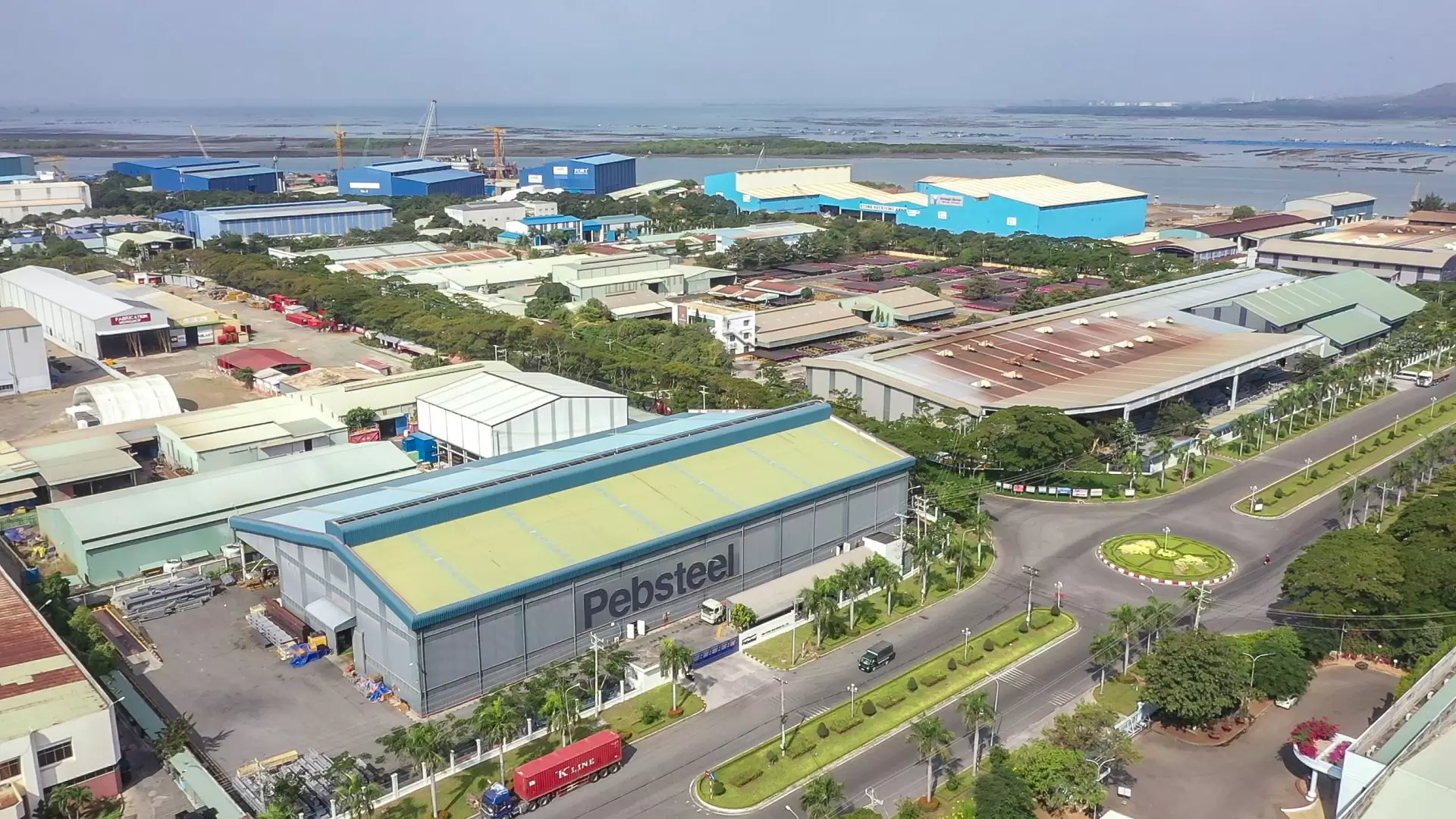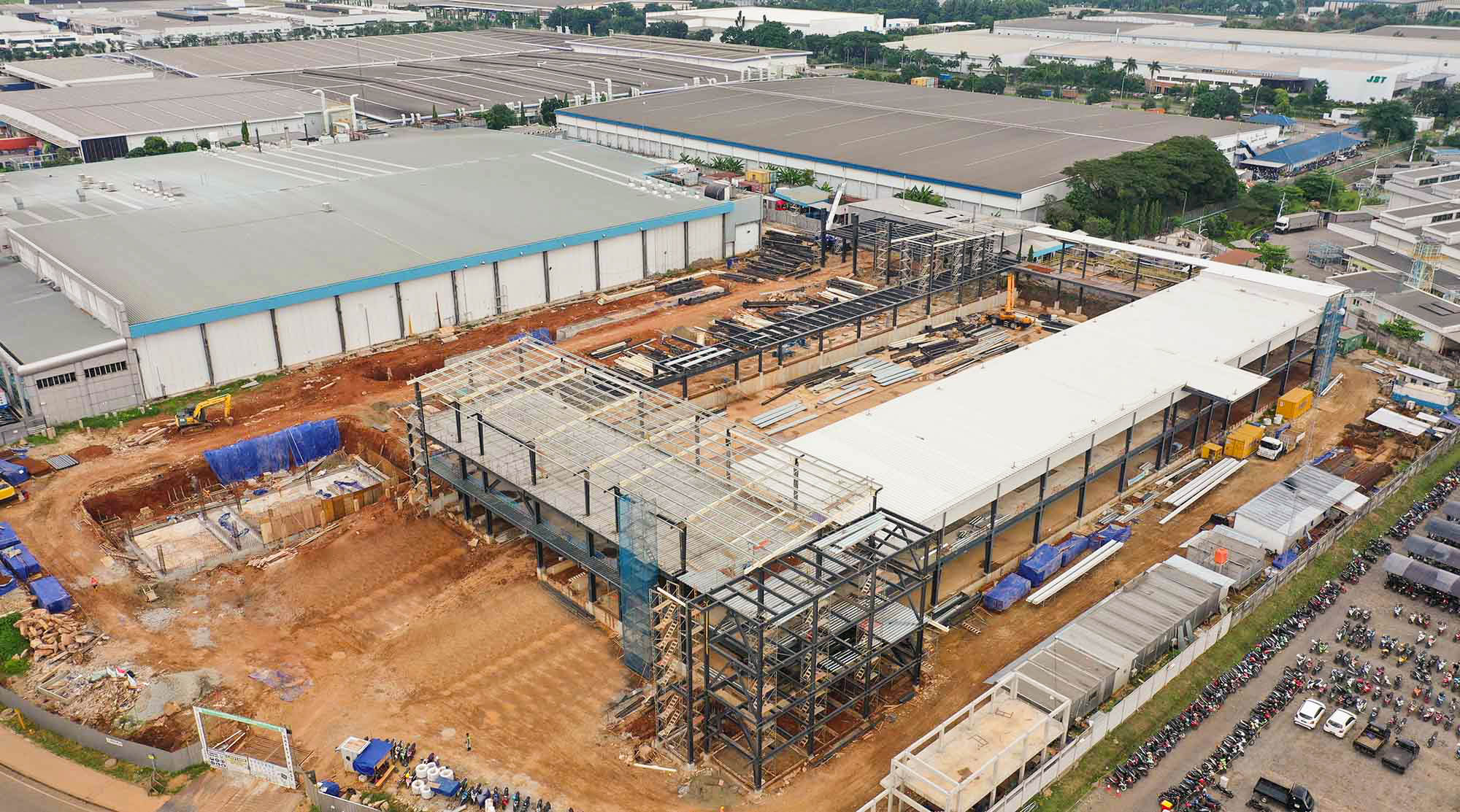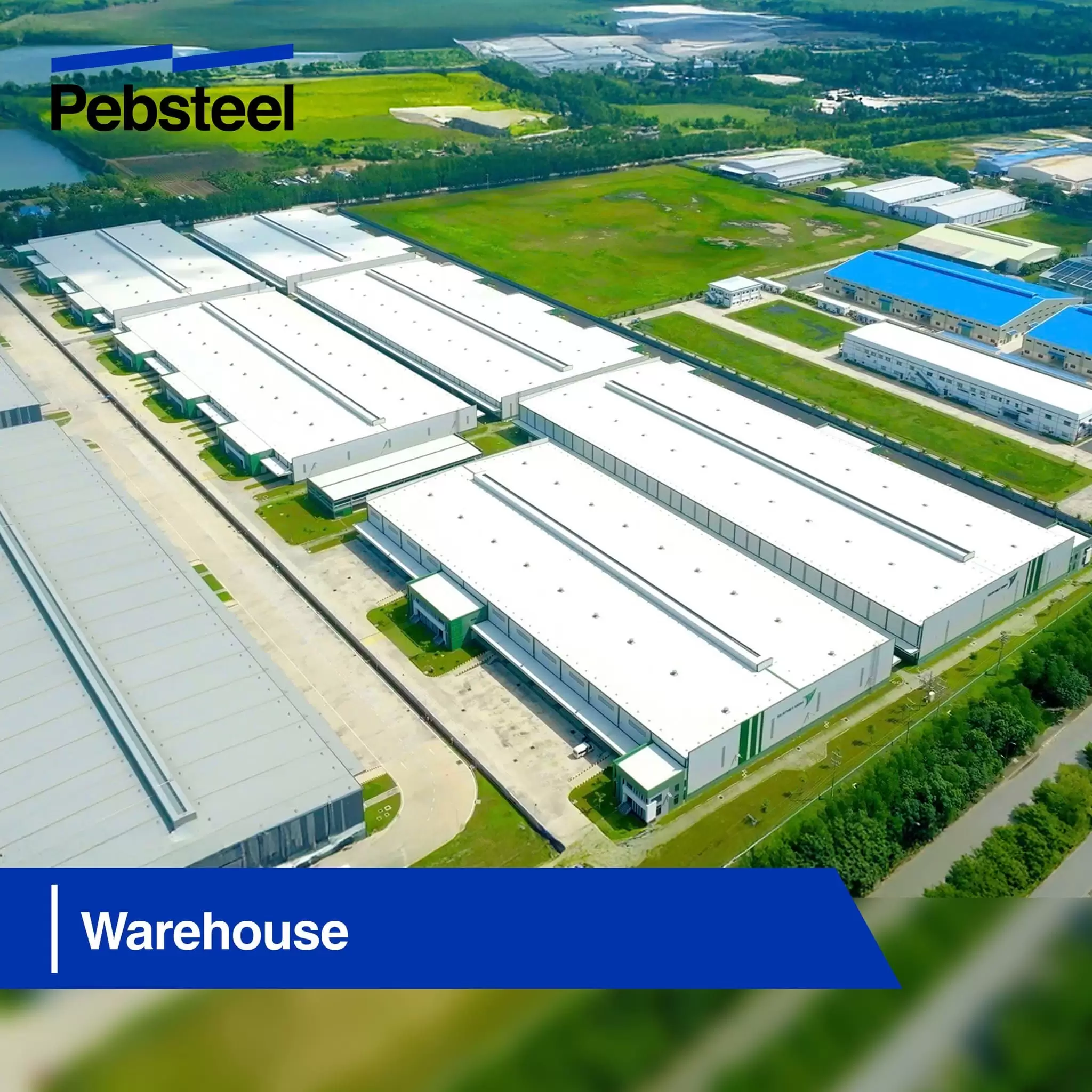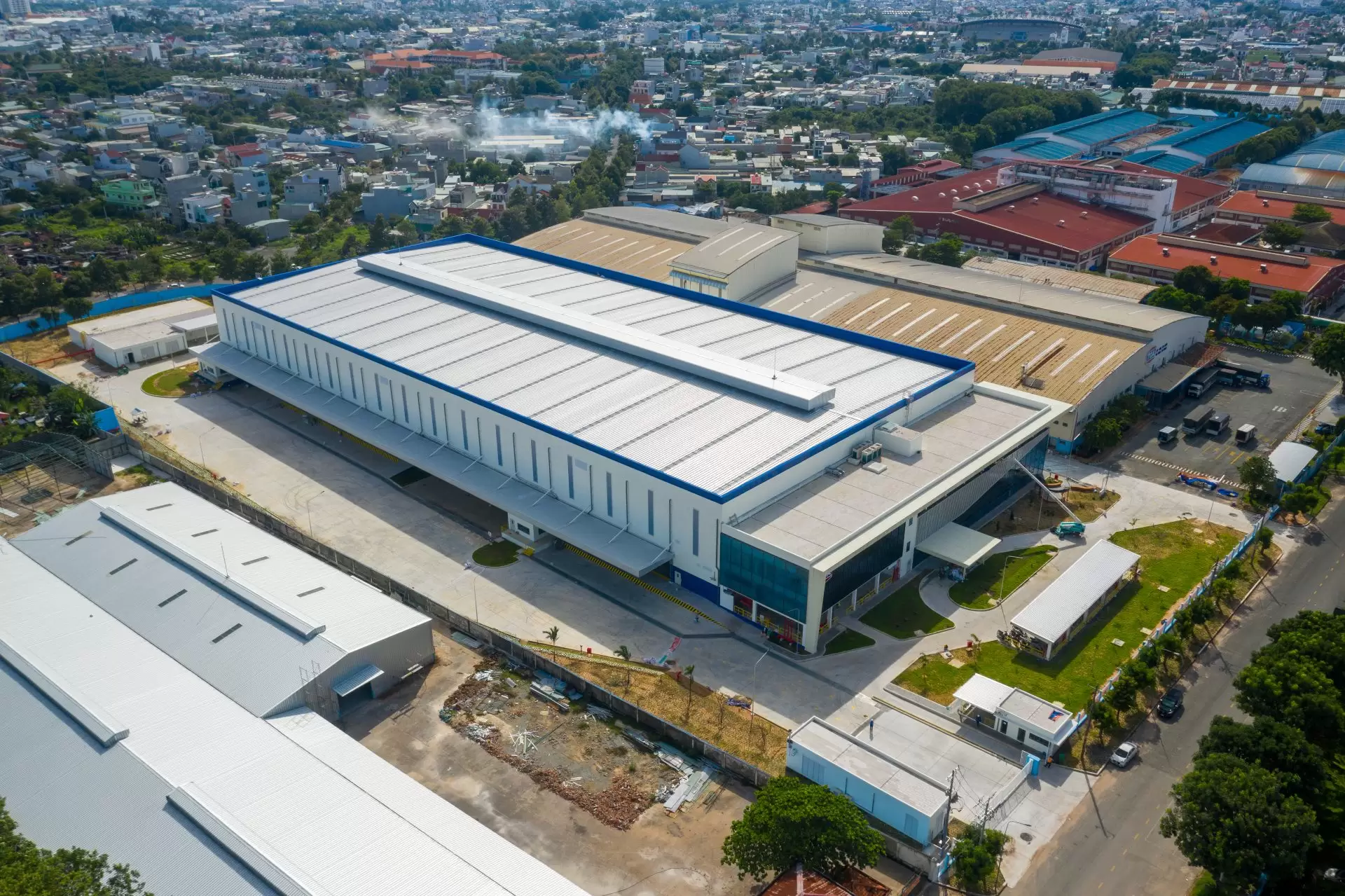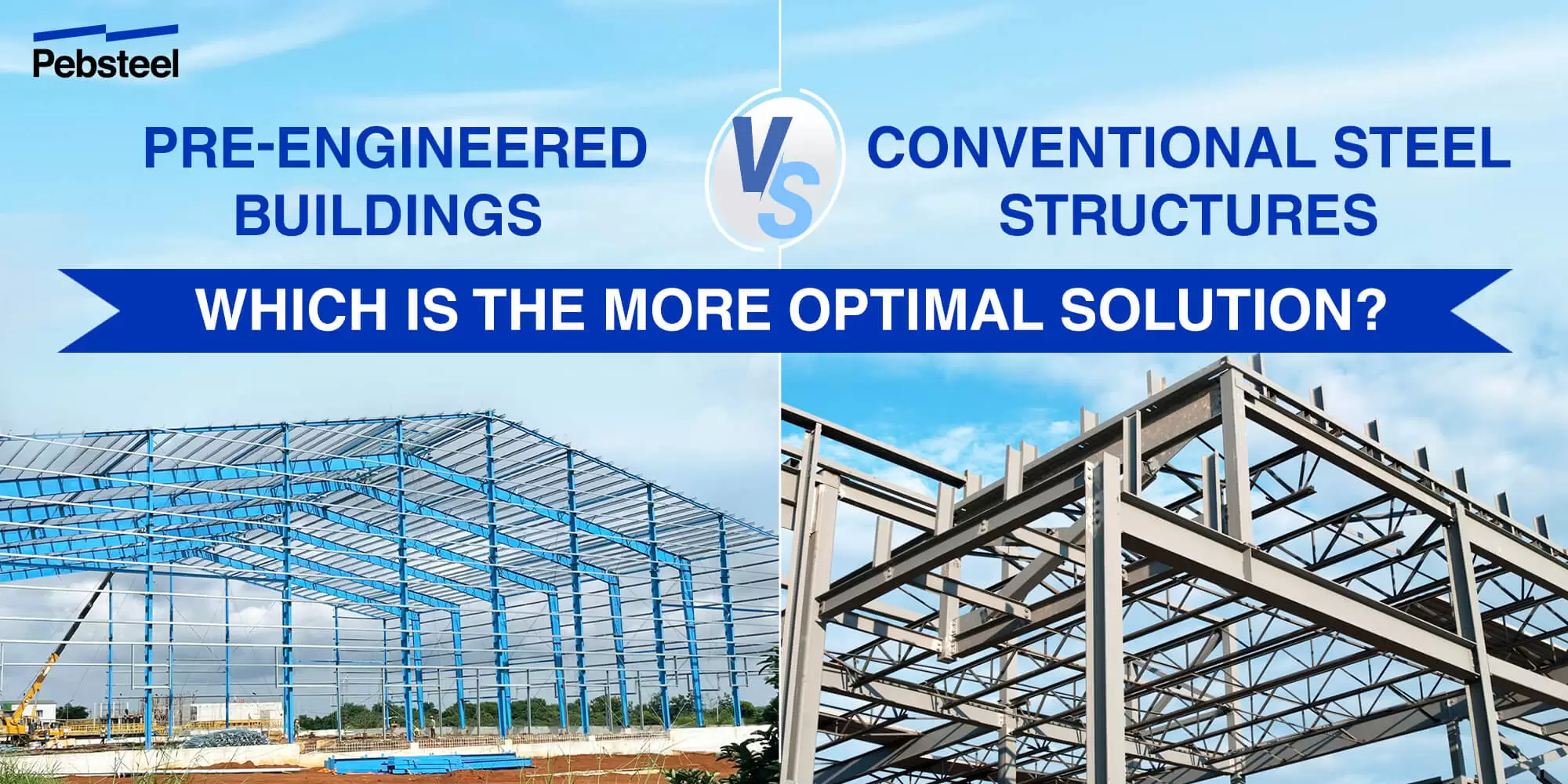

A prefab building is any structure whose primary components — frames, columns, wall panels, roof systems — are engineered and manufactured off-site in a controlled factory environment, then delivered to the job site as a precision kit for rapid assembly. For industrial and commercial projects, the dominant form is the pre-engineered steel building (PEB), which can be erected 30–50% faster than conventional construction and typically costs 20–30% less per square metre. This guide covers everything a project owner or EPC contractor needs to make an informed decision: types, cost drivers, structural specifications, international standards, and a 7-step procurement checklist.
1. What Are Prefab Buildings? Definition & Key Terminology
A prefabricated building — shortened to prefab building — is a structure assembled from factory-made components or modules that are transported to the construction site and erected. The term spans a wide spectrum, from flat-pack residential sheds to fully engineered industrial halls spanning 180 metres without a single interior column.
Three terms appear interchangeably and cause confusion among buyers:
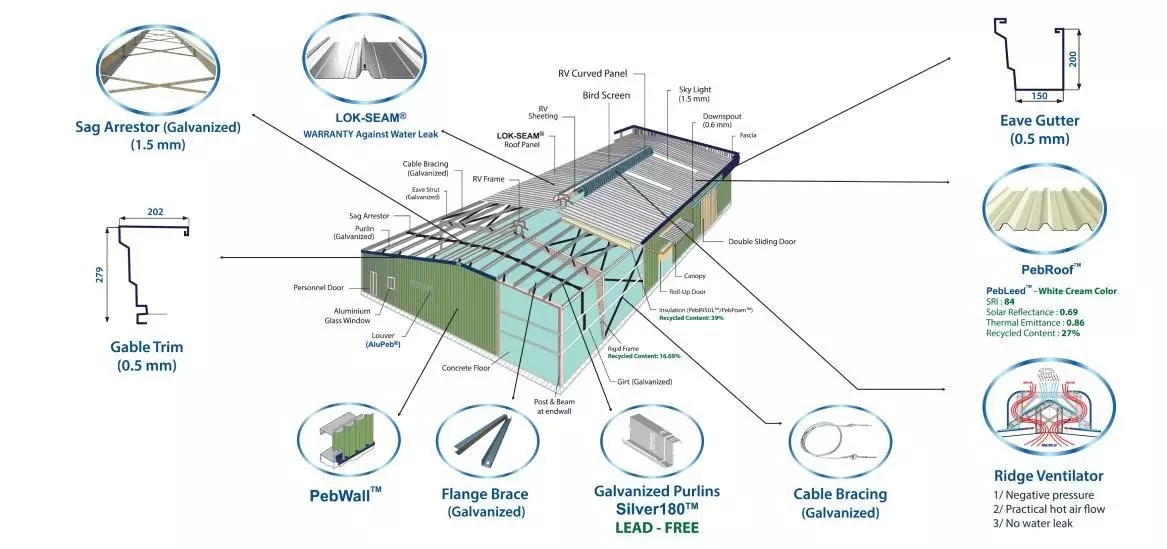
- Prefab building — Broad umbrella term covering all off-site manufactured structures.
- Pre-engineered building (PEB) — A steel structural system where every component (primary frame, secondary members, cladding) is computer-engineered for a specific load case, then factory-fabricated. The standard for industrial, commercial, and large-span applications.
- Modular building — Structures built in volumetric box units (‘modules’) that arrive near-complete. More common in healthcare, education, and temporary facilities.
Pebsteel specialises in pre-engineered steel buildings — the highest-specification class within the prefab category, engineered to AISC, IBC, ASCE and AS/NZS 1170 standards.
2. Prefab Buildings vs. Conventional Construction: Side-by-Side Comparison
Before exploring types and costs, here is the headline comparison most project owners need:
| Factor | Prefab Steel Building (PEB) | Conventional Concrete / Steel |
| Construction time | 3–6 months (design to handover) | 9–18 months |
| Cost per m² | Typically 20–30% lower | Higher |
| Design flexibility | High — custom spans, heights, loads | Moderate — limited span without columns |
| Quality control | Factory-controlled precision | Variable — weather/site dependent |
| Expandability | Modular — bays added at low cost | Expensive and disruptive |
| Foundation load | 30–40% lighter — saves foundation cost | Heavy — full foundation engineering required |
| Material waste | < 5% (factory offcuts recycled) | 15–25% typical site waste |
| Recycled content | Up to 93% recycled steel possible | Typically 0–10% (concrete) |
| Re-use / relocation | Structure is fully disassemblable | Not practical |
3. Five Main Types of Prefab Buildings
Not all prefab buildings are the same. The table below maps each type to its best-fit application, spanning capability, and typical buyer profile.
| Type | Max Clear Span | Structural Material | Best For | Limitations |
| Pre-Engineered Steel Building (PEB) | Up to 180 m | Built-up ‘I’ steel, cold-formed secondary | Factories, warehouses, hangars, commercial — any large-span industrial structure | Requires engineered foundation; not suited for multi-storey residential |
| Modular / Volumetric | ~15 m per module | Steel or concrete frame box units | Offices, schools, hospitals, temporary camps, accommodation | High per-m² cost, complex logistics for large spans |
| Panelised | 6–20 m | Timber, SIP, light gauge steel | Residential, low-rise commercial, fast housing | Not suited for heavy industrial loads or large spans |
| Container / Hybrid | 6–24 m stacked | Repurposed ISO containers | Site offices, remote camps, retail kiosks | Limited customisation, corrosion risk in humid climates |
| Structural Steel Frame + Cladding | 30–100 m+ | Hot-rolled steel, composite systems | High-rise buildings, bridges, complex industrial plants | Higher cost than PEB; requires on-site welding and longer assembly |
MARKET FACT: For large-scale industrial projects — warehouses, factories, logistics centres, and aircraft hangars — Pre-Engineered Steel Buildings (PEBs) offer the best combination of span, speed, cost, and reliability. They represent over 60% of all new industrial building construction in Asia-Pacific.
4. How Pre-Engineered Steel Buildings (PEBs) Work
Understanding the anatomy of a PEB helps buyers specify correctly and avoid costly mid-project change orders.
4.1 Primary Structural Framing
- Rigid frames formed from tapered built-up ‘I’ sections (columns and rafters)
- The taper optimises steel weight distribution to actual load demand — typically 30% lighter than standard rolled sections
- Available in single-span, multi-span, and crane-supporting configurations
- Pebsteel‘s proprietary tapered built-up beam reduces steel tonnage without sacrificing structural performance
4.2 Secondary Structural Members
- Cold-formed ‘Z’ and ‘C’ purlin sections for roofs and wall girts
- Eave struts, ridge elements, and base angles factory-punched for exact bolt patterns
- Secondary members carry cladding loads and brace the primary frame
4.3 Cladding & Roofing Systems
- Roll-formed steel sheeting in a range of profiles and finishes (Colorbond, Galvalume, Aluzinc)
- Single-skin, double-skin, and insulated sandwich panel options
- PebWall® roll-formed wall panels, with PebFoam™ or PebInsul™ insulation for thermal performance
4.4 Optional Structural Sub-Systems
- Mezzanine floors, craneways, walkways, catwalks
- Crane runway beams up to 300-tonne EOT capacity for heavy-industrial applications)
- Solar-ready rooftop frameworks (Pebsteel‘s rooftop solar solutions)
A complete PEB kit arrives at site with every component cut, punched, drilled, and labelled. Site work is assembly only — no cutting, welding, or fabrication required on location, dramatically reducing skilled-labour requirements.
5. Prefab Building Cost: What Drives the Price
The cost of a prefab steel building depends on the project rather than on a standard rate per square metre. The main cost drivers are:
- Clear span width (wider bays require heavier primary frames — the most significant cost lever);
- Building height (column height drives frame weight and wind bracing requirements);
- Roof load (crane rails, rooftop solar, green roofs or heavy snow loads increase steel tonnage);
- Cladding specification (single-skin versus insulated sandwich panels is a significant cladding cost difference);
- Location and logistics (freight to remote or island locations adds to supply-only cost);
- Scope (supply-only means the fabricated steel kit, FOB Vietnam; turnkey means full design, supply and erection). Steel tariffs, site conditions, foundation costs and M&E fit-out are additional variables.
For a project-specific cost estimate, send your requirements through the contact form.
6. Structural Specifications & International Standards
One critical differentiator between prefab building suppliers is the structural standard to which they design. Buyers in international markets — particularly government and institutional clients — must confirm compliance:
| Standard | Region / Application | Key Scope |
| AISC 360 / AISC 341 | USA / International | Steel construction design, connection design, seismic provisions |
| Eurocode 3 (EN 1993) | EU / Middle East / Vietnam | Structural steel design; EN 1990 for load combinations |
| AS/NZS 1170, AS 4100 | Australia / New Zealand | Structural actions, wind loads, steel structures — mandatory for AU/NZ projects |
| TCVN 5575:2012 | Vietnam | Steel structure design standard — the national standard for Vietnamese projects |
| SNI 1729:2020 | Indonesia | Steel structure standard, aligned with AISC |
| ASCE 7-22 | USA / Philippines / International | Minimum design loads including wind, seismic, and live loads |
| MBMA Low-Rise Building Systems Manual | Industry-wide PEB standard | Design criteria specific to metal building systems; accepted globally as PEB benchmark |
| AWS D1.1 / AWS D1.3 | Welding — International | Structural welding quality standards for fabrication |
Pebsteel ADVANTAGE: Pebsteel’s engineering team designs to AISC, IBC, ASCE and AS/NZS 1170 in-house, with welding to AWS and fabrication and erection tolerances to MBMA — eliminating the cost and delay of third-party standard re-calculations when supplying to different markets.
7. Eight Industrial Applications Where Prefab Outperforms Conventional
7.1 Manufacturing & Industrial Factories
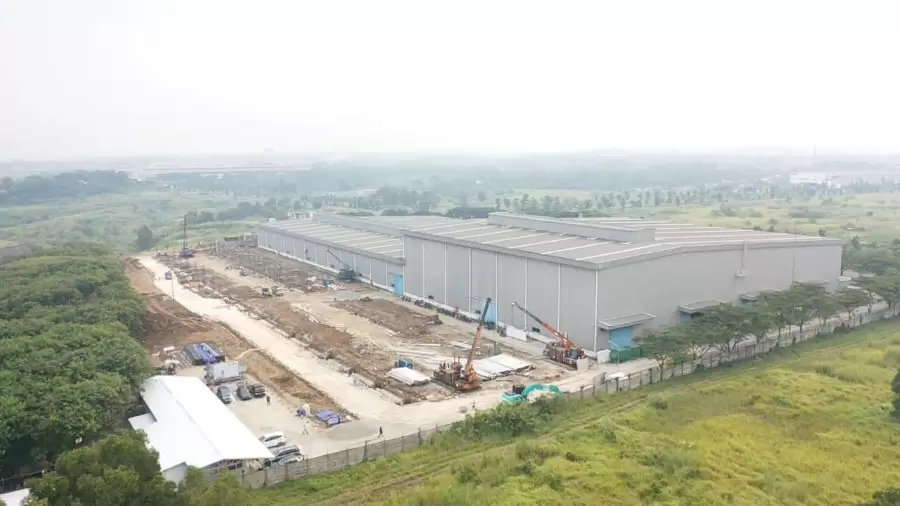
PEB clear-span frames eliminate internal columns, enabling flexible production line layouts. Crane runway beams can be integrated into the primary frame from the outset, accommodating overhead cranes up to 300 MT capacity.
7.2 Logistics & Distribution Centres
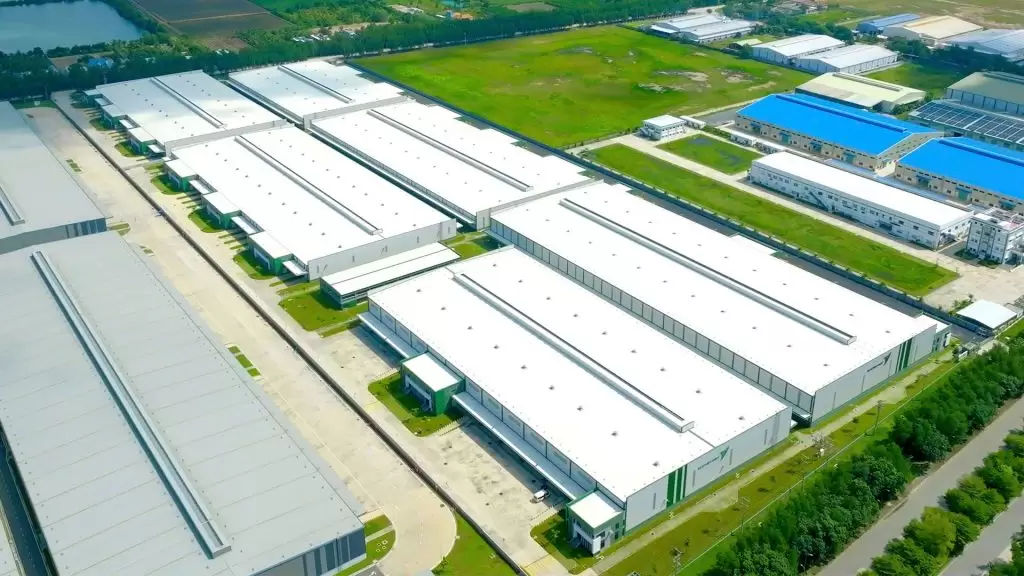
High bay warehouses (12–20 m eave height) with clear spans of 40–90 m are the sweet spot for PEB systems. Mezzanine floors for goods sorting and LED-optimised roof pitches (5°–15°) further improve operational efficiency.
7.3 Aircraft Hangars
Pebsteel has delivered aircraft hangars in the Philippines, Vietnam and Myanmar, including the 128 m clear-span Lufthansa Hangar.
7.4 Commercial Retail & Showrooms
Steel prefab buildings provide column-free display areas with architecturally finished cladding systems. Roof-mounted HVAC units, skylights, and mezzanine offices can be incorporated without modifying the primary frame.
7.5 Cold Storage & Refrigerated Facilities
Insulated sandwich panel walls and roofs (PIF or PIR core) with thermal bridges eliminated at frame interfaces deliver energy-efficient cold stores for pharmaceutical, food, and agribusiness clients.
7.6 Power Plants & Industrial Infrastructure
Turbine halls, substations, pump houses, and gas compression stations all use PEB structural systems for speed of erection in remote locations — critical where grid-connection deadlines are contractual milestones.
7.7 Sports & Recreational Facilities
Arenas, indoor sports halls, and aquatic centres depend on column-free clear spans. Pebsteel frames accommodate cable-suspended roofs, acoustic ceilings, and complex facade systems without structural compromise.
7.8 Data Centres & Technology Parks
Controlled environments, heavy floor loads (battery banks, server racks), and rapid buildout schedules make PEB the preferred structural system for hyperscale data centre campuses across Southeast Asia and Australia.
Ready to Spec Your Prefab Steel Building?
Pebsteel has delivered more than 6,000 buildings in 50+ countries.
Send your requirements through the contact form or email marketing@pebsteel.com.vn.
➤ REQUEST A FREE TECHNICAL QUOTATION
Design • Fabricate • Erect | 100,000 MT/yr Capacity | 32+ Years Industrial PEB Experience
8. Sustainability & ESG: The Environmental Case for Steel Prefab
Sustainability has shifted from a ‘nice to have’ to a procurement requirement for many institutional and multinational buyers. Steel prefab buildings offer verifiable environmental advantages:
| ESG Metric | Steel PEB Performance | vs. Conventional |
| Construction waste | < 5% (factory offcuts recycled on-site) | 15–25% typical waste on a concrete build |
| Embodied carbon (steel) | ~1.5 t CO₂e/t (recycled EAF steel) | ~2.5 t CO₂e/t (virgin BOF steel); concrete ~0.9 t CO₂e/t but much heavier |
| Recyclability at end of life | 93–97% of steel structure recyclable | Concrete demolition → primarily landfill |
| Energy efficiency (operational) | Insulated panels reduce HVAC load 25–35% | Conventional walls require additional insulation |
| Rooftop solar integration | Purpose-designed purlin systems rated for solar panel live loads | Retrofitting solar on conventional roofs often requires structural reinforcement |
Pebsteel offers rooftop solar system design integration at the structural drawing stage — eliminating costly retrofits and ensuring NCC/BCA (Australia) compliance from day one.
9. Seven-Step Procurement Checklist for B2B Buyers
Procurement errors in prefab building projects are almost always traceable to missing specifications at the RFQ stage. Use this checklist before contacting any manufacturer:
- Define the clear span and bay spacing required — identify all production equipment, cranes, or vehicles that must move through the building without obstruction.
- Specify the design standard — confirm which standard governs (AISC, Eurocode 3, AS/NZS, TCVN, etc.) based on your project jurisdiction and client requirements.
- Document all design loads — floor live load, roof live load, wind speed and exposure category, seismic zone classification, and any crane load details.
- Define the cladding performance requirements — thermal (U-value), acoustic (Rw), fire resistance rating, and any specific product certification required.
- Confirm the erection scope — are you procuring supply-only (you provide erection labour), supply-and-erect, or turnkey (including foundation and M&E coordination)?
- Require a full shop drawing and engineering calculation package — this is your structural compliance record for building permits and future modifications.
- Verify the manufacturer’s quality certifications — ISO 9001 fabrication QMS, welder qualifications (AWS D1.1), and dimensional inspection records should be standard deliverables.
PROCUREMENT WARNING: Buyers who skip Step 2 (design standard) routinely encounter permit rejections or costly re-engineering at the approval stage. Confirm jurisdiction requirements before issuing any RFQ.
10. How to Choose the Right Prefab Building Manufacturer
With dozens of suppliers active in the market, due diligence on the manufacturer is as important as the building specification itself. Evaluate on these criteria:
| Evaluation Criteria | What Strong Suppliers Offer | Red Flags to Watch |
| Engineering capability | In-house licensed structural engineers, own software | ‘We’ll adapt a standard design’ — no load-specific engineering |
| Factory capacity & certification | ISO 9001, own fabrication plant, >50,000 MT/yr capacity | Outsourced fabrication, no quality certification |
| Track record | Documented reference projects in your industry and region | Unverifiable case studies, stock photo portfolios |
| Export experience | Customs documentation, port-to-site logistics, export dept. | Domestic-only supply record |
| After-erection support | Warranty documentation, local service team | No stated warranty, no in-market presence |
Why Pebsteel? 32 Years Delivering Precision Prefab Across Asia-Pacific & the Middle East
Pebsteel has been engineering, fabricating, and erecting pre-engineered steel buildings since 1994 — with 1,400+ team members and six factories in Vietnam, with capacity above 100,000 metric tonnes a year.
What Sets Pebsteel Apart
- Tapered built-up sections:Pebsteel’s primary frames use tapered sections designed with state-of-the-art software to optimise weight, utility and functionality, delivering strength and durability at a fraction of the material usage.
- Clear-span capability up to 180 m: the maximum practical width of Pebsteel’s Clear Span frame, with a 128 m clear-span aircraft hangar delivered.
- 14 regional sales offices: Vietnam (HQ), Cambodia, Thailand, the Philippines, Indonesia, Malaysia, plus an Export Sales team.
- Engineering to international codes: In-house design to AISC, IBC, ASCE and AS/NZS 1170, with welding to AWS and tolerances to MBMA.
- Rooftop solar integration: Structural design for rooftop PV is available — future-proofing your building against rising energy costs.
- Full D-F-E scope: Design, Fabrication, and Erection delivered as a single-contract package, eliminating subcontractor coordination risk for EPC clients.
FAQ: Twelve Questions Buyers Ask Most About Prefab Buildings
Q1: What is the difference between a prefab building and a modular building?
A prefab building is any structure built from factory-manufactured components — it is the broad category. A modular building is a subset in which volumetric box units (modules) are produced nearly complete, including interior fit-out, then stacked or connected on site. Pre-engineered steel buildings (PEBs), panelised systems, and container-based structures are all types of prefab buildings but are not modular buildings.
Q2: How much does a prefab steel building cost per square metre?
The cost of a prefab steel building depends on the project: clear span, height, design loads, cladding specification, scope (supply-only or turnkey), site location and logistics all affect the price. For a project-specific cost estimate, send your requirements through the contact form.
Q3: How long does it take to build a prefab steel building?
A typical industrial building of 2,000–10,000 m² takes 10–20 weeks from order placement to handover: 6–10 weeks for engineering and fabrication, plus 4–10 weeks for erection depending on site conditions and building complexity. This is 40–60% faster than an equivalent conventional concrete structure.
Q4: Are prefab buildings compliant with building codes and structural standards?
Yes — a properly engineered PEB is designed to the applicable national or international standard (AISC, Eurocode 3, AS/NZS 1170, TCVN, ASCE 7, etc.) and backed by a full engineering calculation package. The calculations, drawings, and material certifications form the building permit submission. Always confirm which standard applies to your project jurisdiction.
Q5: Can a prefab building be expanded or modified after construction?
Expansion is one of the key advantages of PEB systems. Additional bays can be added to the end of the building, new spans added to the side, or building height raised — often without demolishing any existing structure. This is because the original engineering model includes future extension parameters if specified at the design stage.
Q6: What is the lifespan of a prefab steel building?
A properly fabricated and maintained PEB has a design life of 50 years or more. The primary limiting factor is corrosion protection: hot-dip galvanising, high-build epoxy primers, and quality Colorbond or Galvalume cladding systems are engineered to last 25–40 years before major maintenance. Interior environments must also be managed to avoid condensation and chemical attack on steel.
Q7: Are prefab buildings suitable for areas with high wind or seismic risk?
Yes — PEB systems are regularly designed for cyclone/typhoon wind zones (Category C and D exposure in AS/NZS 1170) and high seismic zones (SDC D and E under ASCE 7). Frame geometry, connection details, and bracing systems are all engineered specifically for site-specific load combinations. High-risk zones typically require heavier primary frames and more extensive bracing.
Q8: What foundation is required for a prefab steel building?
All PEB systems require a reinforced concrete foundation — typically isolated pad footings under each column and a concrete floor slab. Foundation design is done by the project structural engineer based on the column reaction loads provided in the PEB engineering package. Because steel buildings are 30–40% lighter than equivalent concrete structures, foundation requirements — and costs — are proportionally lower.
Q9: Can PEB buildings incorporate solar panels on the roof?
Yes, and Pebsteel specifically designs roof purlin systems rated for rooftop photovoltaic panel live and dead loads as standard. This eliminates the costly structural reinforcement required when solar is retrofitted onto a building not designed for it. PEB Steel’s rooftop solar solution packages include both the structural analysis and the mounting system design.
Q10: What is the difference between supply-only and turnkey for a prefab building?
Supply-only means the manufacturer engineers and fabricates the steel kit and delivers it to site (or port). The buyer is responsible for foundation construction, off-loading, erection, and cladding installation. Turnkey means the manufacturer takes full responsibility from foundation design through structural erection and final handover, including all associated subcontractor management. EPC contractors typically prefer turnkey packages from the steel building supplier to simplify their subcontract chain.
Q11: How do I verify a prefab building manufacturer’s quality standards?
Request the following documentation before issuing a purchase order: ISO 9001 Quality Management System certificate (scope must include fabrication of structural steel), third-party mill certificates for all steel used (meeting ASTM A36, A572, or EN 10025 as applicable), welder qualification records (AWS D1.1 or equivalent), and dimensional inspection reports for a sample of completed projects. Reputable manufacturers make these available as standard.
Q12: Why choose Pebsteel over other prefab building manufacturers in Southeast Asia?
Pebsteel combines three capabilities: (1) in-house engineering to international codes (AISC, IBC, ASCE and AS/NZS 1170); (2) six factories in Vietnam with capacity above 100,000 MT/year and an ISO 9001 QMS…; and (3) a clear-span capability of up to 180 m (128 m delivered). 14 regional sales offices provide customer support at every stage of the process.
Disclaimer: The content provided in this article is for reference purposes only. For further details or clarification based on your needs, please contact Pebsteel directly.
Ready to Spec Your Prefab Steel Building?
Pebsteel has delivered more than 6,000 buildings in 50+ countries.
Send your requirements through the contact form or email marketing@pebsteel.com.vn.
➤ REQUEST A FREE TECHNICAL QUOTATION
Design • Fabricate • Erect | 100,000 MT/yr Capacity | 32+ Years Industrial PEB Experience