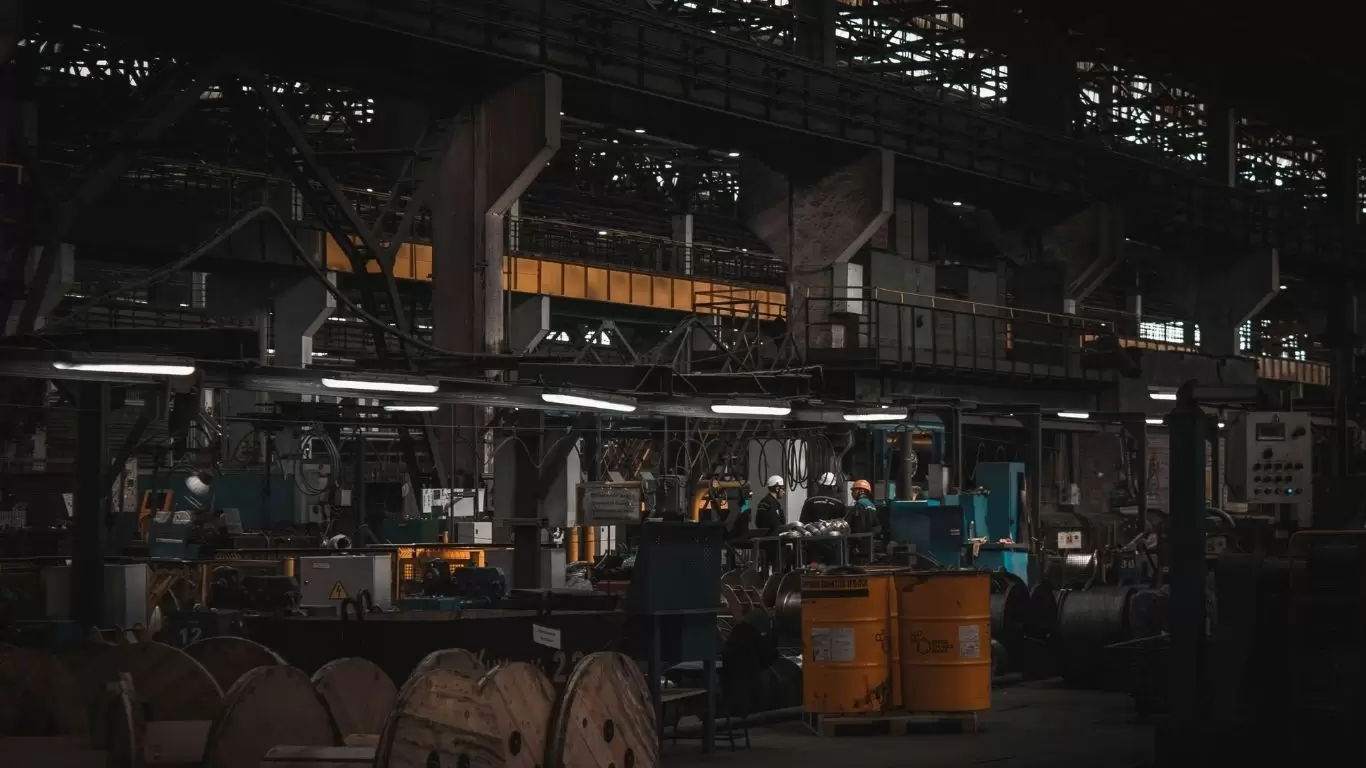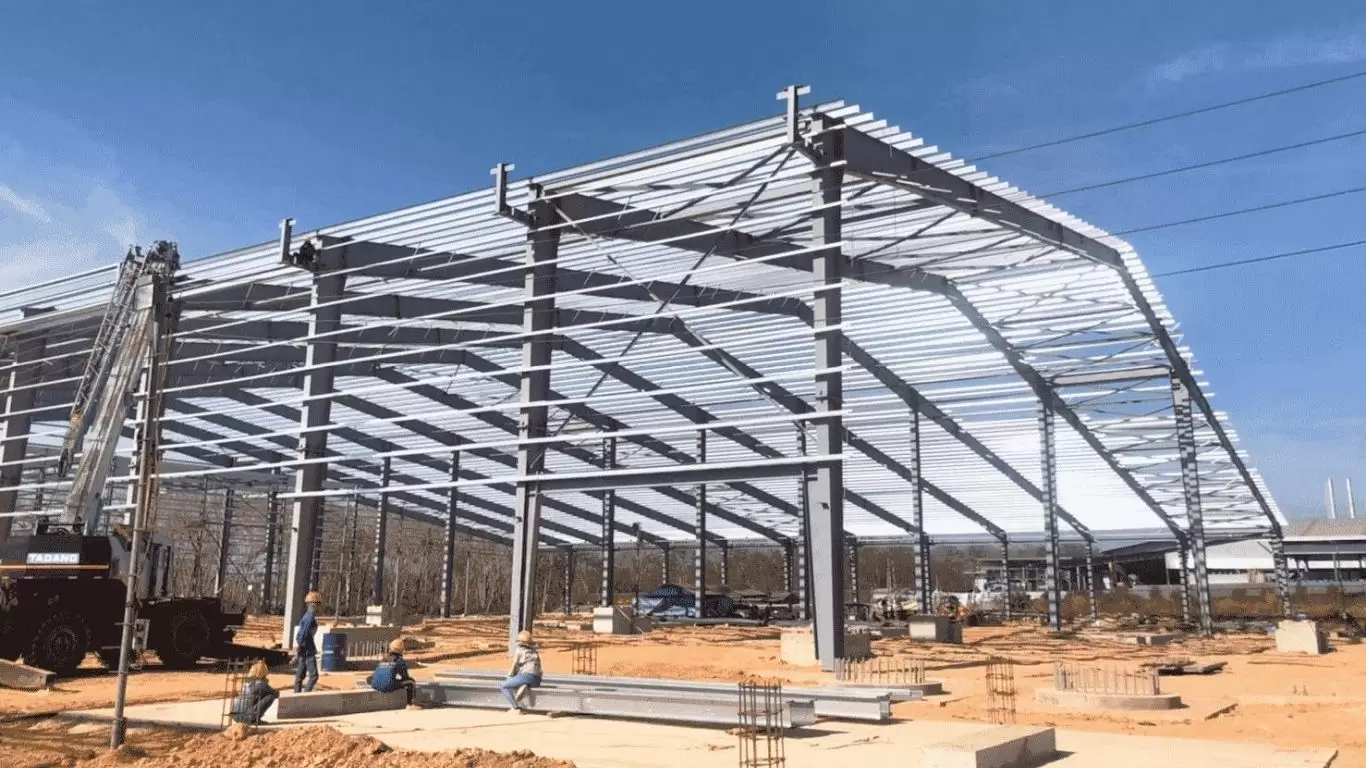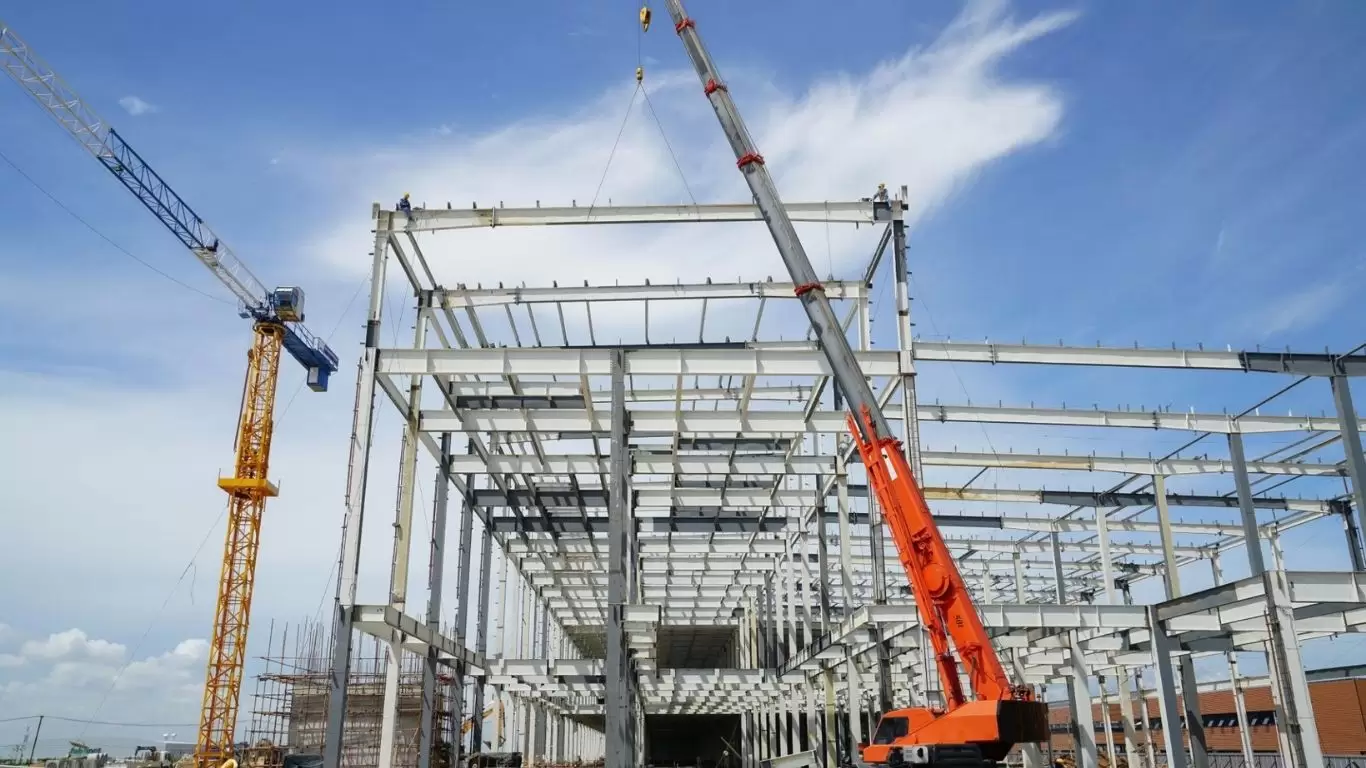

Vietnam’s construction sector has grown rapidly in the last two decades, especially in industrial zones, factories, logistics centers, and warehouses. As a result, structural steel and pre-engineered building (PEB) systems have become the preferred solution for industrial construction due to their speed, flexibility, and cost efficiency.
However, to ensure safety, durability, and regulatory compliance, every steel structure project in Vietnam must follow specific national standards. These standards regulate everything from structural design and load calculation to fabrication, welding, and installation.
This guide explains the Vietnamese steel standards used for structural steel and PEB buildings, including the key TCVN codes, their scope, and how they are applied in real industrial projects.
1. Overview of Steel Construction Standards in Vietnam
Steel construction in Vietnam is mainly governed by TCVN (Vietnamese Standards) issued by the government. These standards ensure structural safety and compatibility with local conditions such as wind loads, seismic activity, and climate factors.
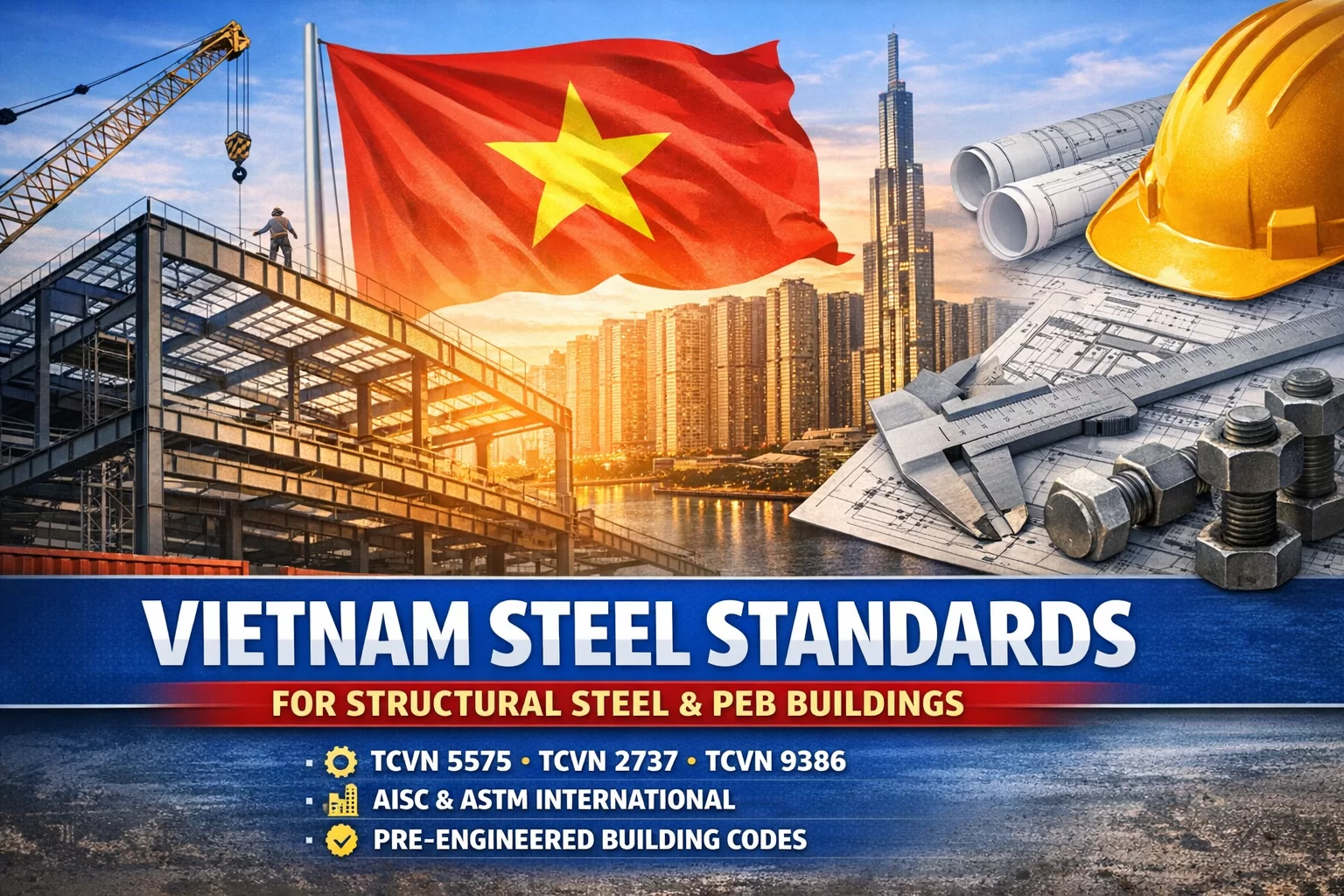
The most important standard for steel design is TCVN 5575:2024, which regulates the design of steel structures.
In addition to national standards, many international projects also adopt global codes such as:
-
American Institute of Steel Construction (AISC)
-
American Society for Testing and Materials (ASTM)
-
Eurocode
These international standards are often used in FDI projects, export factories, and multinational industrial facilities.
2. Key Vietnamese Steel Standards for Structural Steel
Below are the most important standards used in the design and construction of steel buildings in Vietnam.
TCVN 5575 – Design of Steel Structures
TCVN 5575:2024 is the primary standard governing steel structural design in Vietnam.
Scope of the standard
It provides technical requirements for:
-
Structural analysis
-
Member strength calculations
-
Stability checks
-
Connection design
-
Structural safety verification
Key design elements covered
The standard specifies design methods for:
-
Steel columns
-
Bracing systems
-
Steel frame structures
It also includes provisions for local buckling, global stability, and load combinations.
Application in PEB buildings
For pre-engineered buildings, TCVN 5575 is used to design:
-
Portal frames
-
Rafters
-
Steel columns
-
Roof structures
-
Structural connections
TCVN 2737 – Loads and Actions
This standard defines design loads applied to buildings and structures.
Types of loads included
The code specifies calculation methods for:
-
Dead loads
-
Live loads
-
Wind loads
-
Seismic loads
-
Crane loads
-
Thermal effects
Importance for steel buildings
For steel structures and PEB buildings, wind load calculations are especially important because:
-
Steel buildings are lightweight
-
Large roof spans are common
-
Wind pressure significantly affects structural design
Industrial buildings, warehouses, shed workshops, farm sheds and logistics centers rely heavily on this standard to determine structural load combinations.
TCVN 9386 – Seismic Design of Structures
Vietnam is not considered a highly seismic country, but some regions still require earthquake-resistant design.
What the standard covers
TCVN 9386 provides:
-
Seismic hazard zoning
-
Ground acceleration parameters
-
Structural response analysis methods
-
Seismic design factors
Regions where it applies
Earthquake design may be required in areas such as:
-
Northwest Vietnam
-
Northern mountainous regions
-
Some central regions
For large industrial projects, structural engineers often check seismic requirements using this code.
TCVN 1916 – High Strength Bolts for Steel Structures
Bolted connections are critical in steel building construction.
This standard specifies:
-
Bolt material properties
-
Strength grades
-
Manufacturing tolerances
-
Installation requirements
Common applications
High-strength bolts are used for:
-
Beam-to-column connections
-
Portal frame joints
-
Structural splices
-
Bracing systems
In PEB structures, bolted connections are preferred because they allow faster installation compared to welding.
TCVN 5639 – Acceptance of Steel Structure Installation
After fabrication and erection, steel structures must undergo inspection and quality verification.
TCVN 5639 regulates:
-
Installation tolerances
-
Structural alignment
-
Bolt tightening inspection
-
Welding inspection
-
Structural acceptance procedures
Importance for industrial projects
Quality inspection ensures:
-
structural safety
-
construction accuracy
-
compliance with engineering design
It is commonly used during site supervision and project handover.
TCVN 170 – Steel Structure Fabrication and Assembly
This standard covers manufacturing processes for steel components.
Areas covered
-
Steel cutting
-
Forming and drilling
-
Welding procedures
-
Dimensional tolerances
-
Quality control
Fabrication plants producing steel frames, trusses, and beams must follow this standard.
3. International Standards Used in Vietnam Steel Projects
Many modern industrial projects use international design standards alongside Vietnamese codes.
AISC Steel Design Code
The American Institute of Steel Construction provides widely used steel design specifications.
Its standards include:
-
AISC 360 – Specification for Structural Steel Buildings
-
AISC Seismic Provisions
-
Steel Construction Manual
AISC is commonly used in PEB system design.
ASTM Material Standards
The American Society for Testing and Materials publishes standards for steel materials.
Examples include:
-
ASTM A36
-
ASTM A572
-
ASTM A992
These define:
-
yield strength
-
tensile strength
-
chemical composition
Eurocode Standards
The Eurocode is the structural design code used across Europe.
Eurocode 3 specifically addresses steel structures.
It is sometimes adopted in European-funded construction projects in Vietnam.
4. Steel Standards Used for Pre-Engineered Buildings in Vietnam
For a typical PEB industrial building, engineers often combine several standards.
Typical standard combination
| Design Area | Standard |
|---|---|
| Structural design | TCVN 5575 |
| Load calculation | TCVN 2737 |
| Seismic design | TCVN 9386 |
| Bolted connections | TCVN 1916 |
| Fabrication | TCVN 170 |
| Installation inspection | TCVN 5639 |
This integrated approach ensures safe structural performance throughout the building lifecycle.
5. Why Steel Standards Are Critical for PEB Projects
Steel standards are not just regulatory requirements; they also help ensure project reliability and efficiency.
Structural safety
Engineering standards ensure the structure can resist:
-
wind pressure
-
equipment loads
-
environmental stresses
Construction quality
Standards define acceptable tolerances and fabrication methods.
International compatibility
Using international codes helps Vietnamese projects meet global engineering requirements.
Long-term durability
Proper design reduces risks such as:
-
structural fatigue
-
connection failure
-
excessive deflection
6. Future Trends in Vietnam Steel Construction Standards
Vietnam’s construction industry is gradually evolving to align with global engineering practices.
Future trends may include:
Integration with international codes
More projects may combine TCVN with international standards such as AISC or Eurocode.
Digital engineering and BIM
Building Information Modeling (BIM) is increasingly used in steel structure design and steel fabrication.
Sustainable construction
Green building standards may influence future steel design requirements.
7. Conclusion
Vietnam’s steel construction industry relies on a comprehensive framework of national standards to ensure structural safety and quality.
Key codes such as TCVN 5575, TCVN 2737, and TCVN 9386 provide essential guidelines for structural design, load calculation, and seismic resistance.
For pre-engineered building (PEB) projects, these standards work together with international codes like American Institute of Steel Construction and American Society for Testing and Materials to deliver safe, efficient, and globally compatible steel structures.
Understanding these standards is crucial for steel fabricators, engineers, contractors, investors, and developers involved in steel building construction in Vietnam.
8. FAQ – Vietnam Steel Standards
What is the main steel design code in Vietnam?
The primary steel design code is TCVN 5575, which regulates the design and structural analysis of steel buildings.
What standard is used for load calculation in Vietnam?
Load calculations are governed by TCVN 2737, which defines dead loads, live loads, wind loads, and other environmental forces.
Are international steel standards used in Vietnam?
Yes. Many projects use international standards such as American Institute of Steel Construction and American Society for Testing and Materials.
Are earthquake standards required for steel buildings in Vietnam?
Yes, when required by location. Seismic design follows TCVN 9386.
What standards apply to steel structure fabrication?
Fabrication processes follow TCVN 170, which regulates manufacturing and assembly of steel components.
VIETNAM HEAD OFFICE
Unit 701, 7th Floor, Menas Saigon Airport, 60A Truong Son Street, Tan Son Hoa Ward, HCMC, Vietnam.
- Phone: (84) 28 38 475 475
- Email: marketing@pebsteel.com.vn
- Website: www.pebsteel.com
***Disclaimer: This article is intended to provide general information about the pre-engineered steel building and steel structure industry only. For further details or clarification based on your needs, please contact Pebsteel directly.