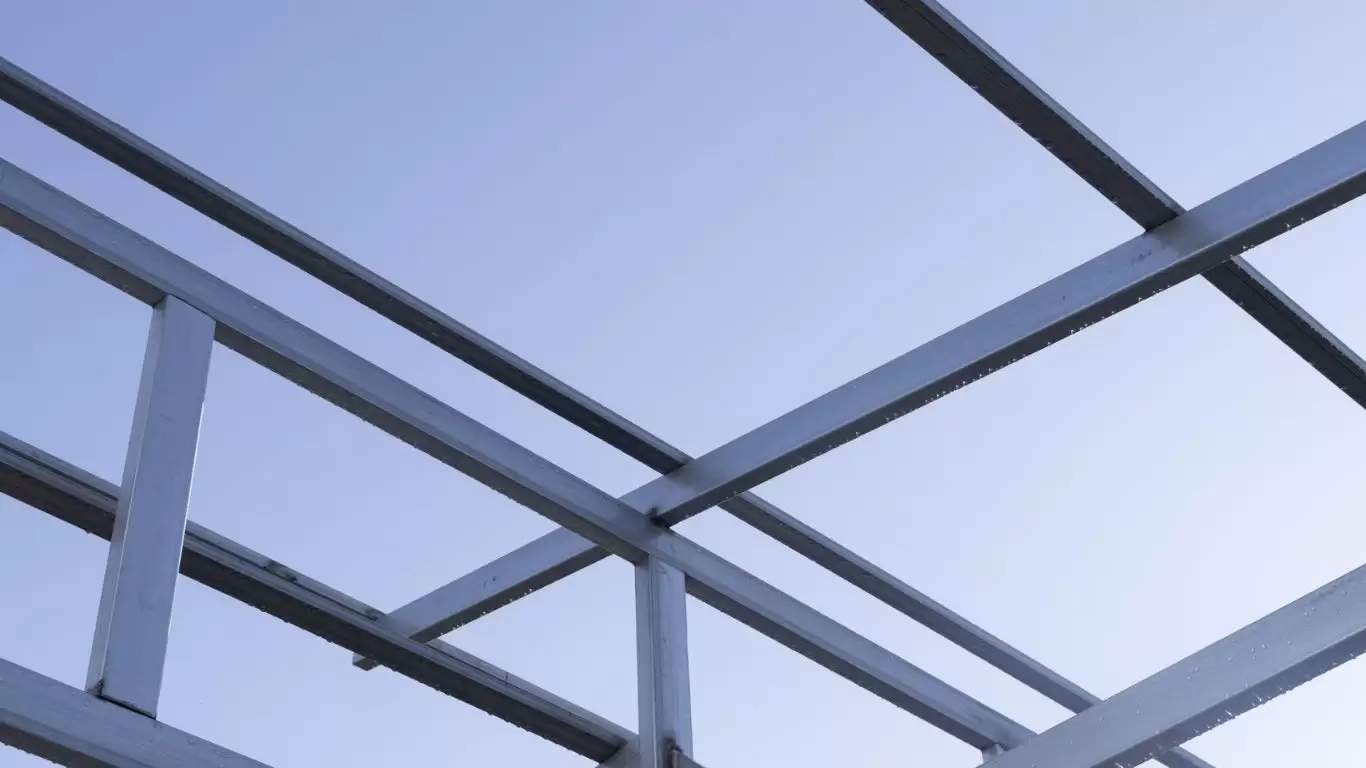

Steel standards in the Philippines play a critical role in ensuring safety, structural integrity, and regulatory compliance across infrastructure and building projects. Whether you are designing structural steel buildings, pre-engineered buildings (PEB), warehouses, or industrial facilities, understanding the Philippines steel standards is essential.
In the Philippines, steel materials and construction practices are governed primarily by national standards developed by the Department of Trade and Industry (DTI) through the Bureau of Philippines Standards (BPS).
This guide explains the Philippines National Standards (PNS) for steel, how they relate to international standards such as International Organization for Standardization (ISO) and American Society for Testing and Materials (ASTM), and what engineers, contractors, and steel manufacturers should know when working in the Philippines market.
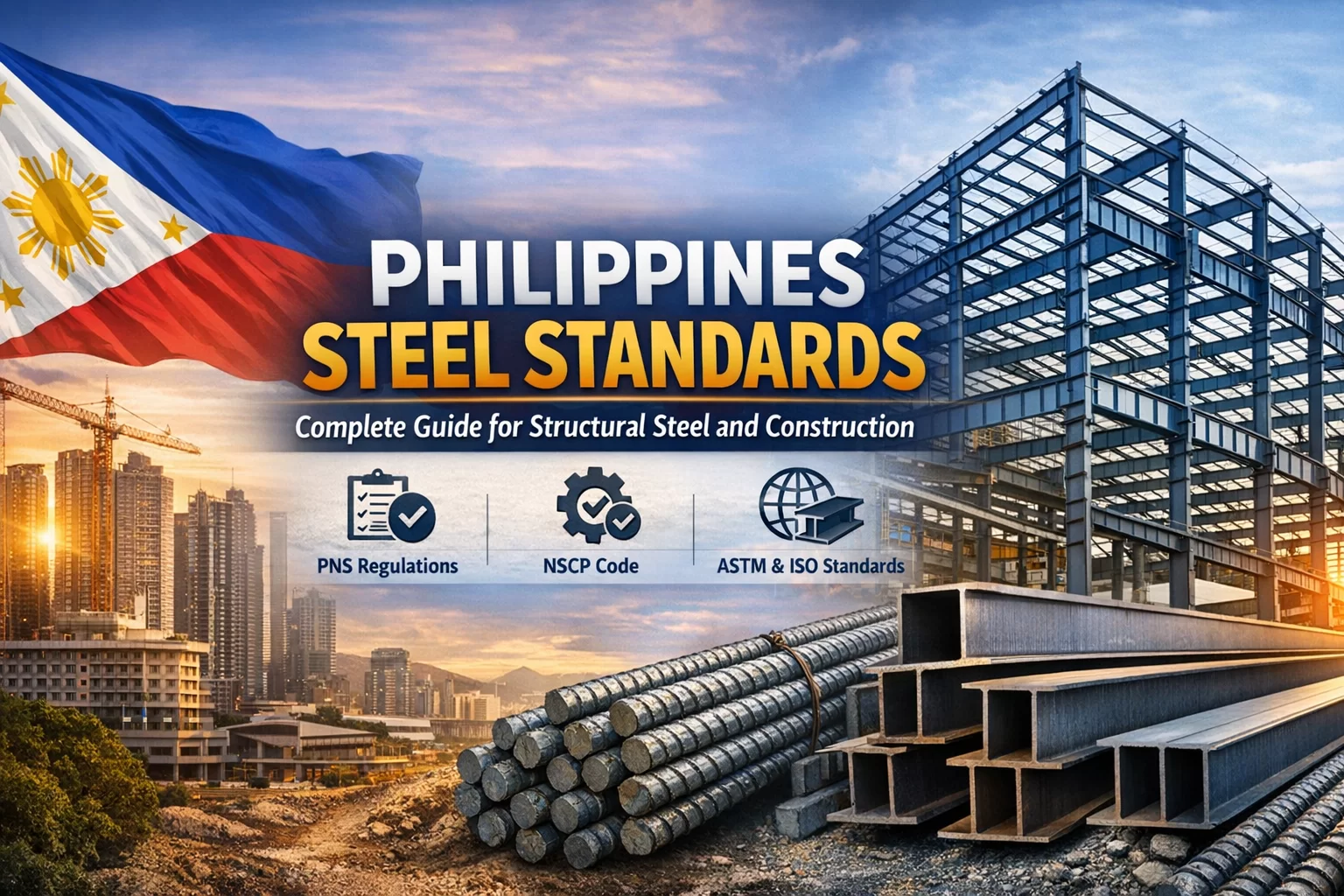
1. Overview of Steel Standards in the Philippines
The Philippines adopts a combination of local standards and internationally recognized codes to regulate steel production, structural design, and construction.
The main regulatory framework includes:
-
Philippines National Standards (PNS)
-
Structural design codes
-
Building regulations
-
Material testing requirements
These standards ensure steel products meet safety requirements for buildings exposed to earthquakes, typhoons, and coastal environments, which are common in the Philippines.
2. Key Organizations Governing Steel Standards
Bureau of Philippines Standards (BPS)
The Bureau of Philippines Standards is the national standards body responsible for:
-
Developing Philippines National Standards
-
Harmonizing with international standards
-
Ensuring product certification
-
Regulating steel product quality
Steel manufacturers must comply with PNS certification to sell structural steel materials within the country.
Department of Trade and Industry (DTI)
The Department of Trade and Industry oversees product safety and enforces compliance through:
-
Import regulations
-
Product certification schemes
-
Mandatory standards for steel products
DTI also manages the Product Standards (PS) mark, which indicates compliance with Philippines standards.
3. Philippines National Standards (PNS) for Steel
The Philippines National Standards (PNS) define technical requirements for steel materials used in construction and manufacturing.
Important steel-related PNS standards include:
PNS for Reinforcing Steel Bars
-
PNS 49 – Deformed steel bars for concrete reinforcement
-
PNS 211 – Plain round reinforcing bars
-
PNS ISO 6935 series – Reinforcement steel standards
These standards regulate:
-
Yield strength
-
Tensile strength
-
Elongation
-
Chemical composition
Reinforcing steel bars are widely used in high-rise buildings, bridges, and infrastructure projects across the Philippines.
PNS for Structural Steel
Structural steel used in buildings and industrial structures may follow:
-
PNS equivalent standards
-
ASTM structural steel specifications
-
ISO material testing requirements
Common structural steel grades include:
-
ASTM A36 equivalent
-
ASTM A572 structural steel
-
ASTM A992 steel for wide-flange beams
These materials are typically used in:
-
Steel warehouses
-
Factory buildings
-
Aircraft hangars
-
Steel workshops
-
Pre-engineered buildings (PEB)
4. Structural Design Codes Used in the Philippines
While material standards follow PNS, structural design typically follows building codes aligned with US standards.
The most important building regulation is the National Structural Code of the Philippines (NSCP).
National Structural Code of the Philippines (NSCP)
The National Structural Code of the Philippines provides design requirements for:
-
Structural steel design
-
Load combinations
-
Wind loads
-
Seismic design
-
Structural stability
NSCP incorporates principles from international codes including:
-
American Institute of Steel Construction (AISC)
-
American Concrete Institute (ACI)
-
American Society of Civil Engineers (ASCE)
For steel structures, NSCP generally adopts AISC steel design methodology.
5. Steel Testing and Certification in the Philippines
Steel materials must undergo strict testing to ensure compliance with Philippine standards.
Typical testing procedures include:
Mechanical Testing
-
Tensile strength testing
-
Yield strength verification
-
Bend testing
Chemical Composition Testing
Steel samples are analyzed to ensure compliance with required alloy compositions.
Quality Certification
Steel products may require certification through the Philippines Standard (PS) Mark scheme administered by the Department of Trade and Industry.
Products without certification may be restricted from entering the Philippines market.
6. Steel Import Regulations in the Philippines
The Philippines imports significant quantities of steel due to high construction demand.
Imported steel must comply with:
-
Philippines National Standards (PNS)
-
Product certification from DTI
-
Quality inspection upon entry
Major steel imports originate from:
-
China
-
Japan
-
South Korea
-
Vietnam
Imported steel must pass inspection and testing requirements before distribution.
7. Steel Standards for Pre-Engineered Buildings (PEB)
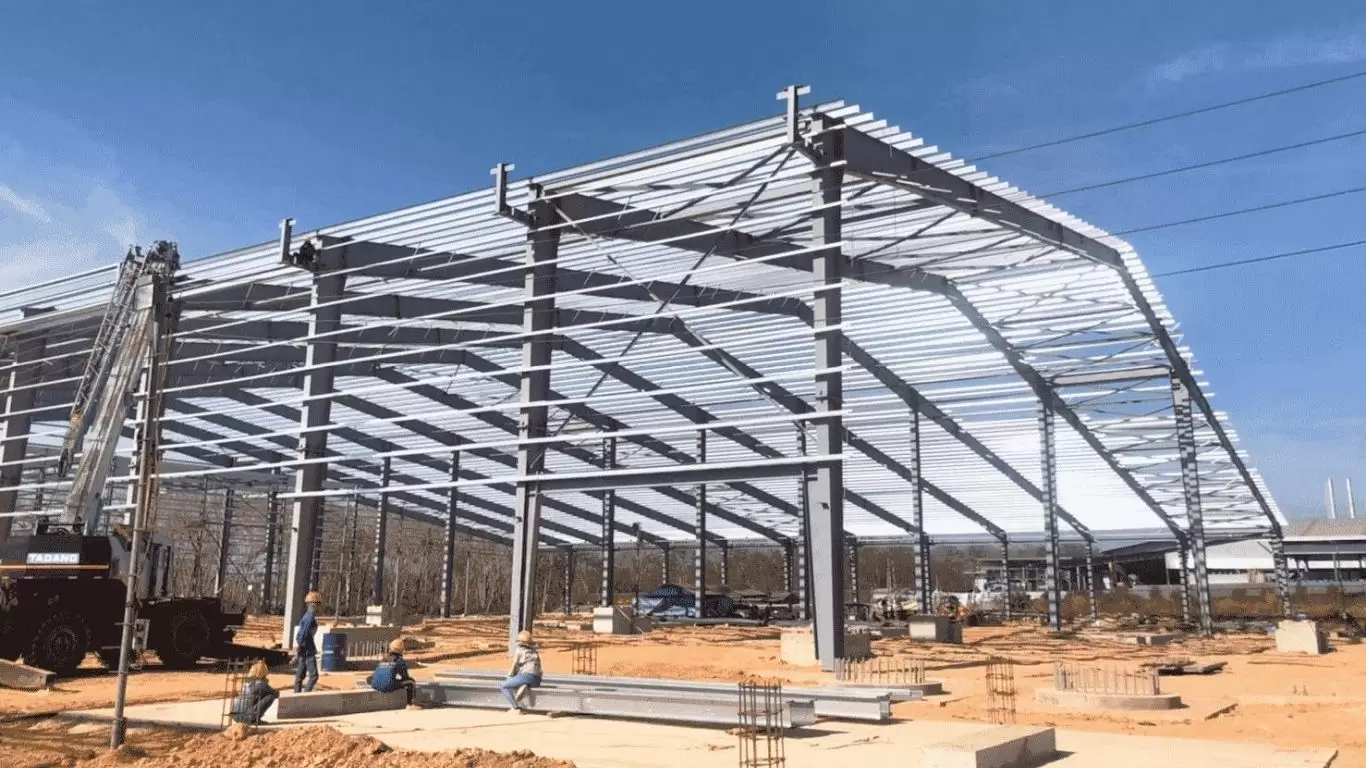
Pre-engineered steel buildings are increasingly popular in the Philippines due to rapid industrial growth.
Common applications include:
-
Logistics warehouses
-
Manufacturing factories
-
Agricultural buildings
-
Commercial buildings
PEB structures must comply with:
-
Structural design under the National Structural Code of the Philippines
-
Material standards from Bureau of Philippine Standards
-
International steel fabrication standards such as AISC and ASTM
Steel components used in PEB structures include:
-
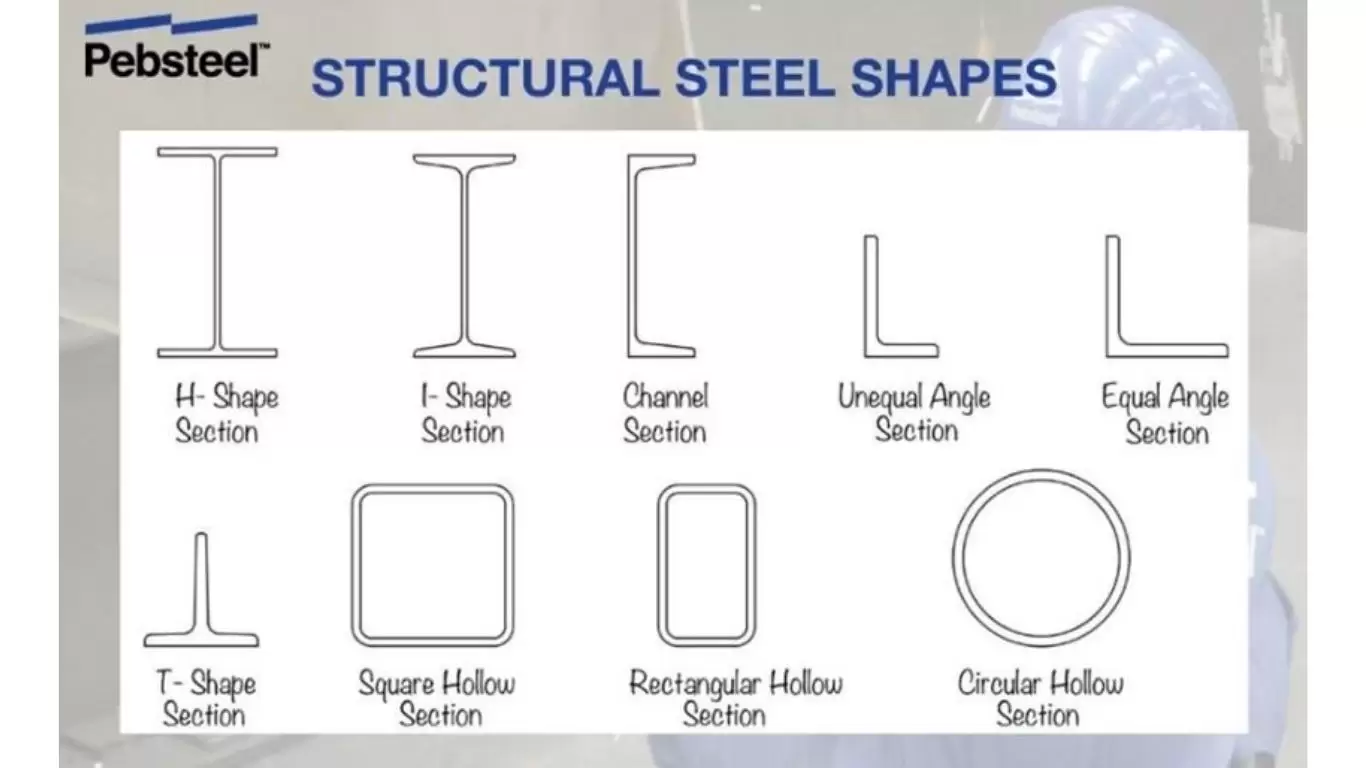
H-beams
-
Built-up steel sections
-
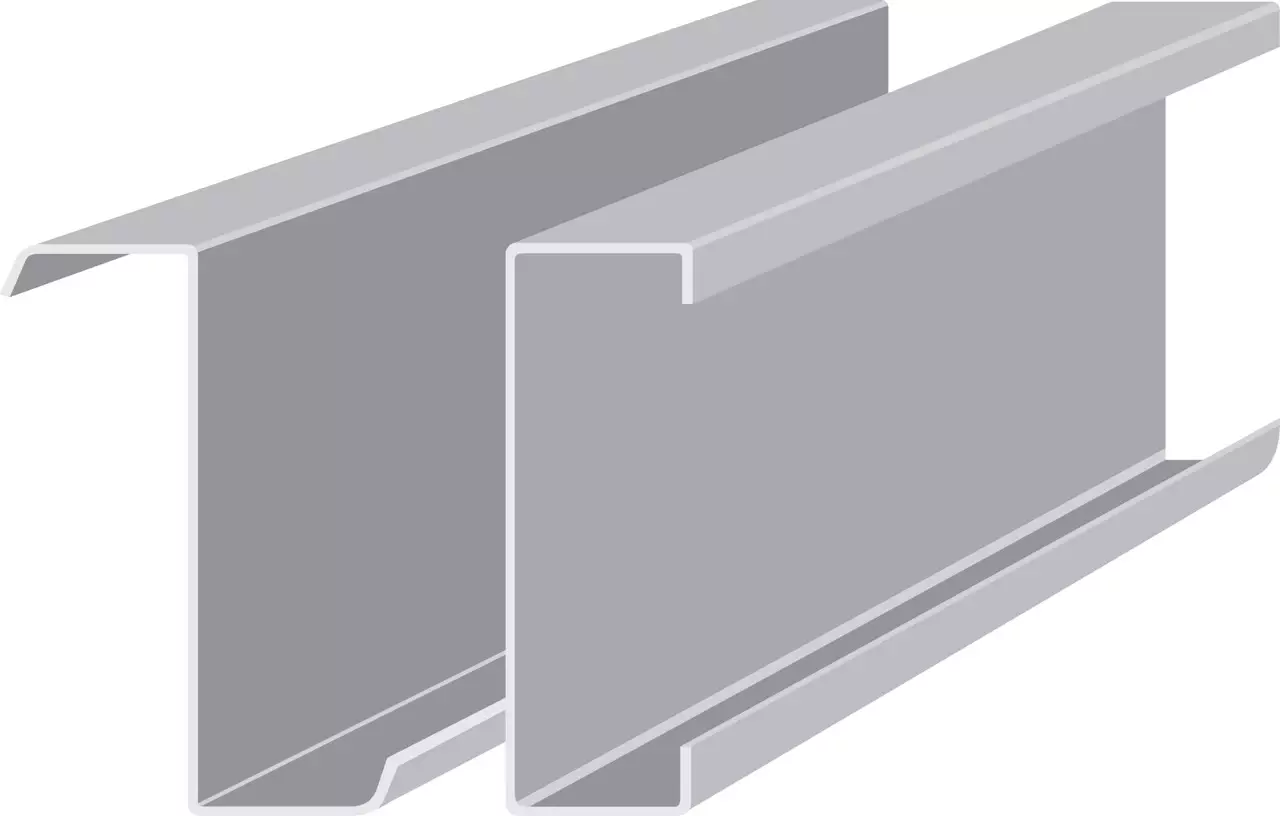
Cold-formed steel members
-
Steel roof and wall panels
8. Differences Between Philippines and International Steel Standards
Although the Philippines has its own standards, many are aligned with global systems.
| Category | Philippines | International Equivalent |
|---|---|---|
| Structural steel | PNS | ASTM / AISC |
| Reinforcement bars | PNS 49 | ISO 6935 / ASTM A615 |
| Structural design | NSCP | ASCE / AISC |
| Material testing | PNS | ISO |
This harmonization makes it easier for international contractors, steel manufacturers, steel fabricators to operate in the Philippines market.
9. Why Steel Standards Matter in the Philippines
Steel standards are especially important due to the country’s environmental conditions. The Philippines is highly exposed to:
-
Typhoons
-
Earthquakes
-
Coastal corrosion
Therefore, compliance with steel standards helps ensure:
- Structural durability
- Building safety
- Disaster resilience
- Regulatory compliance
Failure to follow standards can result in structural failure, legal penalties, or project delays.
10. Future Trends in Philippines Steel Regulations
As infrastructure development expands, steel standards in the Philippines are evolving.
Future trends include:
Stronger earthquake-resistant design
Due to the country’s seismic activity.
Green construction materials
Integration of sustainable steel production.
International standard harmonization
Closer alignment with ISO and ASTM standards.
Digital certification systems
Improved product traceability and compliance monitoring.
These developments will help strengthen the Philippines construction industry.
More about: Steel Trusses: The Definitive Technical & Procurement Guide for Industrial Building Projects
11. Conclusion
Understanding Philippines steel standards is essential for engineers, contractors, and developers involved in construction projects across the country.
The regulatory steel framework combines:
-
Philippines National Standards (PNS)
-
National Structural Code of the Philippines (NSCP)
-
International standards such as ASTM and ISO
Together, these standards ensure that steel materials used in buildings and infrastructure meet strict requirements for safety, durability, and performance.
For companies involved in structural steel fabrication, pre-engineered buildings, and industrial construction, compliance with these standards is a critical step toward successful project execution in the Philippines.
12. FAQs – Philippines Steel Standards
What is the main steel standard used in the Philippines?
The primary standard system is Philippines National Standards (PNS) developed by the Bureau of Philippines Standards under the Department of Trade and Industry.
What code is used for steel structure design in the Philippines?
Structural steel design follows the National Structural Code of the Philippines (NSCP), which incorporates international engineering standards.
Are ASTM steel standards used in the Philippines?
Yes. Many construction projects use ASTM specifications alongside PNS, particularly for structural steel materials.
Is certification required for steel products?
Yes. Steel products may require the Philippines Standard (PS) mark certification issued by the Department of Trade and Industry.
Why are steel standards important in the Philippines?
Steel standards ensure buildings can withstand earthquakes, typhoons, and harsh coastal environments, improving safety and durability.
OUR PHILIPPINES OFFICES:
- 5th Floor, Workspace Building, 1419 Industry St.cor. Finance St. Madrigal Business Park, Ayala Alabang, Muntinlupa City, 1780, Philippines.
View on Google Maps - Phone: (+63) 2 5310 3005
- Mail: pebm@pebsteel.com
- Website: https://ph.pebsteel.com/en/
MANILA OFFICE
- 5th Floor Workspace Building, 1419 Industry St., Cor. Finance St . Madrigal Business Park, Ayala Alabang, Muntinlupa City
- (02) 5310 3005
- pebm@pebsteel.com
CEBU OFFICE
- Unit 211, 2nd Floor, Arcada 5 Building Tipolo Hiway, Mandaue City, Cebu
- (032) 236 2889
- pay@pebsteel.com
DAVAO OFFICE
- Unit 307, 3th Floor, Villa Oro Building, Quimpo Blvd., Cor., Escandor Rd,. Brgy. Bucana, Davao City
- (082) 308-6453
- ggs@pebsteel.com
***Disclaimer: This article is intended to provide general information about the pre-engineered steel building and steel structure industry only. For further details or clarification based on your needs, please contact Pebsteel directly.