
As ESG requirements and net-zero targets increasingly influence investment decisions and global supply chains, rooftop solar is becoming an important component of green factory development. When integrated from the design stage of an industrial building, rooftop solar can help optimize energy use, reduce long-term operating costs, and strengthen manufacturers’ competitiveness.
From Shelter to Strategic Asset
For much of industrial history, a factory roof was evaluated mainly by how quickly it could be built and how effectively it protected the facility from the elements. The priority was simple: protect equipment, control initial investment costs, and bring production online as quickly as possible.
That approach remains relevant, but it is no longer sufficient. Today, investors, manufacturers, and multinational corporations are paying closer attention to lifecycle operating costs, energy efficiency, and readiness for renewable energy integration. A facility that is not designed with these factors in mind may face disadvantages before production even begins.
“For an industrial factory, the roof is far more than a conventional overhead covering,” says Dr. Ngo Hoang Minh, General Manager of Pebsteel’s Rooftop Solar Division. “If properly engineered from the very beginning, it transforms into an energy platform that continuously lowers operational costs and serves as the foundation for the enterprise’s sustainability milestones.”
This shift in thinking, from passive shelter to active energy infrastructure, is central to Pebsteel’s approach to supporting industrial clients in Vietnam and across the region.
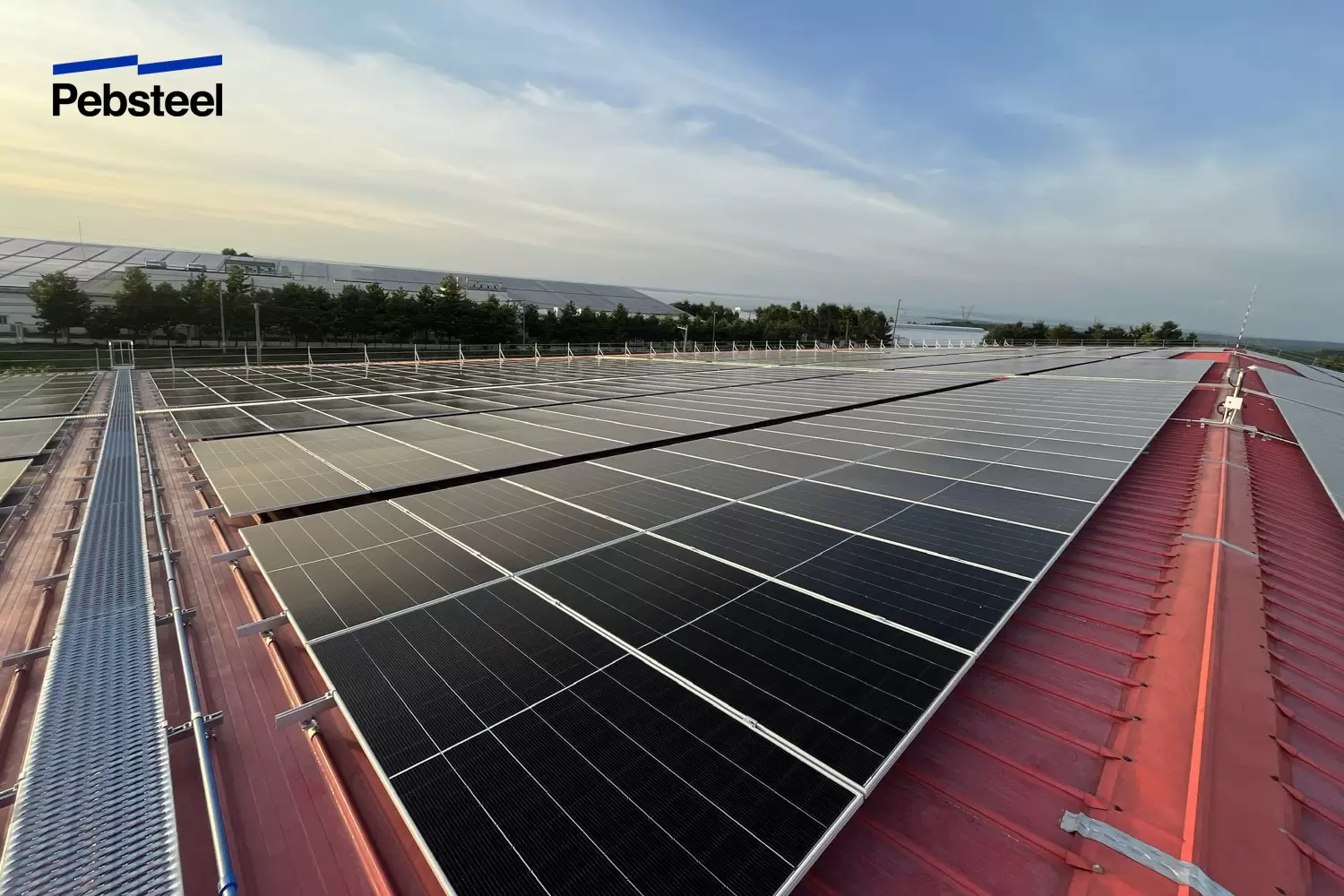 Rooftop solar systems are redefining the role of industrial roofs, turning them into platforms for energy generation and sustainable growth.
The Engineering Advantage of Starting Early
Industrial solar projects have often been implemented after a factory is already built and operating. In many cases, solar panels are added to an existing roof years after construction. This approach can create technical compromises. Structural load limits may restrict panel placement. Mounting methods can increase the risk of long-term leakage. Drainage systems may conflict with racking layouts. In addition, the building’s orientation and roof angle may not have been designed to maximize solar performance.
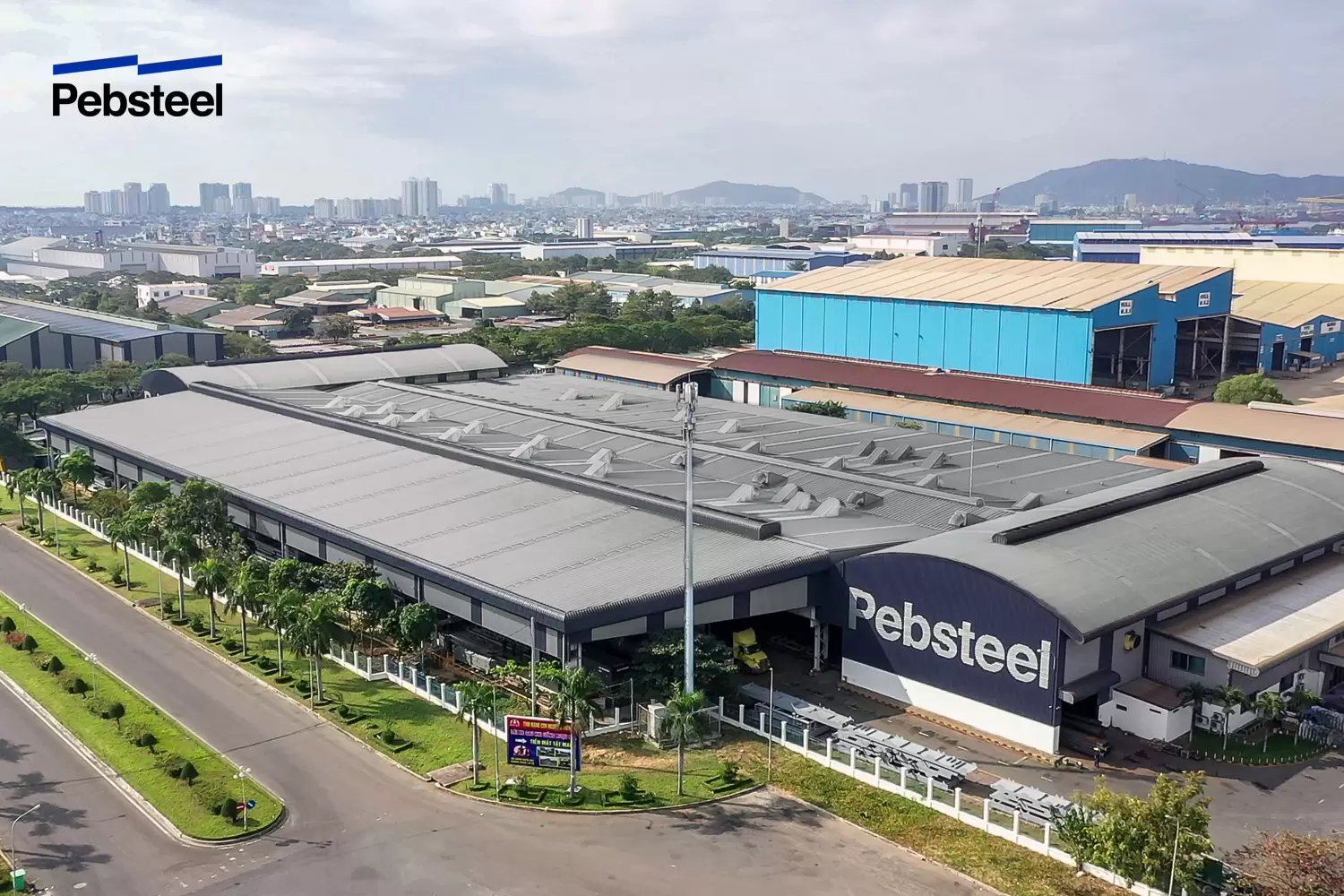
Pebsteel’s integrated engineering model addresses these challenges before construction begins. By working with pre-engineered steel structures, the company coordinates structural load calculations, roof slope, panel orientation, and drainage systems from the design stage. The result is a building frame that is calibrated to support the solar system efficiently, with reinforcement applied only where load concentrations occur. This helps reduce unnecessary steel usage while maintaining structural integrity.
The system also uses specialized clamps that secure the mounting hardware without penetrating the roof sheets. This helps reduce the risk of water ingress, one of the most common long-term concerns in rooftop solar installations, added after construction.
The solution also provides a thermal benefit. When solar panels are installed with a continuous ventilation gap between the array and the roof surface, they can act as a natural heat barrier. This helps reduce the amount of heat absorbed by the building. For manufacturers operating large production floors, the effect can contribute to lower demand for air conditioning and HVAC systems.
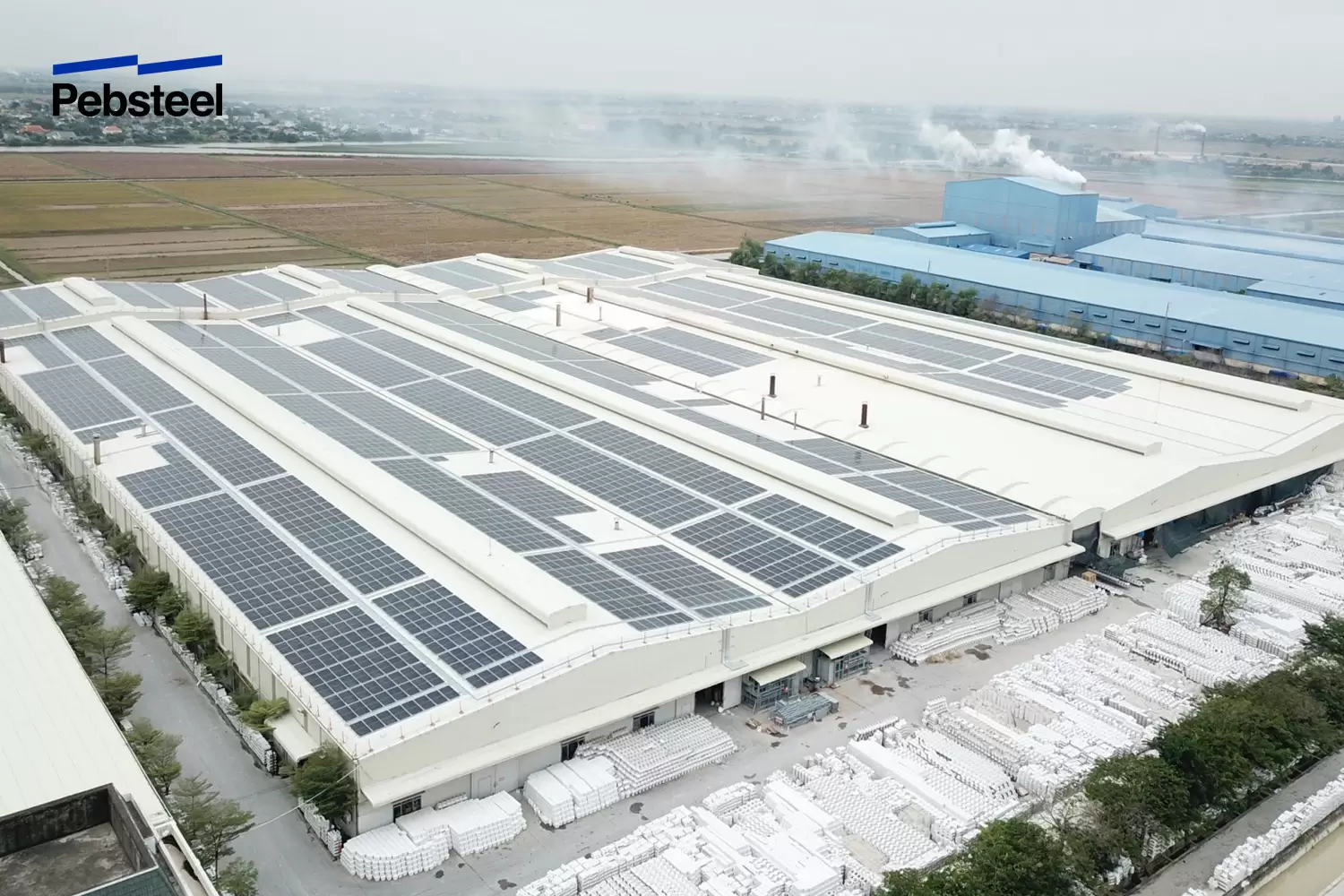 Early-stage rooftop solar integration helps turn industrial roofs into high-performance energy platforms, engineered for efficiency, durability, and long-term value.
Meeting the Demands of a Green Supply Chain
Vietnam’s industrial sector is deeply integrated into global manufacturing supply chains. This integration increasingly comes with environmental expectations. Foreign-invested enterprises and international customers are applying ESG criteria across multiple levels of the supply chain, from raw materials to the energy consumed on the factory floor.
Facilities that can demonstrate on-site renewable energy generation, reduced dependence on the grid, and lower carbon intensity per unit of production are better positioned to meet the requirements of global buyers, investors, and long-term partners. Those who cannot may face growing pressure as procurement decisions increasingly take sustainability performance into account alongside cost, quality, and delivery.
In this context, green infrastructure is no longer just a policy statement or a compliance measure. It is becoming a practical competitive advantage.
Building for the Long Run
Pebsteel’s approach is not simply about placing solar panels on a steel roof. It reflects a broader development philosophy in which energy performance is treated as a structural consideration from the earliest stages of project planning, rather than as an addition after construction is complete.
With expertise in pre-engineered steel construction and renewable energy integration, Pebsteel works with project owners, structural engineers, and energy specialists to deliver industrial facilities designed to perform across their full operational lifespan. For manufacturers investing in Vietnam, this means a facility that creates value not only through production output, but also through every kilowatt hour generated from the sun above it.
As Vietnam moves toward its 2050 net-zero target, the industrial facilities being commissioned today will help define the country’s manufacturing profile for decades to come. The most future-ready facilities will be those designed with that long-term horizon in mind from day one.
For more information, visit Pebsteel’s website at pebsteel.com or contact the company at marketing@pebsteel.com.vn.