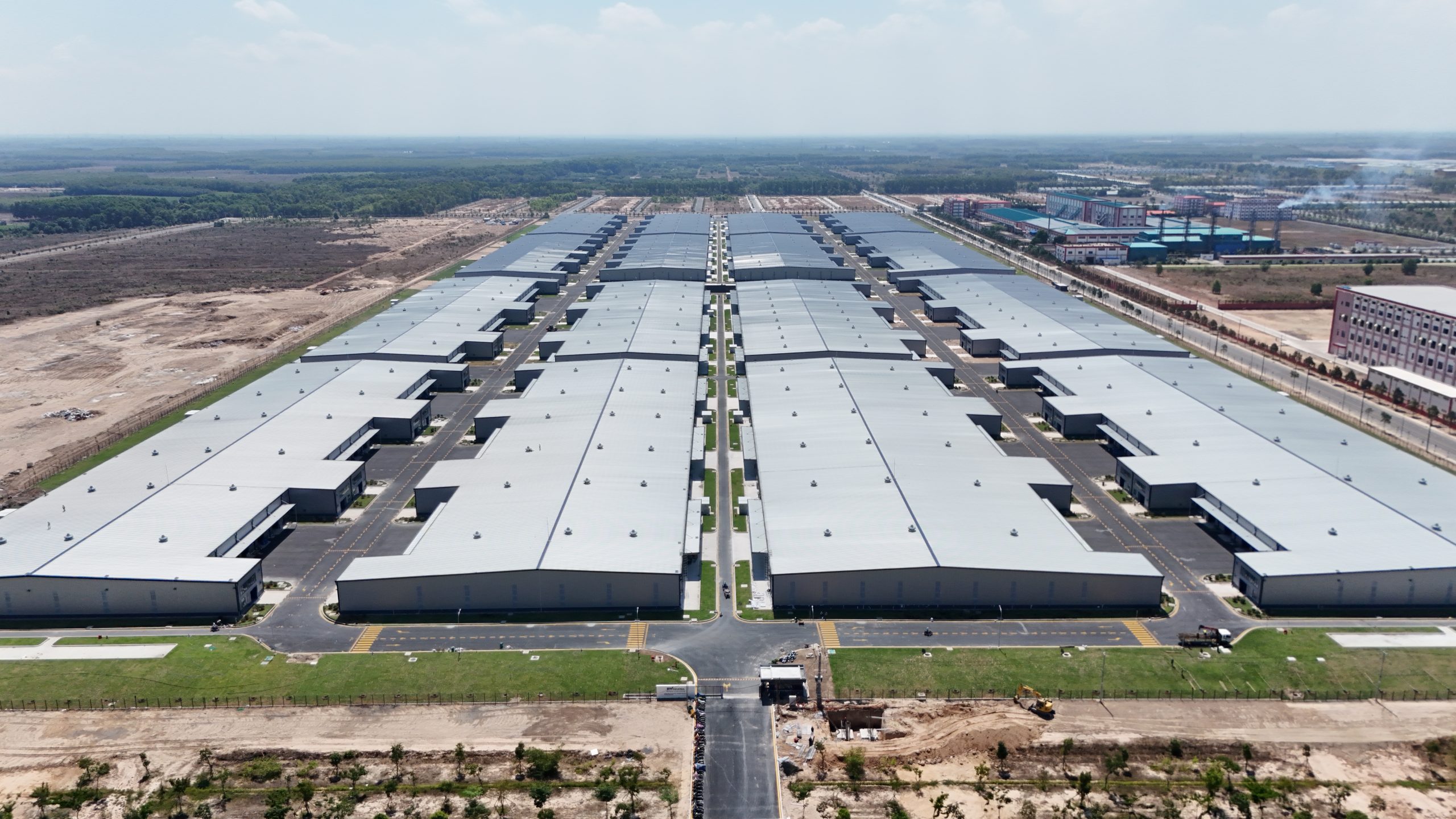

Warehousing and logistics infrastructure is the fastest-growing segment of the global pre-engineered building market — accounting for more than 57% of all PEB demand by floor area as of 2026. The growth is structural, not cyclical: e-commerce penetration across Southeast Asia, the Middle East, and Australia continues to compound, while supply chain regionalisation is creating demand for new distribution hubs closer to end consumers. Pre-engineered steel is the structural system of choice for this wave of construction — not by default, but because it is the only system that consistently delivers the clear spans, eave heights, construction speed, and cost efficiency that logistics operators require.
This guide covers everything a project developer, logistics operator, or procurement manager needs to know before specifying a pre-engineered warehouse building — from structural design principles and key specification parameters to envelope selection, crane systems, and regional code requirements.
WHO THIS GUIDE IS FOR This article is written for: (1) property developers and logistics REITs evaluating warehouse construction options; (2) manufacturing and e-commerce companies planning their own distribution facility; (3) architects and engineers seeking structural specification benchmarks for PEB warehouse design; (4) procurement managers requesting quotes from PEB manufacturers. If you need a cost guide, see our companion article: Pre-Engineered Buildings Cost Guide 2026.
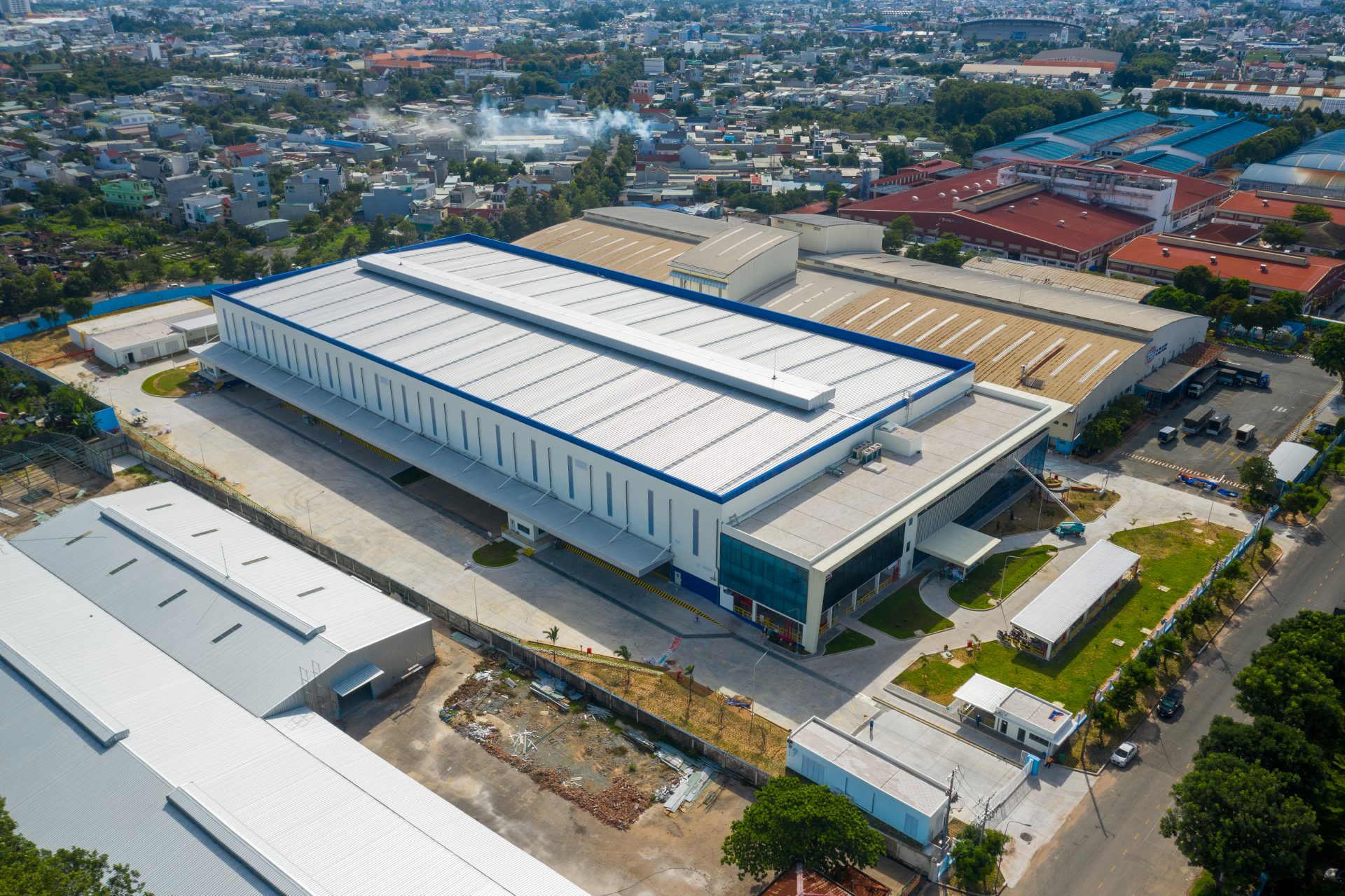
1. Warehouse Types & Their Design Implications
Not all warehouses are the same structural problem. The correct PEB specification starts with a clear understanding of the warehouse type, because the operational requirements of each type drive fundamentally different structural and envelope choices.
| Warehouse type | Eave height | Clear span | Cladding / envelope |
|---|---|---|---|
| Dry goods / general storage | 6–9 m | 30–60 m | Single-skin, optional louvres |
| Cold-chain / freezer | 9–12 m | 30–50 m | PIR sandwich panels (U≤0.20) |
| E-commerce fulfilment | 12–18 m | 40–80 m | Multi-tier racking clearance |
| Heavy manufacturing / MRO | 9–14 m | 40–90 m | Crane beams, blast-rated panels |
| Bonded / customs warehouse | 8–10 m | 30–50 m | High-security doors & fencing |
| Agri / cold produce | 8–12 m | 30–60 m | Humidity control + ventilation |
The e-commerce fulfilment centre — the defining warehouse type of the 2020s
The e-commerce fulfilment centre (FC) has emerged as the most demanding warehouse brief in Southeast Asia and the Middle East. FCs require eave heights of 12–18 m to accommodate automated multi-tier racking and mezzanine pick floors, clear spans of 40–80 m to enable flexible racking grid configurations without column interference, and structural provision for a mezzanine slab (typically 5–7.5 kPa live load) in addition to the roof live load. These requirements push PEB primary frame specifications significantly beyond a simple dry-goods warehouse.
The combination of tall eave height, wide clear span, and heavy imposed loads means FC primary frames carry substantially more steel per square metre than a basic warehouse. Budget separately for the structural uplift — and engage the PEB manufacturer at concept stage to optimise the column grid before the racking layout is fixed.
2. Structural Design: Primary Frame, Spans & Heights
Primary frame types for warehouses
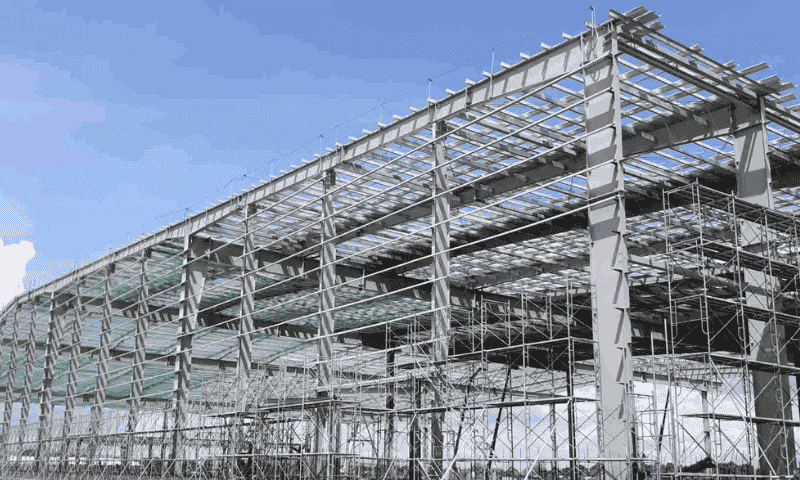
The primary structural frame is the skeleton of the building — the rigid columns and rafters that transfer all roof, wind, and crane loads to the foundations. For warehouse applications, three frame configurations dominate:
- Clear span (single-bay rigid frame): No interior columns. Ideal for warehouses requiring full floor flexibility — racking grids can be configured and reconfigured freely. Economical up to approximately 60 m; specialist heavy-frame designs extend to 90 m.
- Multi-span (modular frame): Interior columns at regular intervals of 20–30 m. The most cost-effective option for very large floor plates (>10,000 m²) where total column-free space is not operationally essential. Reduces primary frame steel by 25–40% versus equivalent clear span.
- Single slope (mono-pitch): A single-plane roof pitched in one direction. Used for lean-to warehouses, drive-through loading bays, and buildings where height restrictions apply on one boundary. Popular for secondary warehouse and storage buildings adjacent to a main facility.
Eave height — the most consequential design decision
Eave height is the vertical dimension from finished floor level to the underside of the eave purlin, and it is the single parameter that most influences both operational capacity and structural cost of a warehouse building.
The relationship between eave height and racking height determines the rentable storage cube — the metric that ultimately drives warehouse economics. The following guidance applies:
- ≤6 m eave: Suitable only for basic single-level storage, vehicle storage, or equipment shelter. Rarely appropriate for modern logistics facilities.
- 8–10 m eave: Accommodates 3–4 levels of Euro-pallet racking (standard for most FMCG, retail, and light industrial warehousing). The most common specification in Southeast Asia for general-purpose logistics.
- 12–15 m eave: Enables 5–7 levels of narrow-aisle or very-narrow-aisle racking. Required for modern e-commerce fulfilment centres and high-bay cold-chain facilities. Increases primary frame cost by approximately 30–50% versus 9 m eaves for equivalent clear spans.
- 15–18 m+ eave: High-bay automated storage and retrieval system (AS/RS) warehouses. Requires specialist structural engineering and crane-runaway beam integration. Premium specification; cost and lead time uplift significant.
Bay spacing and column grid
Bay spacing — the centre-to-centre distance between primary frames along the building length — is a critical cost lever that is often overlooked. Wider bay spacing means fewer primary frames for the same floor area, which reduces fabrication cost and erection time. Most warehouse designs use 6–9 m bay spacing as the optimum range, balancing secondary member spanning capacity against primary frame cost savings.
When integrating mezzanine floors or overhead crane systems, the primary frame column positions must be coordinated with the structural grid of those elements from the earliest design stage. Post-design modification is expensive and often impossible without re-engineering the entire frame.

3. Building Envelope: Roof, Walls & Insulation
Roof cladding systems
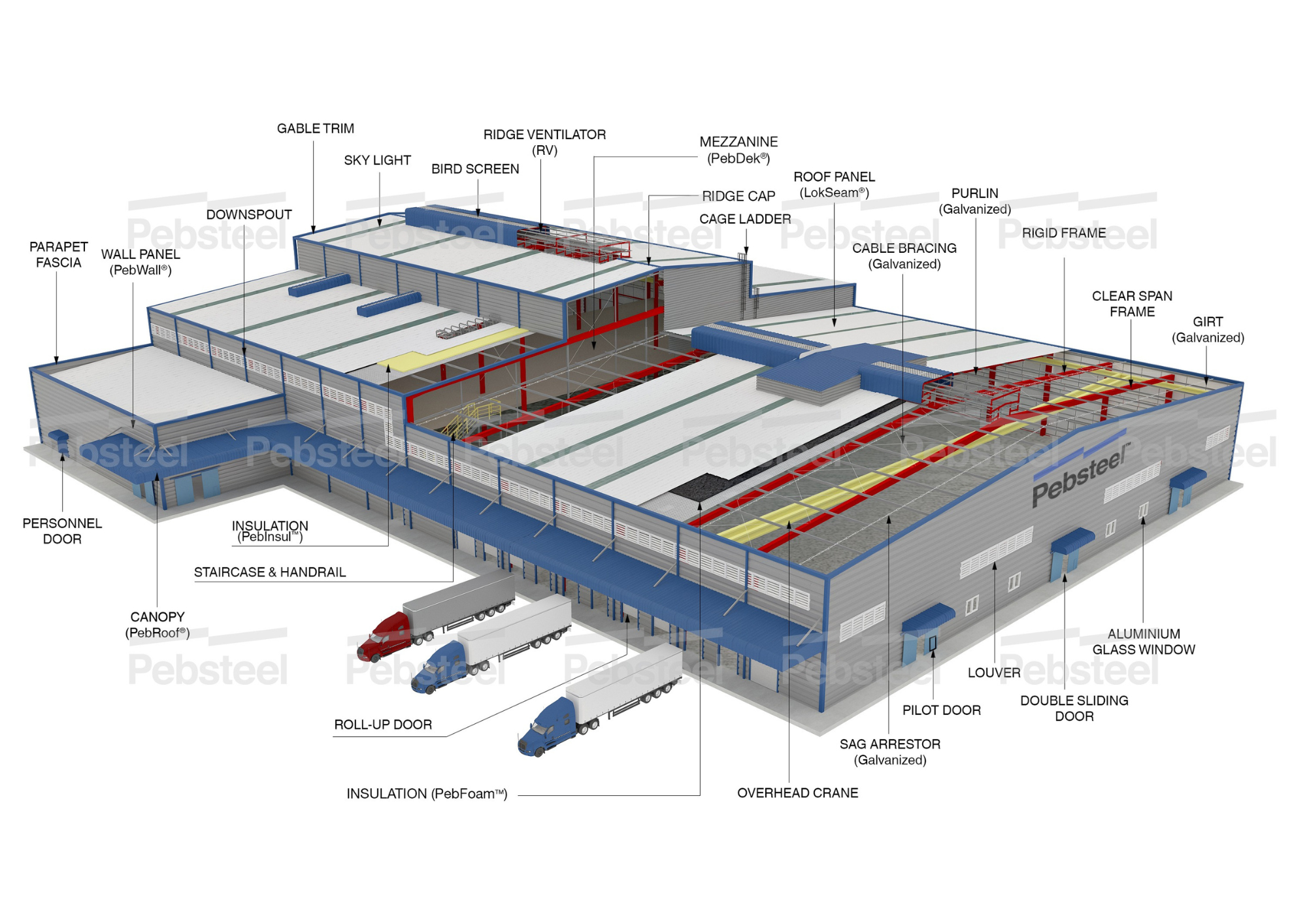
The roof is the most performance-critical element of any warehouse envelope — it must manage rainwater, resist wind uplift, control heat gain, and, in many applications, provide a substrate for rooftop solar photovoltaic (PV) panels. Three roof systems are used in modern PEB warehouse construction:
- Single-skin profiled steel sheeting: The lowest-cost option. Adequate for non-temperature-controlled storage and covered equipment yards. Poor thermal performance — not suitable for any application requiring climate control or worker comfort without supplementary insulation.
- Single-skin + glasswool blanket insulation: 75–100 mm glasswool draped over secondary purlins before cladding installation. Achieves R-values of approximately 2.0–3.5 m²K/W depending on thickness. Cost-effective for general warehousing in tropical climates where cooling rather than heating is the challenge.
- Insulated sandwich panels (PIR or mineral wool core): Factory-assembled panels with a rigid foam or mineral wool insulation core bonded between two steel skins. Achieve U-values as low as 0.18–0.22 W/m²K. Mandatory for cold-chain, food processing, and pharmaceutical warehousing. Also increasingly specified for general warehousing where occupant comfort and energy efficiency are priorities. Premium cost, but lifecycle energy savings typically achieve payback within 5–8 years in tropical and arid climates.
Rooftop solar integration
Pre-engineered warehouse roofs are ideal solar PV substrates — large, unobstructed, and structurally capable of carrying panel loads when specified from the outset. Standing-seam concealed-fix roof systems are strongly preferred for solar integration, as clamps attach directly to the seam without penetrating the roof membrane. Structural provision for solar dead loads (typically 15–25 kg/m² of panel area) and maintenance access live loads must be incorporated into the roof purlin design at concept stage — not retrofitted.
Wall cladding and natural light
Wall cladding for warehouses is typically profiled steel sheeting in a single-skin or insulated configuration, matching the roof specification. Two additional elements require deliberate design attention:
- Translucent roof and wall panels: GRP (glass-reinforced plastic) or polycarbonate translucent sheeting is used at regular intervals in the roof and high-level wall cladding to provide natural daylighting. A well-designed daylighting system (typically 10–15% of roof area in translucent panels) can reduce artificial lighting energy consumption by 30–50% during daytime operations. Position translucent panels on north-facing roof slopes (in the southern hemisphere) or south-facing (in the northern hemisphere) to minimise direct solar gain.
- Louvre ventilation systems: Ridge ventilators and wall louvres are used to manage heat and humidity in non-climate-controlled warehouses. Ridge-mounted continuous ventilators create a stack-effect airflow that extracts hot air at the apex, drawing in cooler air at low level. Essential for worker comfort in tropical climates (Vietnam, Philippines, Indonesia, Thailand) and for preventing condensation in buildings with high internal moisture loads.
4. Loading Dock & Door Design
Loading docks and access doors are operationally critical elements that must be integrated into the PEB structural design from the earliest stage. Framed openings in PEB wall panels require additional structural members — header beams, jamb columns, and foundation pads — that must be designed into the primary and secondary frame system.
Dock door configurations
- At-grade drive-through doors: The simplest configuration. Roller doors or sectional doors installed at floor level, with exterior concrete apron for trailer parking. Appropriate for buildings with level sites and container yard access.
- Raised dock levellers: Dock doors positioned at truck trailer bed height (typically 1.0–1.2 m above exterior grade), with dock levellers bridging the height difference between the trailer floor and the warehouse floor. Standard for high-throughput distribution centres. Requires canopy overhang to shelter the dock during loading — typically a steel canopy extending 4–6 m from the building face, engineered as part of the PEB package.
- Dock shelters and seals: For temperature-controlled facilities, dock doors must be fitted with inflatable seals or retractable dock shelters that compress against the trailer body to prevent thermal bridging during loading. These are accessories specified within the PEB building package.
Door quantity — the most commonly under-specified element
Door quantity is consistently the most under-specified element in early warehouse briefs. A rule of thumb for distribution centres: one dock door per 500–800 m² of floor area for active pick-and-despatch operations; one per 800–1,200 m² for slower-turnover bulk storage. Under-specifying dock doors creates an operational bottleneck that cannot be easily remedied post-construction without expensive structural intervention.
5. Overhead Crane Systems in Warehouse Buildings
Not all warehouses incorporate overhead cranes, but for manufacturing-adjacent warehousing, heavy component storage, and MRO (maintenance, repair, overhaul) facilities, crane systems are a defining structural requirement.
Overhead cranes exert concentrated loads at their runway beams — axial compression, lateral thrust, and significant eccentric moments — that must be designed into the primary frame from the outset. Retrofitting a crane system to a PEB that was not originally designed for it is rarely feasible and always expensive.
- Under-hung cranes (≤5 tonnes): Suspended from the underside of roof purlins or dedicated runway beams spanning between primary frames. Low-impact on primary frame design; suitable for light-duty parts handling and assembly support.
- Top-running cranes (5–50 tonnes): Runway beams supported on brackets welded to the primary frame columns. The most common configuration in manufacturing warehouses. Primary frames must be designed with increased column stiffness and the added eccentric moment from crane wheel loads.
- Heavy cranes (50–200+ tonnes): Require dedicated crane columns, separate from the main building columns in many designs, with deep crane girders and rail systems. These are specialist structural designs that move beyond standard PEB practice and into heavy structural engineering territory.
DESIGN COORDINATION RULE Always provide crane capacity, wheel base, hook height, and runway beam span to the PEB manufacturer at concept stage — before primary frame design begins. Changes to crane specification after frame fabrication has commenced require re-engineering and potentially new steel, with significant cost and schedule impact.
6. Key Specification Parameters — Quick Reference
The following table summarises the most important specification parameters for pre-engineered warehouse buildings, with typical values and the standards that govern them. Use this as a checklist when preparing a brief for a PEB manufacturer.
| Parameter | Typical value / range | Note |
|---|---|---|
| Primary frame steel grade | ASTM A572 Gr.50 / S355 equivalent | High tensile — reduces section size |
| Design wind speed (SEA) | V_ult 47–72 m/s (site-specific) | Check ASCE 7 or local standard |
| Roof live load (maintenance) | 0.6–1.0 kPa | AS/NZS 1170.1 or ASCE 7 Ch.4 |
| Floor live load (warehouse) | 25–50 kN/m² (floor slab, not PEB) | PEB carries roof / wall only |
| Eave height tolerance | ±10 mm (factory fabrication) | Critical for racking integration |
| Anchor bolt positional tol. | ±3 mm | Governs foundation drawing timing |
| Roof slope (standard) | 1:10 (5.7°) minimum | Steeper for high-rainfall sites |
| Purlin spacing | 1.5–2.0 m centres | Driven by cladding spanning capacity |
| Bay spacing | 6–9 m typical | Wider bays = less frames, lower cost |
| Crane runway beam tolerance | ±2 mm rail alignment | Critical for long-travel cranes |
7. Regional Design Standards & Code Requirements
Pre-engineered warehouse buildings must comply with the structural design standards of the country where they are erected. These standards govern load combinations, material specifications, connection design, and seismic detailing. The table below summarises the applicable standards and key local factors for PEB Steel’s primary markets.
| Country / Region | Primary standard | Seismic consideration | Key local factor |
|---|---|---|---|
| Vietnam | TCVN 2737 / ASCE 7 | Zone III–IV seismic | High humidity, coastal corrosion zones |
| Philippines | NSCP 2015 / ASCE 7 | Seismic Zone 4, super-typhoon | UHF wind zone: V_ult up to 85 m/s |
| Thailand | EIT / ASCE 7 overlay | Low seismic | High ambient temp design required |
| Malaysia | MS EN 1993 (Eurocode) | Low seismic | BS codes still accepted |
| Indonesia | SNI 1726 / SNI 1727 | High seismic (Zones 5–6) | Liquefiable soils common in coastal areas |
| UAE / Saudi | IBC 2018 / ASCE 7 | Moderate seismic (SA higher) | Extreme heat, UV, sand abrasion |
| Australia | AS/NZS 1170 + NCC | Seismic Zone B–E | Cyclone Regions B–D; BAL fire zones |
A critical point for export projects: structural drawings must be stamped by a licensed engineer registered in the country of installation, not merely in the country of manufacture. PEB Steel’s engineering teams hold or can facilitate local registration in Vietnam, Cambodia, Philippines, Thailand, Malaysia, Indonesia, UAE, and Australia. Confirm registration status with your supplier before contract award.
8. Warehouse PEB Design Brief Checklist
Use this checklist when preparing a request for quotation (RFQ) to a PEB manufacturer. Providing complete information at enquiry stage enables the manufacturer to produce an accurate budgetary estimate within 48 hours and avoids costly design revisions later.
Building dimensions & layout
- Building footprint: length × width (m)
- Eave height (m) at lowest point
- Number of bays and preferred bay spacing
- Roof slope requirement (or leave to manufacturer to recommend)
- Mezzanine floor: yes/no; if yes — area (m²), live load (kPa), number of levels
Structural requirements
- Site location: country, province, and GPS coordinates (for wind/seismic zone determination)
- Terrain category or exposure category (urban/open/coastal)
- Overhead crane: capacity (tonnes), span, duty cycle (A1–A8), hook height
- Roof live load for maintenance access and/or solar PV (if applicable)
- Any blast, impact, or fire resistance requirements
Envelope & fitout
- Roof cladding system: single-skin / blanket insulation / sandwich panels (specify U-value target)
- Wall cladding system: same as roof or specify separately
- Number and size of dock doors / roller doors / personnel doors / windows
- Ridge ventilators: yes/no; area of building served
- Translucent roof panels: percentage of roof area (or leave to manufacturer to recommend)
- Solar PV provision: panel area (m²), dead load (kg/m²)
Site & logistics
- Site access constraints (road width, bridge limits, crane radius restrictions)
- Soil bearing capacity or geotechnical report reference (if available)
- Target completion date
- Applicable design standard (or confirm with manufacturer if unsure)
TIP — THE 5-MINUTE RFQ If you do not yet have all of the above information, a budgetary estimate can still be produced from just five inputs: (1) length × width, (2) eave height, (3) warehouse type / use, (4) site country and nearest city, (5) crane requirement (yes/no and capacity). PEB Steel will return a budgetary range within 48 hours on this basis.
9. Frequently Asked Questions
Q: What is the optimal clear span for a general-purpose warehouse building?
For general-purpose warehousing in Southeast Asia and the Middle East, the most economical clear span is typically 30–50 m. This range accommodates standard euro-pallet racking configurations, allows forklift aisles without column interference, and falls within the most cost-effective range for PEB primary frame design. Clear spans beyond 60 m are available and appropriate for aviation hangars or very large e-commerce fulfilment centres, but carry a significant cost premium per square metre. For large floor plates (>10,000 m²), a multi-span design with 30 m bays and interior columns is often 25–35% cheaper than an equivalent clear-span solution.
Q: What eave height do I need for a modern e-commerce warehouse?
A minimum eave height of 12 m is now considered the industry standard for new-build e-commerce fulfilment centres in Asia-Pacific and the Middle East. This accommodates five-level narrow-aisle racking to approximately 10.5 m pick height, with clearance for racking uprights, sprinkler heads, and building services. High-bay facilities using very-narrow-aisle (VNA) trucks or automated storage and retrieval systems (AS/RS) require 15–18 m eaves. If in doubt, build to 12 m minimum — the incremental structural cost of specifying 12 m versus 9 m eaves is typically 20–35% on primary frame cost, but the operational flexibility gained is permanent.
Q: Can a pre-engineered warehouse building support rooftop solar panels?
Yes — and this is one of the most compelling value-adds of PEB warehouse construction. PEB roofs, particularly standing-seam concealed-fix systems, are ideally suited for rooftop solar PV. The key requirement is that the solar dead load (typically 15–25 kg/m² for crystalline silicon panels) and maintenance live load are specified and incorporated into the purlin design at concept stage. PEB Steel routinely designs warehouse roofs with structural solar provision, and can advise on the optimal purlin section and spacing for your target panel density. Do not attempt to retrofit solar to a warehouse roof that was not designed to carry the additional load without a structural assessment.
Q: How many dock doors should I specify for my warehouse?
Dock door quantity is a function of throughput requirements, not floor area alone. As a general guideline: for active distribution centres (high SKU count, frequent small shipments), allow one dock door per 500–700 m² of warehouse floor area. For bulk storage warehouses (low frequency, large shipments), one dock per 1,000–1,500 m² is typically adequate. Under-specifying dock doors is one of the most common and costly mistakes in warehouse design — adding doors post-construction requires wall framing modifications, header beam installation, external concrete apron extension, and dock equipment procurement, all at significant cost and disruption. Specify generously.
Q: What is the design life of a pre-engineered steel warehouse building?
The structural design life of a PEB warehouse building is 50 years, consistent with the design standards applied (ASCE 7, AS/NZS 1170, Eurocode). The practical building life is typically longer — provided the cladding envelope is maintained and re-coated at the end of its warranty period. PEB Steel’s standard cladding systems (Hyper180® PVDF-coated) carry 25–40-year coating warranties for colour retention and corrosion resistance. At the end of the coating’s warranted life, the building can be re-clad with a new panel system on the existing structure, effectively resetting the building’s serviceability life at a fraction of new-build cost.
Disclamer: The content provided in this article is for reference purposes only. For further details or clarification based on your needs, please contact Pebsteel directly.