
When specifying a new industrial, commercial, or logistics facility, the most consequential early decision is the structural system: pre-engineered building (PEB) or conventional construction? The wrong choice can mean months of unnecessary delay, millions in avoidable cost, or a building that cannot adapt as your business grows.
This guide provides a transparent, data-driven comparison across every dimension that matters to project owners and developers in Southeast Asia, the Middle East, and Australia. We cover cost, speed, design flexibility, structural performance, sustainability, and the specific conditions under which each method is the better choice.
KEY TAKEAWAY For single-storey and low-rise industrial, logistics, commercial, and agricultural buildings — which represent more than 65% of global construction demand in PEB’s core markets — pre-engineered buildings outperform conventional construction on cost, speed, and quality in virtually every measurable dimension. The exceptions are narrow but real, and we cover them honestly.
1. What Each Method Actually Means
Pre-Engineered Buildings (PEB)
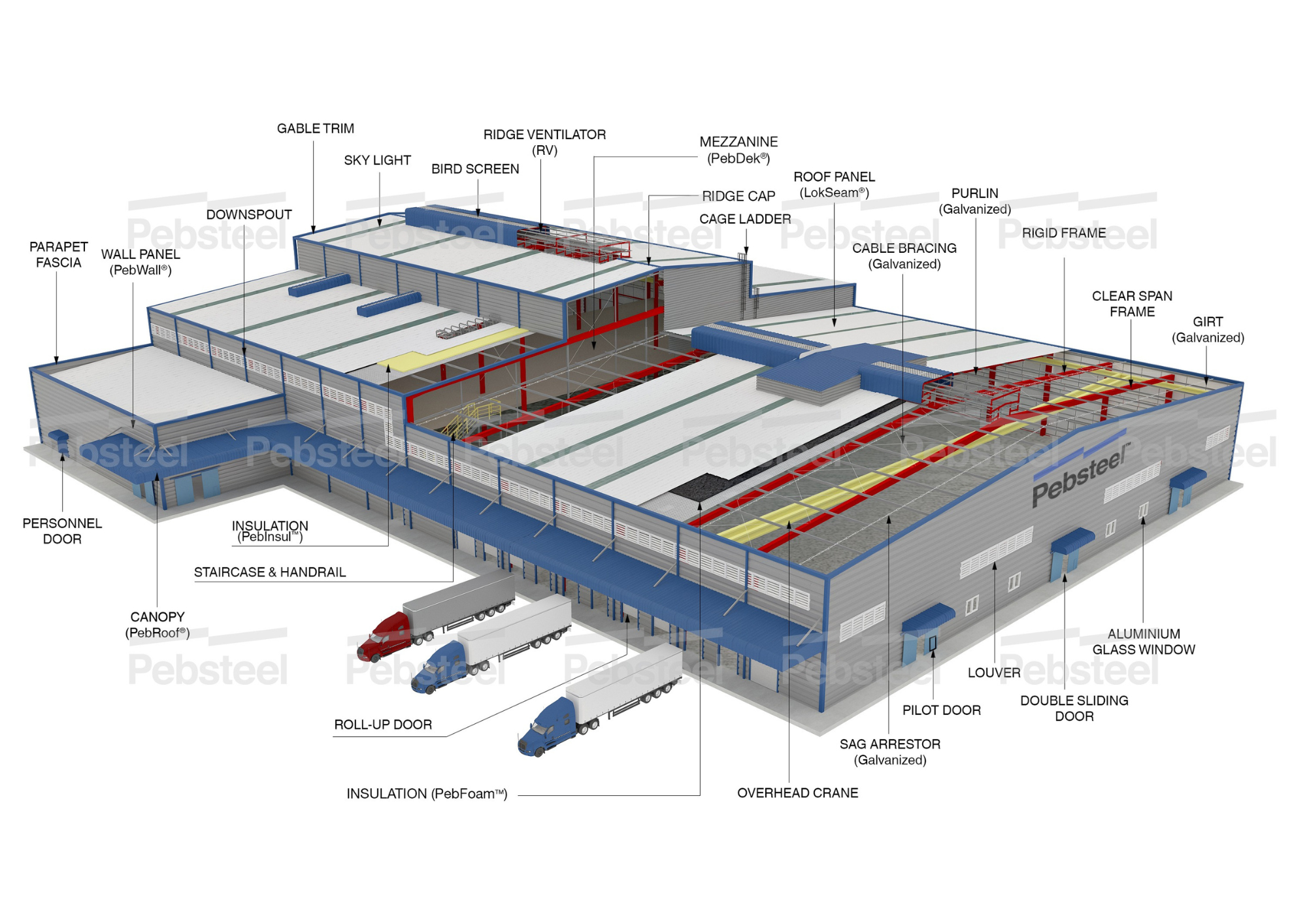
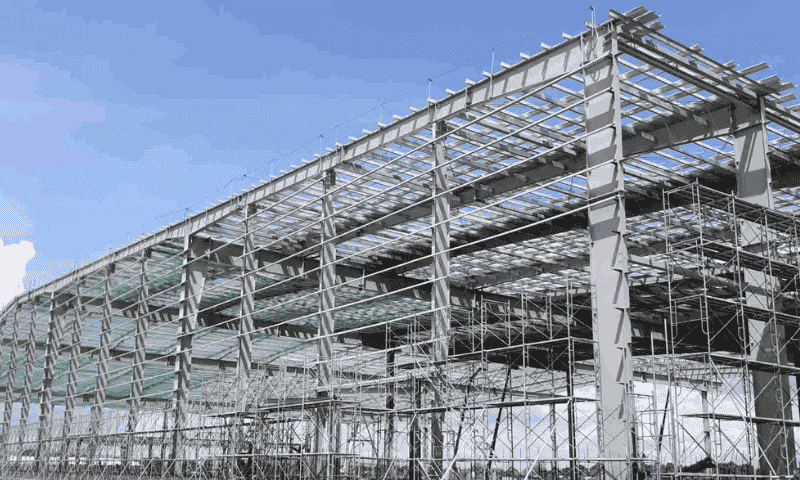
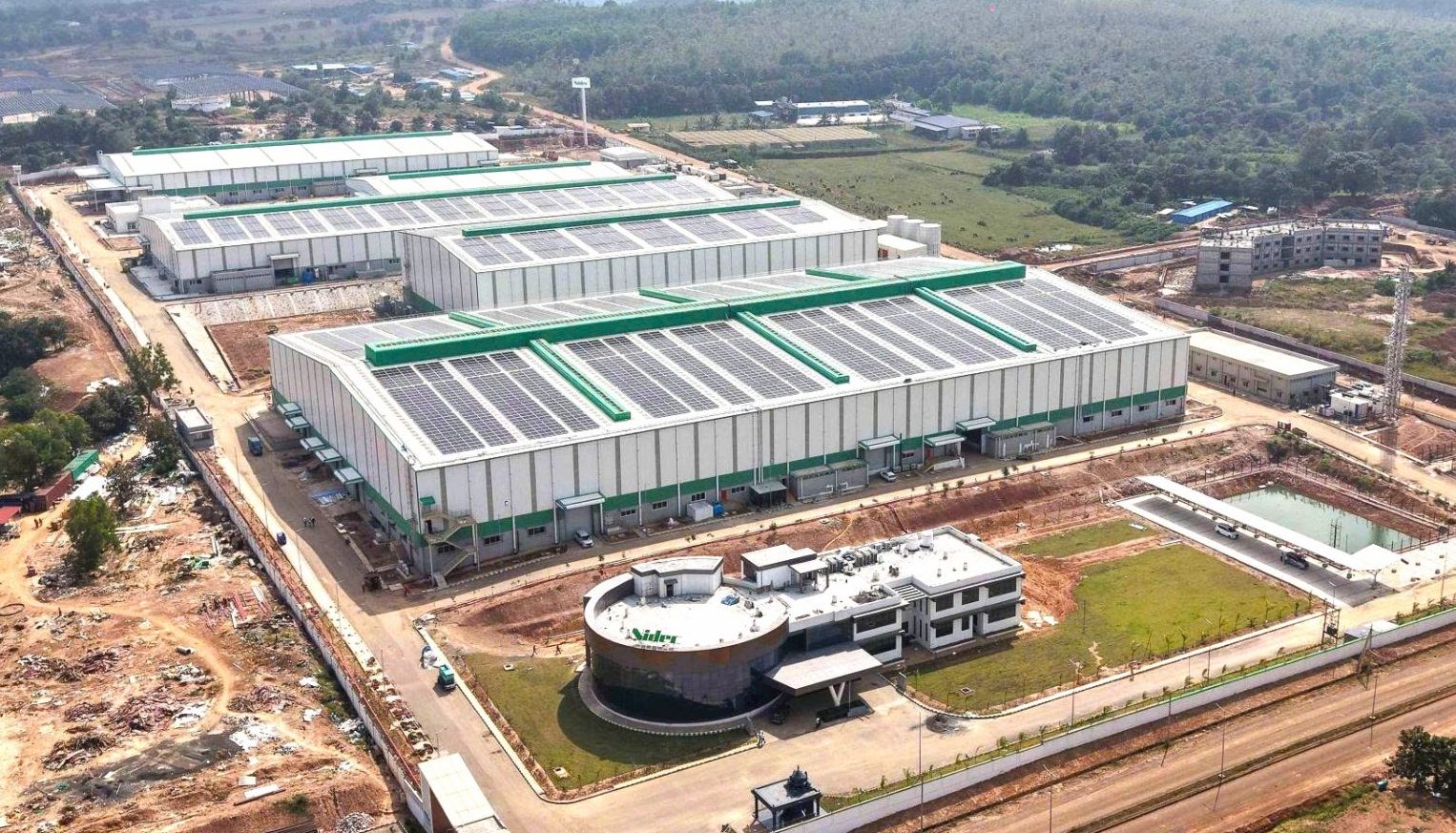
A pre-engineered building is a complete structural system — primary steel frames, secondary members, roofing, wall cladding, and all accessories — that is designed, engineered, and fabricated in a factory to the exact specifications of a single project. All components are precision-cut, drilled, and coated under quality-controlled conditions, then delivered to site as a numbered kit for rapid bolted assembly.
The critical advantage is parallelism: factory fabrication runs simultaneously with site preparation and foundation construction, so the total project schedule is compressed. A building that would take 12 months to construct using conventional methods can be erected in 6–8 weeks once the kit arrives on site.
Conventional Construction
Conventional construction refers to structures built primarily on-site from raw materials — reinforced concrete frames, masonry walls, in-situ concrete slabs — with structural steel members typically hot-rolled to standard section sizes. Everything is designed, procured, and assembled sequentially on site, relying heavily on local skilled labour throughout.
Conventional construction offers greater architectural flexibility and is the appropriate choice for complex multi-storey buildings, highly specialised structures, and projects where the architectural brief cannot be accommodated within a steel frame system. For most industrial and commercial applications, however, this flexibility is purchased at significant cost in time and money.
2. The Complete Comparison — 13 Key Factors
The table below summarises the head-to-head comparison across the dimensions that most influence project owner decisions. Detailed explanation of each factor follows in subsequent sections.
| Factor | Pre-Engineered Building (PEB) | Conventional Construction |
|---|---|---|
| Construction speed | 6–12 weeks erection (factory runs in parallel) | 6–18 months on-site build |
| Cost vs. concrete | 30–40% lower total project cost | Baseline — higher labour & waste |
| Material waste | ~5% waste (factory precision cuts) | 15–25% on-site waste typical |
| Design wind/seismic | Engineered to exact site loads | Engineered to exact site loads |
| Clear-span capacity | Up to 90 m column-free | Typically ≤30 m economically |
| Quality consistency | Factory QC, ISO-controlled, traceable welds | Variable — site labour dependent |
| Expandability | Add bays / raise eaves with minimal disruption | Structural changes expensive |
| Foundation cost | Defined column loads = optimised footings | Often heavier, more conservative |
| Architectural finish | Full brick, glass, composite façade options | Unlimited form and finish |
| Multi-storey (4+) | Limited — best for low-rise | Preferred — concrete or steel frame |
| Sustainability | 85%+ recyclable steel, 30–40% less site waste | Higher embodied carbon (concrete) |
| Lead time certainty | Factory schedule = predictable delivery | Site delays more common |
| Maintenance cost | Very low — premium coatings 25–40 yr life | Moderate — concrete crack, spall |
3. Cost Comparison: PEB vs Conventional
Cost is the most frequently cited reason for choosing PEB over conventional construction, and the advantage is real — but it is important to understand where the savings come from and where they do not apply.
Where PEB is cheaper
Pre-engineered buildings deliver cost savings across five mechanisms:
- Reduced labour hours — components arrive ready to bolt; no shuttering, no reinforcing, no wet trades on the primary structure.
- Minimal material waste — factory fabrication to exact lengths and profiles generates approximately 5% material waste versus 15–25% on a conventional site.
- Shorter construction schedule — fewer weeks of site management, supervision, and financing costs during construction.
- Optimised steel tonnage — PEB primary frames are tapered to exact structural requirements, using 15–30% less steel than conventional hot-rolled section design.
- Single-source procurement — one contract, one supplier, eliminates interface disputes between multiple sub-contractors.
2026 Turnkey Cost Benchmarks by Building Type
The following benchmarks reflect total turnkey project costs (design, structure, cladding, erection, foundations, basic fitout) based on PEB Steel’s project portfolio data from 2024–2026.
| Building type | PEB turnkey est. | Conventional turnkey | Typical saving |
|---|---|---|---|
| Warehouse (basic) | $120–200/m² | $180–280/m² | PEB saves 30–35% |
| Manufacturing plant | $160–280/m² | $250–400/m² | PEB saves 30–40% |
| Commercial / retail | $180–320/m² | $280–450/m² | PEB saves 25–35% |
| Cold-chain / insulated | $250–420/m² | $350–520/m² | PEB saves 20–30% |
| Multi-storey (4+ floors) | $350–600/m² | $280–480/m² | Conventional preferred |
IMPORTANT CAVEAT Turnkey costs vary significantly by site conditions (ground quality, access, remoteness), labour rates in the destination country, and local import duties. The figures above represent mid-range estimates for well-served markets in Southeast Asia. Australian and Middle East projects typically carry a 30–60% premium on erection costs due to local labour rates and logistics.
4. Construction Speed: PEB vs Conventional
Speed of construction is the second major decision driver after cost, and the PEB advantage here is even more decisive than in cost. The key is that PEB construction is not simply faster — it is structurally faster, meaning the speed advantage is embedded in the system and does not depend on finding an exceptional site team or compressing the programme in ways that create quality risk.
Phase-by-phase timeline comparison
For a representative 5,000 m² single-storey industrial building:
| Phase | PEB | Conventional |
|---|---|---|
| Design & engineering | 3–6 weeks | 8–20 weeks |
| Site preparation | Concurrent with fabrication | Sequential (adds to schedule) |
| Factory fabrication | 6–14 weeks | N/A — built on site |
| On-site erection/build | 4–10 weeks | 20–52 weeks |
| Total (typical 5,000m²) | 16–30 weeks | 36–72 weeks |
The single most important time-saving mechanism is parallel scheduling: PEB factory fabrication (the longest phase at 6–14 weeks) runs simultaneously with site clearing and foundation construction. In conventional construction, the two phases are sequential — you cannot begin structural work until the foundation slab has cured. This alone saves 8–14 weeks on a typical mid-size project.
For businesses entering a fast-moving market — a new logistics hub opening in Vietnam to serve regional e-commerce demand, or a manufacturing facility needed to begin production before a customer deadline — this schedule compression translates directly into earlier revenue. At a conservative USD 1M per month of trading from a new facility, a 10-week programme saving is worth USD 2.5M in opportunity cost alone.
5. Design Flexibility: What PEB Can and Cannot Do
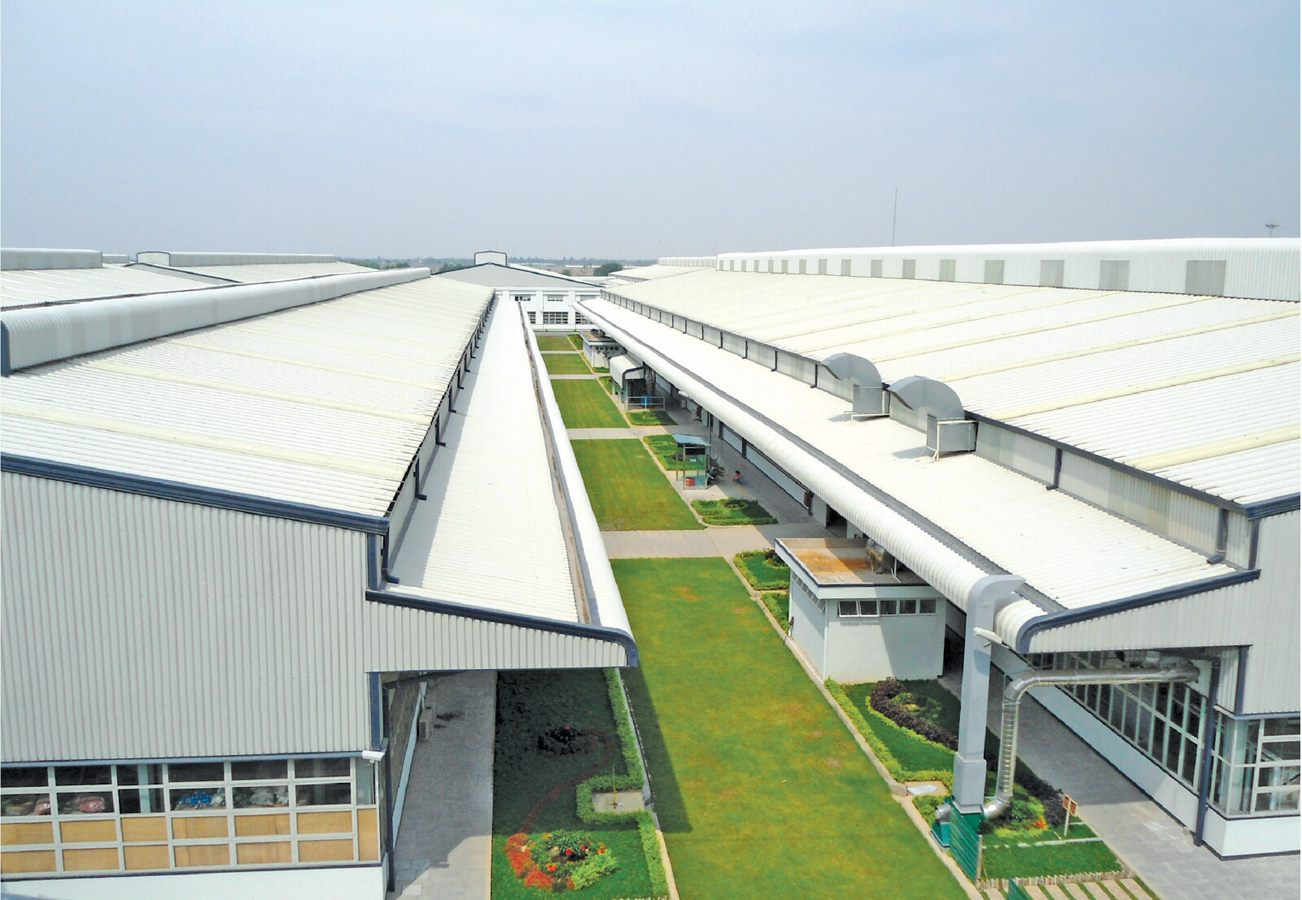
The most common misconception about pre-engineered buildings is that they are limited in architectural expression — that they must look like corrugated-iron sheds. This has not been true for more than a decade. Modern PEB systems accommodate a wide range of finishes and forms:
- Brick, masonry, and stone façade cladding applied over the steel frame
- Glass curtain walls and structural glazing systems
- Composite metal panel facades (similar to conventional commercial buildings)
- Curved eaves and tapered fascias for architectural interest
- Clear-span interiors up to 90 m — impossible to match economically with concrete
- Mezzanine floors, crane systems, roof platforms, and canopies integrated as engineered elements
Where conventional construction retains a genuine advantage is in highly complex multi-storey structures (4+ floors), buildings with curved or non-rectilinear plan forms, and projects where the architectural brief requires bespoke structural solutions (e.g., a cantilever feature, an atrium with no visible support). For these applications, a conventional structural engineer working from a clean sheet is the appropriate choice.
6. Quality Control & Long-Term Durability
Pre-engineered buildings offer a fundamental quality advantage that is rarely discussed: the entire primary structure is manufactured in a factory under ISO 9001-certified conditions, with traceable material certificates, documented weld inspection records, and controlled surface treatment processes. This level of traceability and quality assurance is structurally impossible to replicate on a construction site.
Structural lifespan: A well-specified PEB has a design life of 50+ years. The limiting factor is typically the cladding coating system, not the structure. High-quality PVDF-coated steel panels (such as PEB Steel’s Hyper180® system) carry 25–40-year warranty periods for colour retention and corrosion resistance, even in the aggressive coastal and tropical environments of Southeast Asia and the Middle East.
Maintenance: Steel does not crack, spall, or carbonise. Unlike reinforced concrete, pre-engineered steel structures do not suffer from the progressive deterioration caused by moisture ingress into reinforcement. Annual maintenance on a PEB building typically consists of gutter cleaning, fastener inspection, and minor caulking — an order of magnitude less labour-intensive than maintaining a concrete frame building of equivalent age.
7. When to Choose PEB — and When to Choose Conventional
The comparison above makes clear that PEB is the stronger choice for the majority of industrial and commercial applications. But there are conditions under which conventional construction is genuinely preferable. Understanding both sides prevents a poor specification decision.
Choose Pre-Engineered Building (PEB) when…
- The building is single-storey or low-rise (≤3 floors) with an industrial, logistics, commercial, or agricultural function
- Speed of construction is critical — you need to occupy the building within 6–12 months of project start
- Budget efficiency is a priority — you need maximum floor area for minimum cost
- Large column-free spans are required (warehouses, hangars, sports halls, manufacturing)
- Future expansion is likely — you want to add bays, raise eaves, or extend the building without major structural intervention
- The project is in a market where site labour quality is variable — factory QC eliminates dependency on local craftsmanship
- Sustainability credentials are important — you need to demonstrate low embodied carbon and recyclable materials to stakeholders
Choose Conventional Construction when…
- The building is 4+ storeys, or has a complex structural programme that cannot be accommodated by a steel frame
- The architectural brief requires curved forms, non-rectilinear plan shapes, or highly bespoke structural solutions
- The site has severe access constraints that preclude delivery of large fabricated components
- Local regulatory requirements mandate reinforced concrete for specific building categories (uncommon, but exists in some jurisdictions)
- The project requires very high fire resistance ratings that are not achievable with a steel structure (though intumescent coatings address most scenarios)
- The client has a specific preference for concrete aesthetics or thermal mass performance (applicable primarily to residential or hospitality)
8. Frequently Asked Questions
Q: Is a pre-engineered building as structurally strong as a conventional concrete building?
Yes — PEBs are engineered to exactly the same structural load requirements as conventional buildings, using the same international design standards (ASCE 7, AS/NZS 1170, Eurocode). The primary steel frames are designed to resist the same wind, seismic, and live loads as an equivalent concrete structure. In high-wind environments such as cyclone regions of Australia or super-typhoon zones in the Philippines, PEB structures are specifically engineered to the local ultimate design wind speed and have a proven track record in these demanding conditions.
Q: Can a pre-engineered building look like a conventional commercial building?
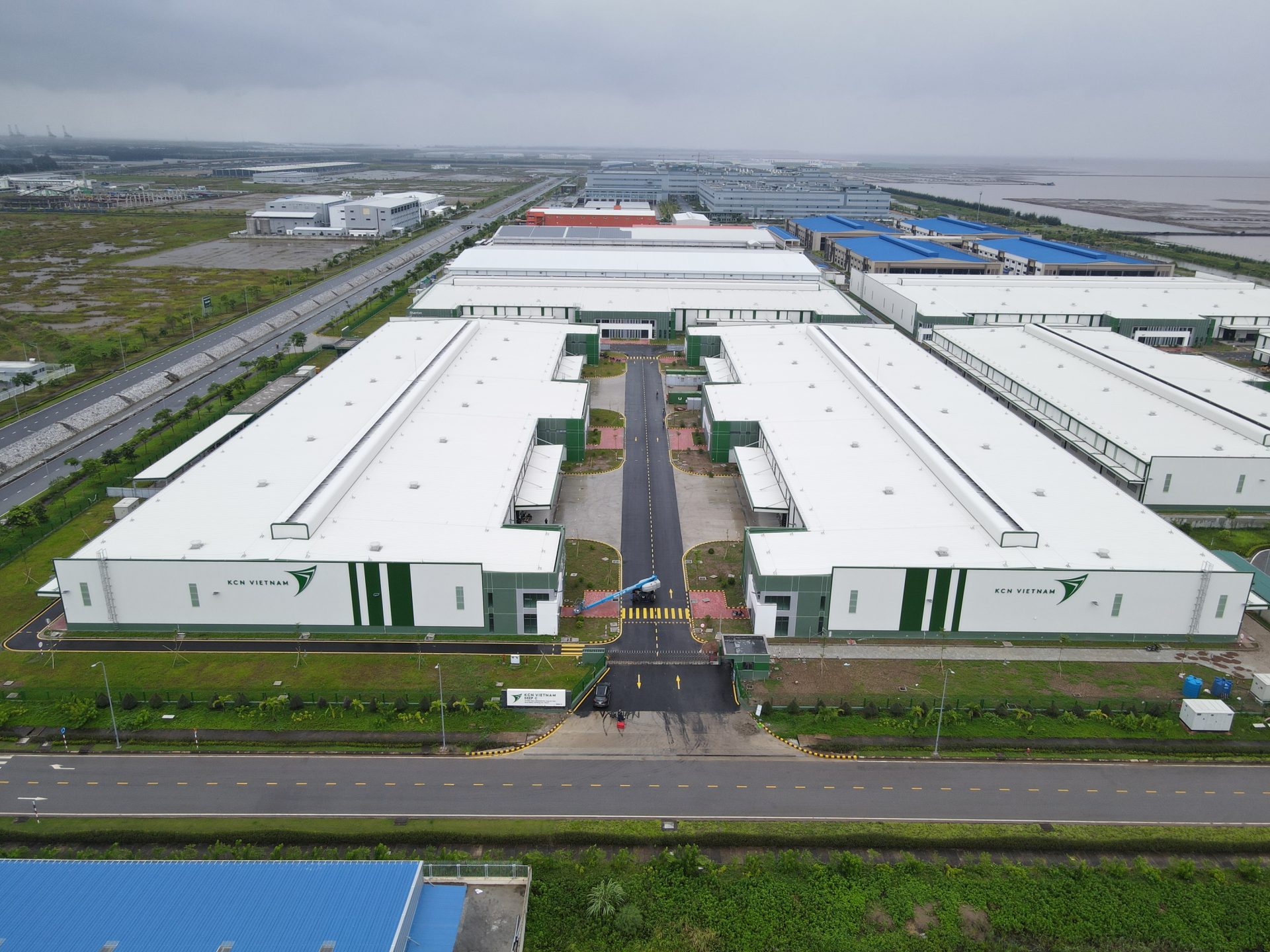
Yes. Modern PEB systems support brick, masonry, glass curtain wall, and composite metal panel façades applied to the steel structure. Many completed PEB commercial buildings are visually indistinguishable from conventionally constructed buildings. The steel frame is the structural system, not the architectural expression — and the architectural expression is highly flexible within the constraints of a rectilinear building form.
Q: How does the foundation cost compare between PEB and conventional construction?
PEB foundations are typically less costly than conventional equivalents. Because PEB manufacturers provide precise column load schedules (axial load, shear, and moment at each column base) early in the design process, the foundation engineer can optimise each footing individually. Conventional concrete structures often require more conservative foundation designs because load information is less precise. PEB column loads are also frequently lighter than equivalent concrete column loads, allowing smaller footings and lower concrete volumes.
Q: Can I expand a pre-engineered building after it is built?
Yes — expansion is one of the most significant advantages of PEB systems over conventional construction. Buildings designed with future expansion in mind can be lengthened by adding standard bays at the endwalls, without disturbing the existing structure or interrupting operations. Width expansion and eave height increases are also possible with careful prior planning. Expansion of a conventional concrete building typically requires structural engineering assessment, demolition of existing elements, and significant disruption to operations.
Q: What is the typical maintenance cost difference between PEB and conventional over 20 years?
In PEB Steel’s experience across completed projects, pre-engineered steel buildings typically incur 40–60% lower maintenance costs over a 20-year period compared to equivalent reinforced concrete buildings. Steel does not crack, spall, or develop carbonation-related deterioration. The primary maintenance items on a PEB building are cladding and sealant inspection (every 5 years) and gutter cleaning (annually). Premium PVDF-coated cladding systems carry 25–40-year warranties, meaning the cladding does not need repainting during a typical building ownership period.
Disclamer: The content provided in this article is for reference purposes only. For further details or clarification based on your needs, please contact Pebsteel directly.