
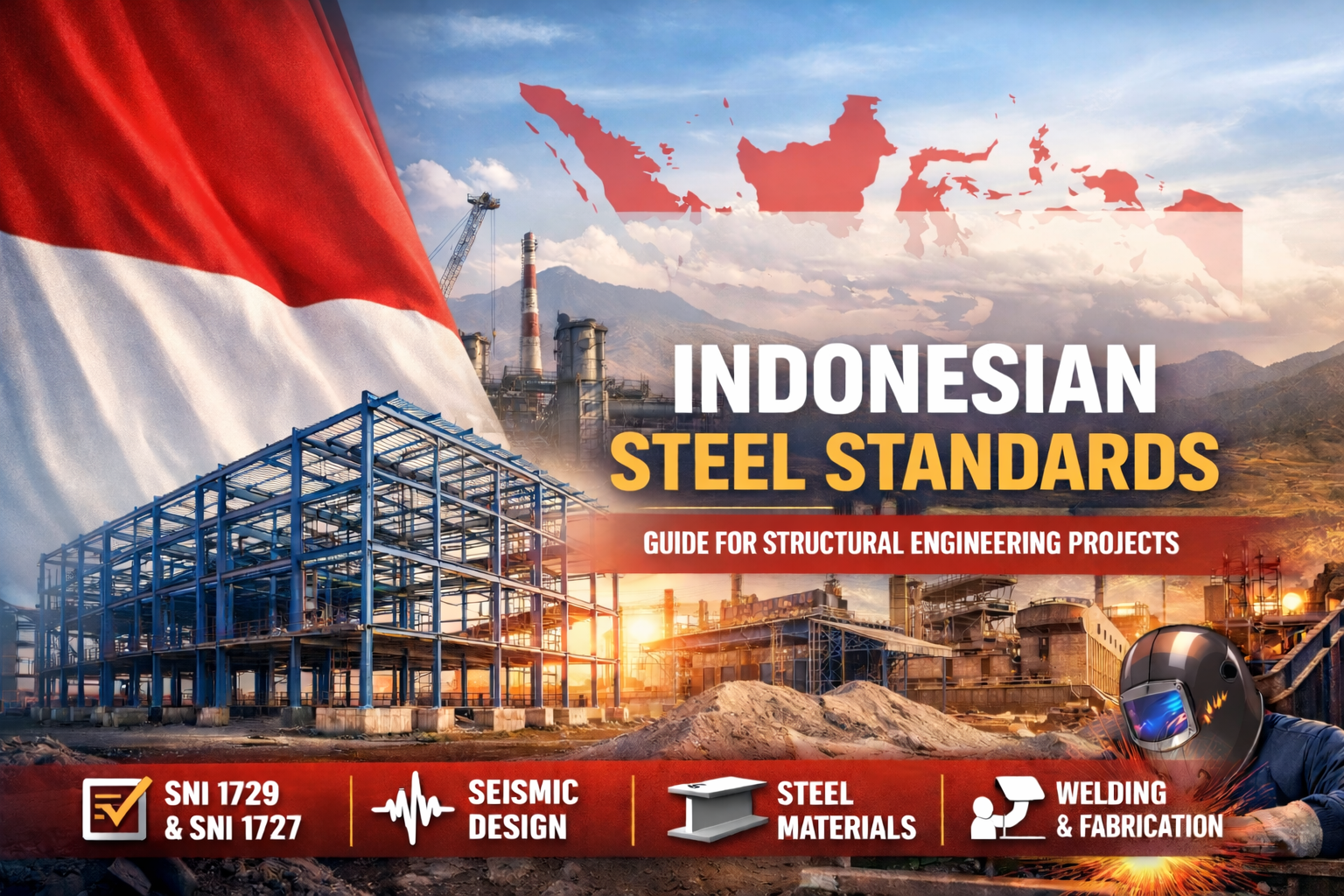
Indonesia has a rapidly growing construction and infrastructure sector, which requires strict regulations to ensure safety, durability, and structural integrity. The national framework governing steel design, manufacturing, and construction is known as SNI – Indonesian National Standard (Standar Nasional Indonesia).
These standards regulate everything from steel material specifications to structural design requirements, welding procedures, fabrication, and inspection.
For international companies involved in structural steel fabrication, pre-engineered buildings (PEB), warehouses, and industrial facilities, understanding Indonesian steel standards is essential for regulatory compliance and project approval.
This guide explains:
-
The Indonesian steel standard system
-
Key SNI codes for structural steel
-
Design and fabrication requirements
-
Comparison with international standards such as ASTM and ISO
-
Compliance considerations for foreign contractors
1. What Are Indonesian Steel Standards (SNI)?
SNI (Standar Nasional Indonesia) are national standards developed and published by the National Standardization Agency of Indonesia (BSN).
SNI standards regulate many industries, including:
-
Construction materials
-
Mechanical engineering
-
Manufacturing processes
-
Infrastructure and safety systems
For steel construction, SNI provides guidelines for:
-
Structural steel design
-
Steel material quality
-
Welding procedures
-
Fabrication methods
-
Structural safety
Compliance with SNI standards is often mandatory for government projects and large-scale infrastructure developments.
2. Key Indonesian Steel Standards for Structural Engineering
Several important SNI standards apply to steel structures (struktur baja) and construction projects in Indonesia.
SNI 1729 – Structural Steel Design Standard
SNI 1729 governs the design of steel structures. It is largely adapted from ANSI/AISC 360, making it familiar to international engineers. Key topics include:
-
Load combinations
-
Steel member design
-
Beam and column capacity
-
Connection design
-
Structural stability
-
Seismic design provisions
SNI 1729 is widely used for:
-
Industrial steel buildings (bagunan baja)
-
Factories
-
Warehouses
-
Steel bridges
-
Multi-story steel structures
SNI 1727 – Minimum Design Loads
SNI 1727 defines the loads that must be considered during structural design. These loads include:
-
Dead loads
-
Live loads
-
Wind loads
-
Rain loads
-
Seismic loads
-
Roof loads
Engineers must calculate these loads before designing structural steel systems.
SNI 1726 – Seismic Design Requirements
Indonesia lies in one of the most active seismic regions in the world. Therefore, SNI 1726 is critical for steel structures. It provides requirements for:
-
Earthquake-resistant structural systems
-
Structural ductility
-
Base shear calculations
-
Seismic load combinations
Steel structures must meet these seismic design rules to obtain project approval.
SNI 2052 – Reinforcing Steel Bars
SNI 2052 regulates reinforcing bars used in reinforced concrete structures. The standard specifies:
-
Mechanical properties
-
Yield strength
-
Chemical composition
-
Quality control requirements
3. Indonesian Steel Material Standards
Steel materials used in Indonesian construction projects must comply with SNI or internationally recognized equivalents. Common steel grades include:
| Steel Grade | Equivalent Standard | Typical Use |
|---|---|---|
| BJ37 | Similar to ASTM A36 | General structural steel |
| BJ41 | Similar to ASTM A572 | Structural beams |
| BJ50 | High strength structural steel | Heavy structures |
These materials are commonly used in:
-
Structural steel frames
-
Industrial buildings
-
Steel warehouses
-
Steel bridges
4. Welding and Fabrication Standards in Indonesia
Steel fabrication must comply with welding and inspection standards recognized by SNI. Key requirements include:
Welding Procedure Specifications (WPS)
Welding must follow certified procedures to ensure joint strength and structural reliability.
Common welding standards used alongside SNI include:
-
AWS D1.1
-
**American Welding Society guidelines
Fabrication and Inspection
Steel fabrication workshops must implement strict quality control measures:
-
Material traceability
-
Dimensional accuracy
-
Non-destructive testing (NDT)
-
Weld inspection
-
Surface treatment and coating
5. Indonesian Steel Standards vs International Steel Standards
Many Indonesian standards are aligned with global codes.
| Indonesian Standard | International Equivalent |
|---|---|
| SNI 1729 | AISC 360 |
| SNI 1727 | ASCE 7 |
| SNI 1726 | IBC / ASCE seismic provisions |
| SNI steel materials | ASTM / ISO |
This alignment allows international companies to adapt more easily when entering the Indonesian construction market.
6. Compliance Requirements for Foreign Contractors
International structural steel companies working in Indonesia must consider several regulatory requirements.
Certification and Documentation
Projects often require:
-
SNI-compliant design calculations
-
Material certification
-
Structural analysis reports
-
Fabrication quality documentation
Local Approval Process
Designs may need approval from:
-
Local building authorities
-
Engineering consultants
-
Government regulatory agencies
Import Regulations
Imported steel materials may require:
-
Product testing
-
SNI certification
-
Quality verification
7. Importance of Steel Standards in Indonesia’s Construction Industry
Strict adherence to steel standards ensures:
Structural Safety
Proper design prevents structural failure during earthquakes, wind loads, and extreme weather.
Construction Quality
Standardized fabrication and inspection procedures improve project reliability.
Regulatory Compliance
Projects that do not comply with SNI may face delays or rejection during approval stages.
International Compatibility
Alignment with global standards allows collaboration between local and international engineering firms.
8. Future Trends in Indonesian Steel Regulations
Indonesia continues to modernize its construction standards. Future developments may include:
-
Increased seismic design requirements
-
Sustainable construction standards
-
Carbon reduction regulations
-
Advanced structural modeling standards
These changes will shape the future of steel buildings, industrial structures, and infrastructure projects in Indonesia.
9. Conclusion
Indonesian steel standards play a vital role in ensuring safe and reliable construction across the country. The SNI system governs structural design, materials, fabrication, and seismic resistance for steel structures.
For international contractors and structural steel companies, understanding these standards is essential to successfully participate in Indonesia’s rapidly expanding construction market.
By aligning with SNI requirements and international engineering best practices, companies can deliver safe, compliant, and durable steel structures for industrial and commercial projects.
If you have questions that need to be answered, please contact us at the following email: pebsteel.indonesia@pebsteel.com
Location: Pebsteel Indonesia – 12th Floor, Gedung Agro Plaza, Jl. H.R Rasuna Said, Kav. X-2 No.1, Kuningan, Jakarta Selatan 12950, Indonesia.
Phone: +62215203025
Disclaimer: The content provided in this article is for reference purposes only. Technical specifications and design requirements may vary based on specific project conditions and local regulations.